Despite being available in the market for years now, most people still don’t know porcelain pavers are a viable option. And one of the first questions we hear when homeowners know about them is this one: “Are porcelain pavers durable?”
Honestly, it is the right question to ask.
Outdoor flooring is not just about choosing something beautiful for the first week after installation; it needs to handle foot traffic, furniture, rain, heat, cleaning, spills, and the occasional dropped barbecue tool that always seems to fall at the worst possible angle.
Here at JS Brick, we have worked with pavers since 2000 – and we know that every material has its personality. Concrete pavers are reliable and versatile. Travertine has a natural charm. Brick has that classic look people love. But what about porcelain pavers? Are they durable enough?
Let’s discuss this in depth in this article. By the end, you’ll know everything there is to know about the matter. So let’s get right to it!
Jump to:
Are Porcelain Pavers Durable?
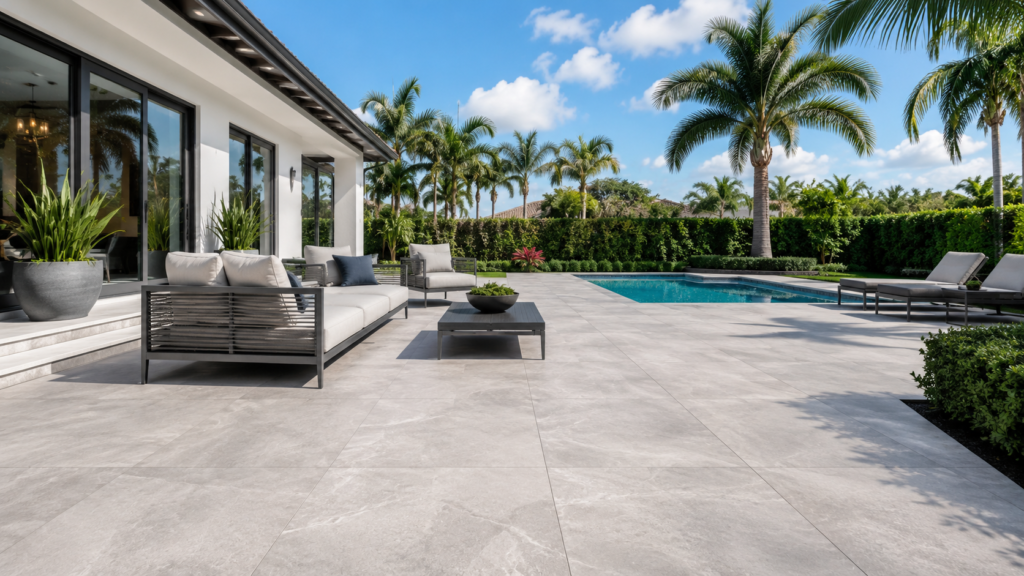
The short answer is yes, porcelain pavers are durable, especially when they are designed for exterior use and installed correctly. They bring a very modern combination of strength and style. They look clean, they come in many finishes, and they can mimic stone, wood, or concrete without requiring the same level of maintenance.
This durability comes from a combination of material density, low water absorption, surface hardness, stain resistance, and proper installation. Porcelain is a type of ceramic material fired at very high temperatures, which creates a dense and compact structure.
According to the Tile Council of North America, porcelain tile is defined by water absorption of 0.5 percent or less, which helps explain why it performs so well in many outdoor applications.
This low absorption rate is one of the big reasons for its durability, especially in climates where moisture, humidity, and temperature changes can affect outdoor materials. In areas prone to dealing with intense sun, heavy rain, pool water, sand, and everyday use, a dense material that does not absorb much water can be a major advantage.
Learn more here Pros and Cons of Porcelain Pavers
Porcelain Pavers: Durability Breakdown
Dense Structure and Low Water Absorption
As previously mentioned, low water absorption is the main characteristic of porcelain pavers. It sounds technical, but it is simple. The less water a paver absorbs, the less likely it is to suffer from moisture-related problems.
Porcelain pavers are manufactured to be extremely dense, and that density limits how much water enters the body of the material. This matters because outdoor surfaces are constantly exposed to water. Rain, irrigation, pool splash, humidity, and cleaning all introduce moisture. A material with high porosity can stain more easily, weaken over time, or become more vulnerable in freeze-and-thaw climates.
Because porcelain pavers are dense, they are easier to keep clean compared with more porous materials. But that does not mean they are magic; we still recommend routine cleaning, but it does mean they do not behave like a sponge every time it rains.
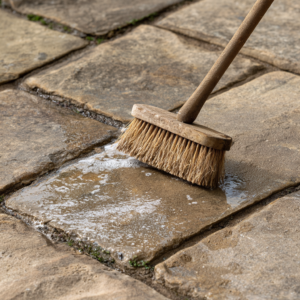
We explain the maintenance side in more detail in our guide on how to clean porcelain pavers. The practical takeaway is that porcelain pavers are durable because they resist many of the small problems that slowly age an outdoor surface.
Resistance to Stains, Fading, and Daily Wear
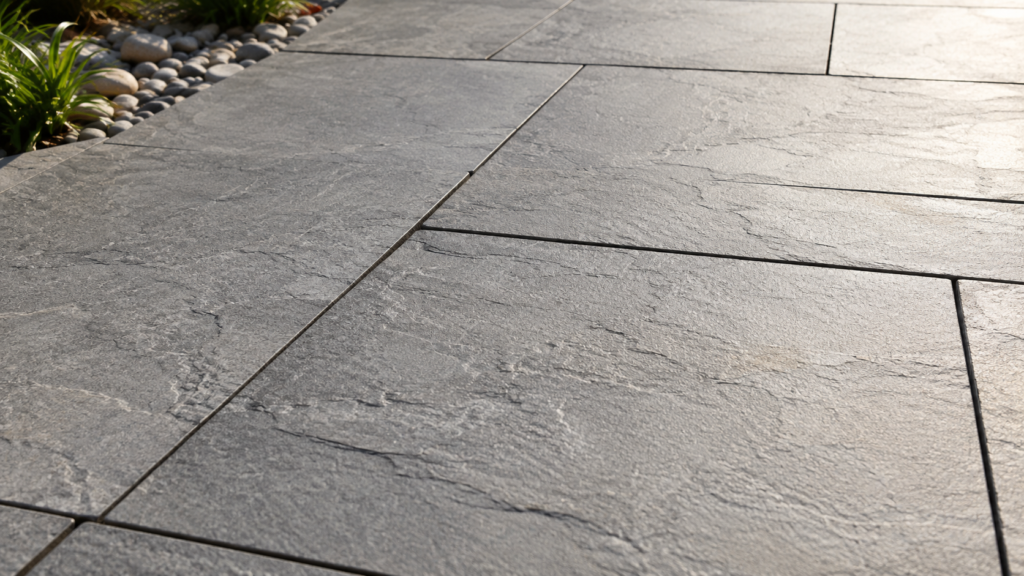
Another characteristic of porcelain paver durability comes from their surface performance. Quality outdoor porcelain pavers are designed to resist stains, scratches, and color fading. This is especially important for patios and pool decks, where sunscreen, food, drinks, leaves, and outdoor furniture are part of daily life.
Unlike some materials that need sealing to protect against stains, porcelain pavers have very low porosity. That makes it harder for spills to penetrate the surface. Of course, quick cleaning is always better. Red wine, oil, or barbecue sauce should never be treated like a long-term design feature. Still, porcelain gives homeowners a very forgiving surface.
The color stability is another major advantage. In settings that receive a lot of sun, UV exposure can be brutal on certain surfaces. Porcelain pavers are manufactured with finishes that hold their appearance well, which helps the installation look fresh for years.
Strength Depends on the Right Product
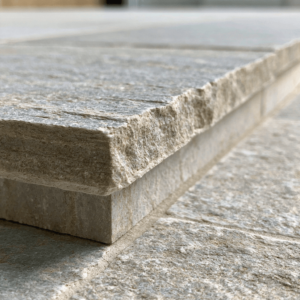
Are porcelain pavers durable enough for every project? That depends on the product. Outdoor porcelain pavers are often thicker than indoor porcelain tile, with 2-centimeter porcelain being a common option for exterior applications. Thickness, format, manufacturer specifications, and intended use all matter.
A porcelain tile made for a bathroom wall is not the same thing as a porcelain paver made for a patio. This is where homeowners need to be careful. The word “porcelain” alone is not enough. The product should be rated for outdoor use, have appropriate slip resistance, and be suitable for the planned installation method.
This is where the help of a professional hardscape contractor is pivotal to help you decide what the best product for your specific situation is. Especially because the installation of porcelain pavers is absolutely not recommended from a DIY perspective.
Let’s expand on why.
The Importance of Professional Help With Porcelain Pavers
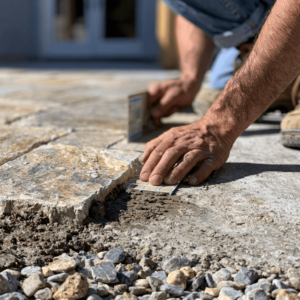
The biggest threat to porcelain paver durability is not usually the porcelain itself – it is a poor installation. A weak base, incorrect slope, bad drainage, unstable bedding material, or improper spacing can create problems that make even a great product underperform.
Outdoor flooring is a system. The paver is only the visible part. Underneath it, there needs to be a stable foundation that manages weight and water. If water has nowhere to go, it can create movement, settling, or edge issues.
If the base is not compacted correctly, the surface may shift. Porcelain pavers deserve a precise installation because their clean edges and modern finish make mistakes more visible.
Another issue is choosing the wrong porcelain paver. They can only perform their best when they are designed for the environment where they will be used. Outdoor-rated porcelain should be selected for exterior projects. For pool decks, for example, slip resistance should be reviewed. For raised pedestal systems, the product must be suitable for that application. For heavy loads, manufacturer guidance is essential.
Read also: 6 common paver patio installation mistakes & how to avoid them
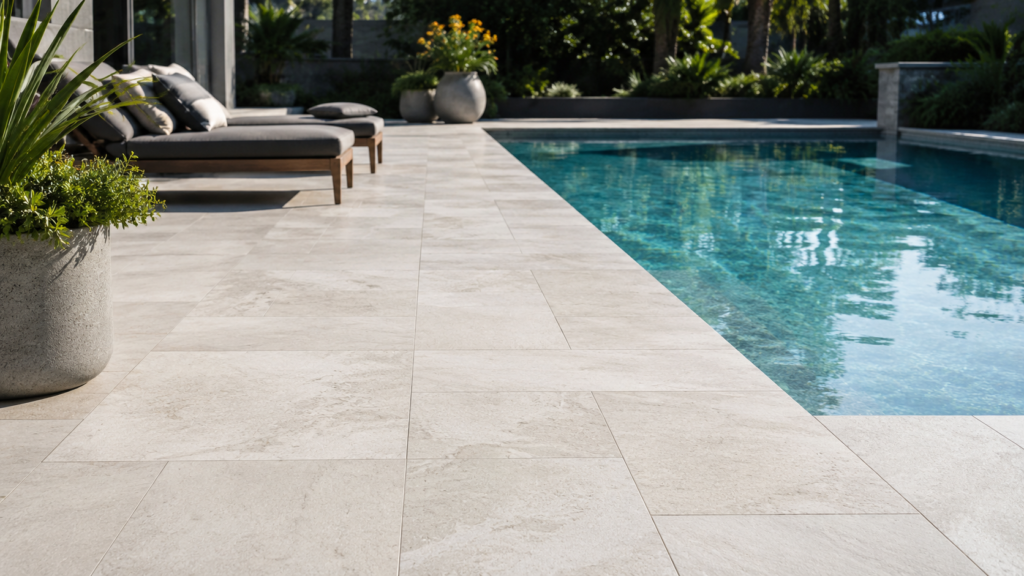
So, as you can see, it is not as simple. The key is matching the right porcelain paver to the right application. A durable material still needs smart planning, proper drainage, a stable base, and professional installation. When those pieces come together, porcelain pavers can deliver an outdoor surface that looks elegant and performs well year after year.
Here at JS Brick, we’ve been helping homeowners in Sarasota and surrounding areas choose, install, and maintain pavers with confidence for over 20 years, so we know the importance of real dedication when it comes to porcelain pavers.
If you are still asking if porcelain pavers are durable for your specific patio, pool deck, or walkway, we can evaluate your project and guide you toward the best solution. Contact our team anytime for a free estimate on our services.