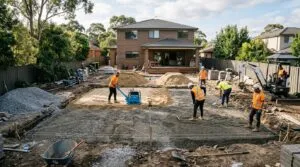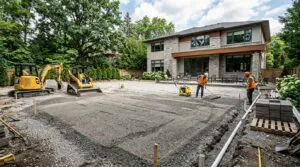
You measured the patio, the pavers are staged, and now you need to know how much joint sand to buy. Here is the direct answer: a standard 50-pound bag of polymeric sand covers roughly 65 to 85 square feet when paver joints run 1/8 to 3/8 inch wide. For a 500-square-foot patio with those common joints, that means 6 to 8 bags.
That range comes from manufacturer coverage charts tested on 2-3/8-inch-tall concrete pavers. But the real number for your project depends on three measurements: joint width, joint depth, and paver size. We have been filling paver joints on driveways, patios, and pool decks across Sarasota since 2000, and those three inputs explain why a 500-square-foot job can need anywhere from 6 bags to more than 20.
Below is the full breakdown: a quick-reference table, the variables that shift the count, the backup formula for unusual layouts, and the Florida-specific timing details most online calculators skip.
Jump to:
Quick-Reference Table: Bags by Paved Area
This table uses published coverage data for 50-pound bags of polymeric sand on standard 2-3/8-inch concrete pavers. If your project uses a different product or paver height, check its technical data sheet for a comparable table.
| Paved area (sq ft) | Narrow joints (1/8 to 3/8 in.), 65 to 85 sq ft per bag | Wide joints (3/4 to 1-1/4 in.), 22 to 42 sq ft per bag |
|---|---|---|
| 100 | 2 bags | 3 to 5 bags |
| 200 | 3 to 4 bags | 5 to 10 bags |
| 300 | 4 to 5 bags | 8 to 14 bags |
| 500 | 6 to 8 bags | 12 to 23 bags |
| 750 | 9 to 12 bags | 18 to 35 bags |
| 1,000 | 12 to 16 bags | 24 to 46 bags |
Use the lower coverage number (more bags) when you want to avoid a mid-project shortage. Use the higher number for a best-case estimate on uniform, tight-jointed pavers.
The gap between columns is dramatic. A 500-square-foot pool deck with standard 1/4-inch joints and a 500-square-foot flagstone patio with 1-inch joints can differ by a factor of three. The next section explains why.
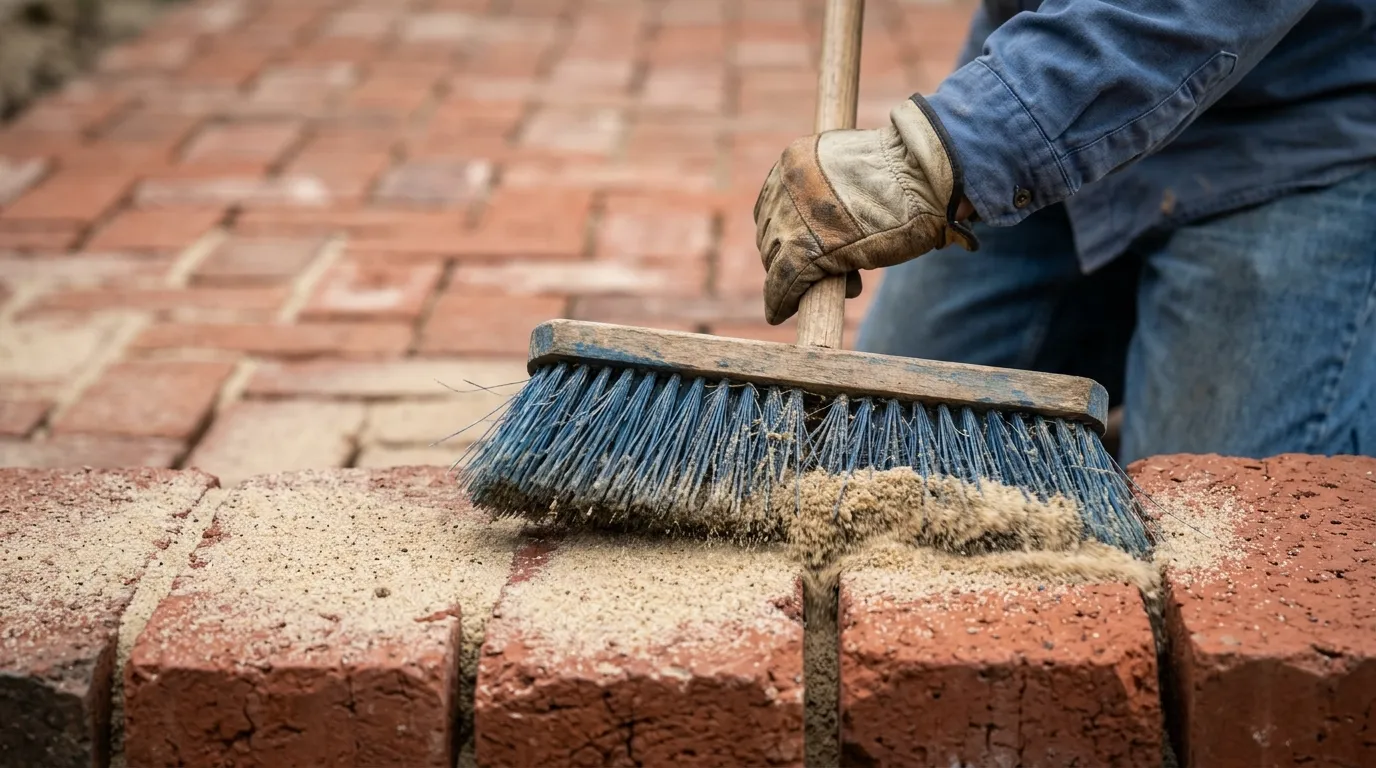
What Changes the Number: Width, Depth, and Paver Size
Joint width is the most visible variable. Every extra 1/16 inch of gap between pavers increases the sand volume per linear foot of joint. Most machine-made concrete pavers have built-in spacer bars that hold joints at a consistent 1/8 inch. Tumbled pavers, natural stone, and travertine tend to run wider: 1/4 to 1/2 inch is common, and flagstone gaps can exceed an inch.
Joint depth is the one people skip. Sand does not just sit at the surface. It needs to fill the gap from roughly 1/8 inch below the paver’s top edge (or below the chamfer) down to the bedding layer. For a 2-3/8-inch-tall paver, that fill depth might be close to 2 inches. Some products set a minimum: the Gator SuperSand G2 technical data sheet lists a minimum joint depth of 1-1/2 inches. If your pavers are only 1-3/16 inch tall (common with thin overlay pavers), that product will not work, and you need a different sand with a different coverage chart.
Paver size is the variable that surprises people. Smaller pavers create more joints per square foot, which means more sand. The difference is not minor.
| Paver size (inches) | Joint length per sq ft | Relative sand demand |
|---|---|---|
| 4 x 8 | 4.5 linear ft | Highest |
| 6 x 6 | 4.0 linear ft | High |
| 6 x 9 | 3.3 linear ft | Moderate |
| 6 x 12 | 3.0 linear ft | Moderate |
| 8 x 8 | 3.0 linear ft | Moderate |
| 12 x 12 | 2.0 linear ft | Low |
| 16 x 16 | 1.5 linear ft | Lowest |
| 12 x 24 | 1.5 linear ft | Lowest |
A 4×8-inch paver produces three times the joint length of a 12×24 large-format unit, square foot for square foot. If you are comparing standard brick pavers to large-format travertine, this single variable can double your sand order.
One more factor: laying pattern. A herringbone layout does not add joint length in the field area (the pavers are the same size regardless of orientation), but it increases cut pieces along borders. Those cuts create short, irregular joints that consume slightly more sand. On a 500-square-foot patio, herringbone border cuts might add 5 to 10 percent more joint sand compared to a running bond with straight edges.
So you have your three inputs: width, depth, and paver size. If your pavers and product match a manufacturer’s coverage chart, use the chart. If not, here is the math.
A Volume Formula for Custom Layouts
When no published coverage chart matches your paver and joint combination, you can estimate the total joint cavity and convert it to bags.
Joint volume (cu ft) = Area (sq ft) x (12/L + 12/W) x (J / 12) x (D / 12)
- L = paver length in inches
- W = paver width in inches
- J = joint width in inches
- D = fill depth in inches
Worked example: a 500-square-foot patio using 6×12-inch pavers with 1/4-inch joints filled to 2 inches deep.
Joint volume = 500 x (12/6 + 12/12) x (0.25 / 12) x (2 / 12)
= 500 x 3.0 x 0.02083 x 0.1667
= 5.21 cubic feet
Dry polymeric sand weighs roughly 100 pounds per cubic foot. That is about 521 pounds, or 11 bags of 50-lb product (rounded up).
This formula assumes a uniform rectangular grid. It does not account for chamfers that reduce the top of the joint, or for irregular cuts at borders. Treat it as a cross-check. If the number falls within the range on the manufacturer’s chart, you are in the right zone.
What the formula does reveal: our 500-square-foot example with 1/4-inch joints needs nearly double the bags of the same area with 1/8-inch joints. Joint width is not a rounding error.
The formula calculates volume the same way for conventional and polymeric sand. But the two products behave differently on the job, and in Sarasota’s climate the gap between them matters more than in drier states.
Polymeric Sand vs Conventional Sand: Different Coverage
Conventional joint sand is loose, dry, graded material swept into joints and compacted with a plate compactor. CMHA’s guide specification references ASTM C144 grading for joint sand and says the largest particle must fit the smallest joint opening. No binder. It is affordable, easy to top off, and compatible with most sand-set assemblies.
The tradeoff in Sarasota: conventional sand washes out of shallow joints faster than most homeowners expect. Afternoon storms dump an inch of rain in twenty minutes. We see joints half-empty by September on pool decks and patios that face even a slight slope. Every year.
Polymeric sand contains binding agents that activate with water and lock the fill in place. It resists washout, deters ants and weeds from colonizing paver joints, and holds up better under summer rain. The tradeoff: higher cost per bag, tighter installation conditions, and harder repairs if something goes wrong during application.
Coverage varies by brand, not just by product category. Here are published yields from current technical data sheets:
| Product | Bag size | Narrow-joint coverage | Wide-joint coverage |
|---|---|---|---|
| Alliance Gator SuperSand | 50 lb | 65 to 85 sq ft | 22 to 42 sq ft |
| Techniseal SmartSand | 50 lb | 60 to 120 sq ft | 25 to 40 sq ft |
| SEK PolySweep | 50 lb | 50 to 75 sq ft (up to 1/4″) | 15 to 25 sq ft (1/2″ to 3/4″) |
Techniseal’s range tops out at 120 square feet in narrow joints. SEK bottoms out at 15 square feet in wide joints. That is an eightfold spread from the same bag weight. “50-pound bag” tells you nothing about coverage until you know the brand and the joint dimensions.
Some newer products use resin binders instead of water-activated polymers. Alliance Gator Nitro, for instance, comes in a 40-pound pail and covers about 35 square feet for 3/16-inch concrete paver joints or 15 square feet for 3/4-inch joints. Different chemistry, different bag size, different yield. When comparing brands, compare coverage per square foot, not just price per bag.
For most residential patios and driveways in our area, polymeric sand is the better long-term choice. But getting the coverage number right is only half the job. The other half is timing.
Rain and Timing: The Florida Factor
Polymeric sand activates with water. That is the design. The problem is uncontrolled water: Sarasota’s afternoon thunderstorms from June through September, arriving with almost no warning.
Here is what happens if heavy rain hits fresh polymeric sand before it cures. The binder displaces out of the joints, coats the paver surface, and hardens into a white haze that is tedious to remove. SEK’s technical bulletin on watering is direct about this: excessive water can float polymer out of the joint, while insufficient wetting leaves material that washes out or gels on the surface. Either direction is a problem.
Different products have different rain windows. Sika Evolution Pro requires rain protection for at least 24 hours (48 hours for joints wider than 1/2 inch). Gator Nitro, which uses a different air-cure chemistry, says it can be installed in wet or dry conditions. These rules do not transfer from one brand to another. Follow your specific product’s data sheet.
We schedule joint sand work for mornings and watch the radar. In Sarasota, a 2:00 PM storm is so reliable from June through September that any crew working with polymeric sand needs to plan around it. If you are doing this yourself, give yourself a dry window of at least 24 hours after activation. November through April is the safer window for DIY polymeric sand work, which is one reason we see a wave of resanding calls every October.
Florida’s humidity also slows curing. If the forecast shows 90 percent humidity for three consecutive days, the sand may stay tacky longer than the bag suggests. This does not mean the product failed. It means the cure schedule assumed drier air.
Timing matters for bag count too. Poor activation or unexpected rain can waste a bag of material and force a redo. We factor in one extra bag per 500 square feet as a buffer for field conditions. Which brings up the question most calculators never address.
Buy a Few Extra Bags for Year One
After installation, paver joints settle. The first few rain events wash fine particles to the bottom of the joint. Foot traffic compresses the fill. Within the first three to six months, it is normal for polymeric sand to sit 1/16 to 1/8 inch lower than where you left it.
If you have no extra sand on hand, that means a return trip to the supply house. And here is the catch: if the product has been reformulated or the batch color has shifted, the top-up layer may not match.
Our rule of thumb: buy one extra bag for every 500 square feet of paved area. Keep it sealed, dry, and in the garage. Use it for touch-ups after the first rainy season, or save it for the spot where ants find a hairline gap two years down the road.
For conventional sand, the same principle applies. CMHA notes that on open-graded aggregate bases, joint sand can migrate into the voids below and should be replenished when loss exceeds 1/2 inch. Keep a five-gallon bucket of matching sand on hand if your driveway sits on an open-graded crushed rock base.
Over time, joints may need a full resanding, especially after pressure washing strips the top layer. How much sand for a resanding job? Use the same coverage chart, but adjust: you are not filling empty joints. You are topping off joints that are half full. Start with 50 percent of the original bag count and keep an extra bag ready.
Frequently Asked Questions
How many bags of polymeric sand do I need for 100 square feet?
For standard 1/8- to 3/8-inch joints on 2-3/8-inch concrete pavers, two 50-pound bags cover 100 square feet. If joints run wider (1/2 inch or more), plan on 3 to 5 bags. Always confirm against the specific product’s coverage chart, since yields vary significantly by brand.
How deep should polymeric sand be in paver joints?
Deep enough to fill from roughly 1/8 inch below the paver surface (or chamfer) down to the bedding layer. For a 2-3/8-inch paver, that is close to 2 inches of fill. Some products set a minimum: Gator SuperSand G2 specifies 1-1/2 inches. Check the technical data sheet before buying a product for thin overlay pavers.
Does paver size affect how much joint sand I need?
Significantly. A 4×8-inch paver creates 4.5 linear feet of joint per square foot. A 12×12-inch paver creates only 2 linear feet. Smaller pavers mean more joints and more sand, sometimes double the quantity for the same patio area.
What happens if it rains right after I apply polymeric sand?
Heavy rain before the sand cures can displace the binder, wash sand out of joints, and leave white haze on the paver surface. Product rain windows vary: some require 24 to 48 hours of dry weather after activation. In Sarasota, we schedule joint work for mornings during the dry season whenever possible.
Should I keep extra bags after installation?
Yes. We recommend one extra 50-pound bag per 500 square feet of paved area. Joints settle during the first year, and having matching sand on hand saves a trip and ensures consistent color. Store the bag sealed and dry.
Calculating joint sand is straightforward once you know your paver size, joint width, and fill depth. If you would rather have someone measure the actual joints and hand you a precise materials list, our crew does that during every free estimate. We have been installing and resanding pavers across Sarasota, Venice, Bradenton, Nokomis, and Osprey since 2000. A site visit shows what a calculator cannot: slope, drainage, base condition, and edge restraint. Reach out before the rainy season tests your base.