In recent years, porcelain pavers have become popular because they combine a refined look with strong outdoor performance. But how much are porcelain pavers, after all?
This is one of the first questions homeowners ask when they start considering working with them – imagining an outdoor space that looks like it belongs in a magazine, preferably without demanding a magazine-sized budget.
Well, their price can vary more than many people expect. The final number depends on material quality, thickness, project size, base preparation, access to the area, drainage, cuts, patterns, and, of course, professional installation, which is non-negotiable when talking about porcelain pavers.
Let’s discuss all these elements today so you can understand how much porcelain pavers typically cost.
Jump to:
How Much are Porcelain Pavers per Square Foot?
The simplest answer is that the material alone often starts around the mid-single digits per square foot and can go much higher for premium designs, thicker slabs, or imported styles.
In current retail listings, porcelain pavers can be found for around $5 to $12 per square foot, depending on the product, size, finish, and brand.
However, the material price is only part of the story. Installing porcelain pavers commonly costs more because the surface has to be prepared correctly; a beautiful porcelain paver over a weak base is like putting a tuxedo on a lawn chair. It may look interesting for a minute, but it is not going to perform the way you hoped.
Material Cost vs. Installed Cost
The material cost answers only one piece. The installed cost includes labor, excavation, base aggregate, bedding material, edge restraints, cuts, compaction, hauling, disposal, and finishing details.
For many residential outdoor projects, a realistic installed cost can fall somewhere between $18 and $35 per square foot, with complex projects going above that.
A simple rectangular patio with easy access will usually stay closer to the lower end. A pool deck with curves, coping transitions, drainage corrections, and many cuts will usually move toward the higher end. That is why two projects with the same square footage can have very different prices.
Why Are Porcelain Pavers More Expensive?
Porcelain pavers often cost more than basic concrete pavers, but the difference comes from the manufacturing process and design flexibility.
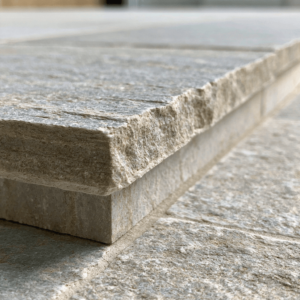
Porcelain is dense, hard, and resistant to moisture. The Tile Council of North America explains that exterior suitability depends on the product and its intended area of use, which is why we always recommend checking manufacturer specifications before choosing any outdoor surface.
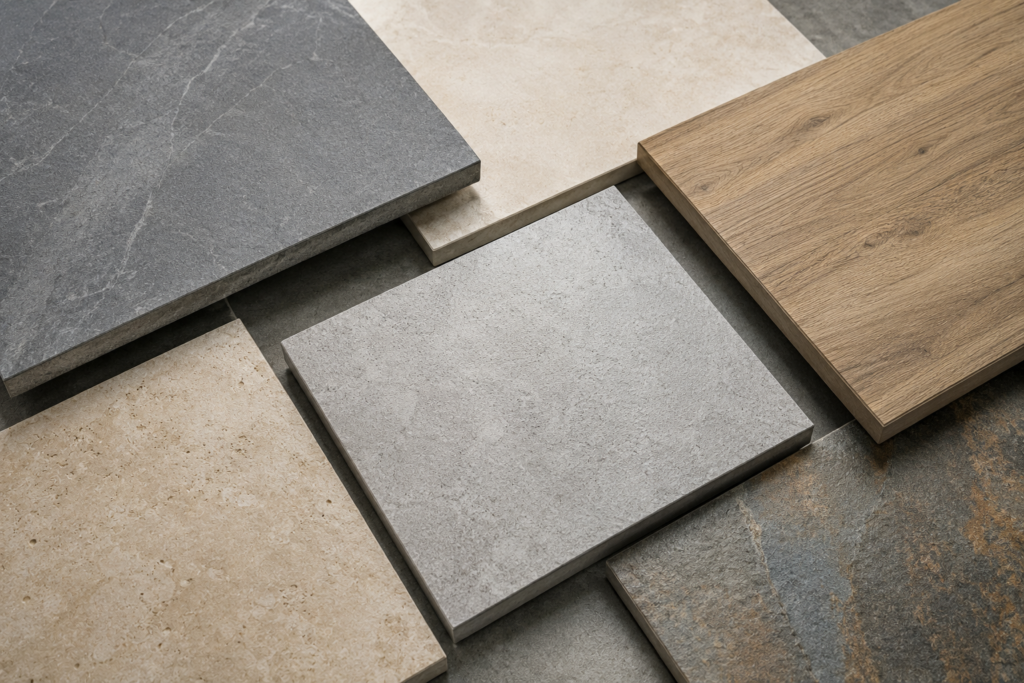
Porcelain pavers can imitate stone, wood, concrete, and marble with impressive realism. They also resist staining better than many porous materials. That matters in situations where pool water, rain, sunscreen, barbecue grease, leaves, and the occasional “oops, I dropped the lemonade” moment all join forces against outdoor flooring.
The Cost of Porcelain Pavers for a Full Project
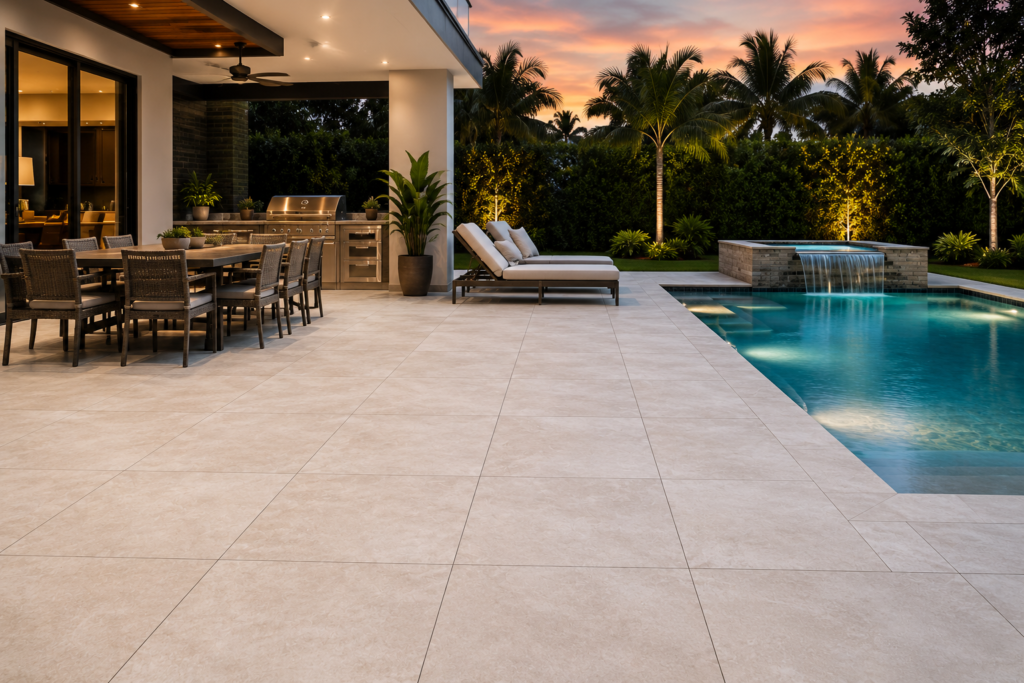
To understand how much porcelain pavers cost in a real project, we need to look beyond the tile itself. The biggest cost drivers are site conditions and installation requirements. A flat patio area with good drainage is very different from an old cracked surface that needs demolition, leveling, and a new compacted base.
Here at JS Brick, we usually look at the full system. Pavers are never just the visible surface. They are part of a structure that includes the soil, base layer, bedding layer, joints, edges, and water movement. If one layer is ignored, the surface may eventually shift, sink, or drain poorly.
Project Size and Layout
Square footage is the first number most homeowners calculate. Larger spaces cost more overall, but they can sometimes have a lower price per square foot because setup and mobilization are spread across more area. Smaller projects may cost less in total, but the price per square foot can be higher.
If you are still learning how paver coverage works, our guide on how many square feet are in a pallet of pavers can help you understand why material ordering is not always as simple as counting individual pieces.
That said, the layout also matters – a lot. A straight patio is faster to install than a design with borders, curves, diagonal patterns, inlays, or multiple transitions. Porcelain pavers are strong once installed, but they require precision during cutting and handling.
Base Preparation and Drainage
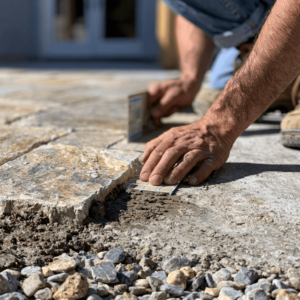
Base preparation is one of the biggest reasons estimates vary. If the existing ground is stable, properly graded, and easy to access, the work is more straightforward. If the area has poor drainage, soft soil, roots, old concrete, or uneven elevation, the project needs more labor and materials.
Drainage deserves special attention. Porcelain is dense, so water needs a planned path away from the surface. A good installation accounts for slope, runoff, and nearby structures. This is especially important for pool decks, patios close to the house, and walkways that connect to driveways or doors.
Joint material can also influence performance. For many paver systems, joint stabilization helps reduce shifting, erosion, and weed growth. We explain this in more detail in our article about polymeric sand for pavers.
Are Porcelain Pavers Worth the Price?
In many outdoor projects, yes – porcelain pavers can be worth the investment when the homeowner wants a modern look, low maintenance, strong color consistency, and excellent resistance to stains and moisture.
Porcelain works especially well in patios, pool decks, walkways, and outdoor living areas where appearance matters as much as durability. It gives a clean, upscale finish without the natural variation and sealing demands of some stones.
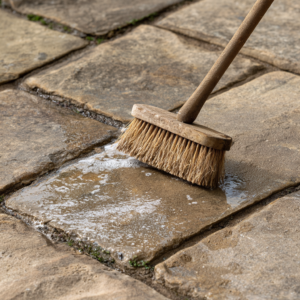
Porcelain pavers are also appreciated because they are relatively easy to clean. Most routine maintenance involves sweeping, rinsing, and washing with mild cleaning products when needed. Since porcelain is dense and less absorbent than many other materials, it is less likely to stain deeply.
That lower maintenance can make the initial price easier to accept. A cheaper surface that requires constant sealing, frequent deep cleaning, or early repairs may not stay cheaper over time.
After all, outdoor projects should be judged by more than the first invoice. They should be judged by how they look and perform after years of sun, rain, foot traffic, furniture, and family gatherings.
Hire Professional Help and Avoid Major Hardscape Problems
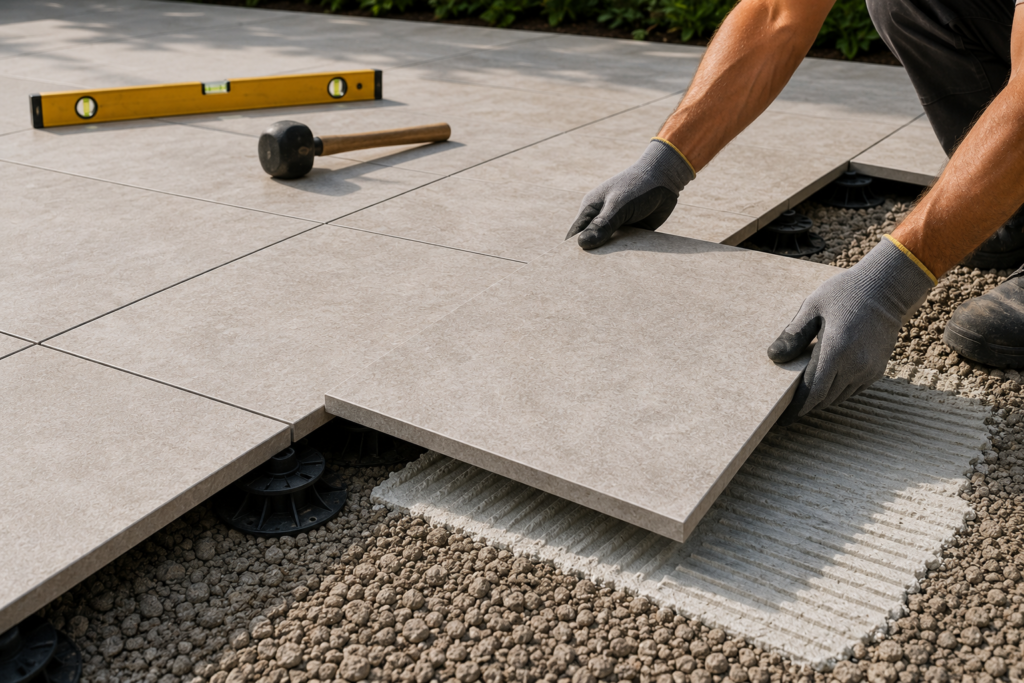
No wonder here: to get the full advantage of porcelain pavers, professional help during the installation is essential. With porcelain, it is very important to understand how the space will be used. A pool deck, driveway border, patio, and walkway each have different installation needs.
A professional estimate should explain what is included, what materials are being used, how the base will be prepared, and whether demolition, drainage, sealing, or special cuts are part of the scope. So find a professional you can trust in your area to help you.
And for homeowners in Sarasota and nearby areas, we here at JS Brick can help you evaluate your project, compare material options, and build a porcelain paver installation designed for beauty, stability, and everyday use.
If you are planning an outdoor upgrade, reach out to our team and request a personalized free estimate of our prices and services!