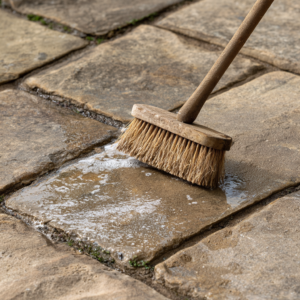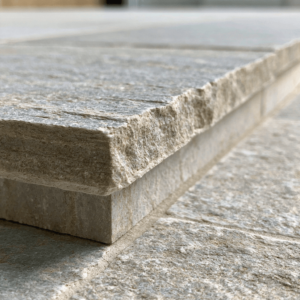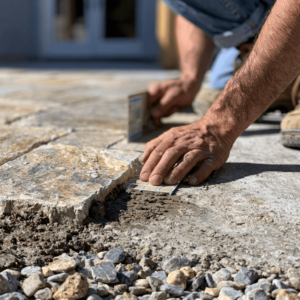
In this article, we have decided to take our time and talk about something that we don’t see discussed very often: paver machines. But what exactly does that mean? Well, it can refer to more than one type of equipment, which is exactly why the term can feel a little confusing at first.
But the two most important contexts are the paver machines used to manufacture pavers, shaping raw materials into consistent units that can later be installed in driveways, patios, walkways, pool decks, and other outdoor surfaces, and the machines used on the job site to help place, compact, cut, or prepare pavers during installation.
It is important to have in mind that pavers are both a manufactured product and an installed system. The paver itself may come from a factory, but the final result depends heavily on what happens at the property. A good paver can still fail if it is installed over a weak base, placed without proper drainage, or compacted incorrectly. Paver machines can help create the material and support the installation, but they do not replace knowledge, planning, and craftsmanship.
This is why talking about paver machines is useful. It helps homeowners understand why a paver project is more technical than simply laying blocks on the ground. It also helps explain why professional installation matters. So let’s get right to it.
Paver machines used to manufacture pavers
Manufacturing paver machines are responsible for turning raw materials into strong and consistent concrete pavers. In a production facility, sand, gravel, stone dust, cement, water, pigments, and admixtures are carefully measured and mixed before the material is pressed into molds.
This process needs to be controlled because small differences in moisture, pressure, vibration, or curing can affect the strength, color, size, and finish of the final paver.
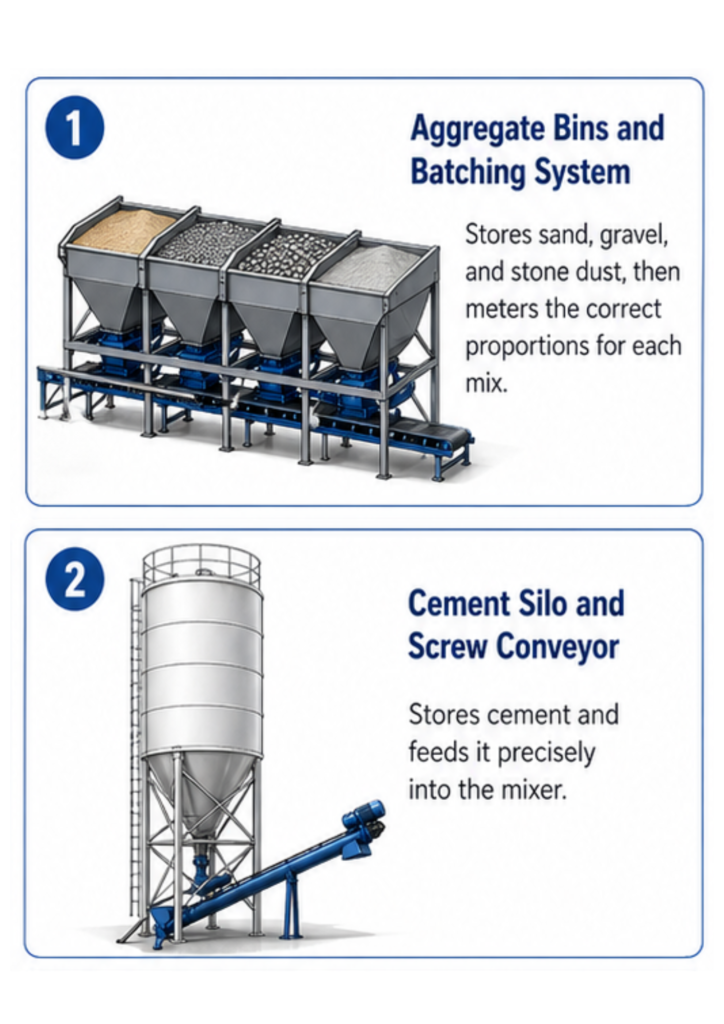
The aggregate bins and batching system are usually the first stage of the process. These machines store and measure materials such as sand, gravel, and stone dust. Accurate batching is important because the concrete mixture needs the right proportions to achieve proper density and durability.
The cement silo and screw conveyor handle the cement supply. The silo stores cement in bulk, while the screw conveyor feeds it into the mixer in a controlled way. This helps keep the mixture consistent from one batch to the next.
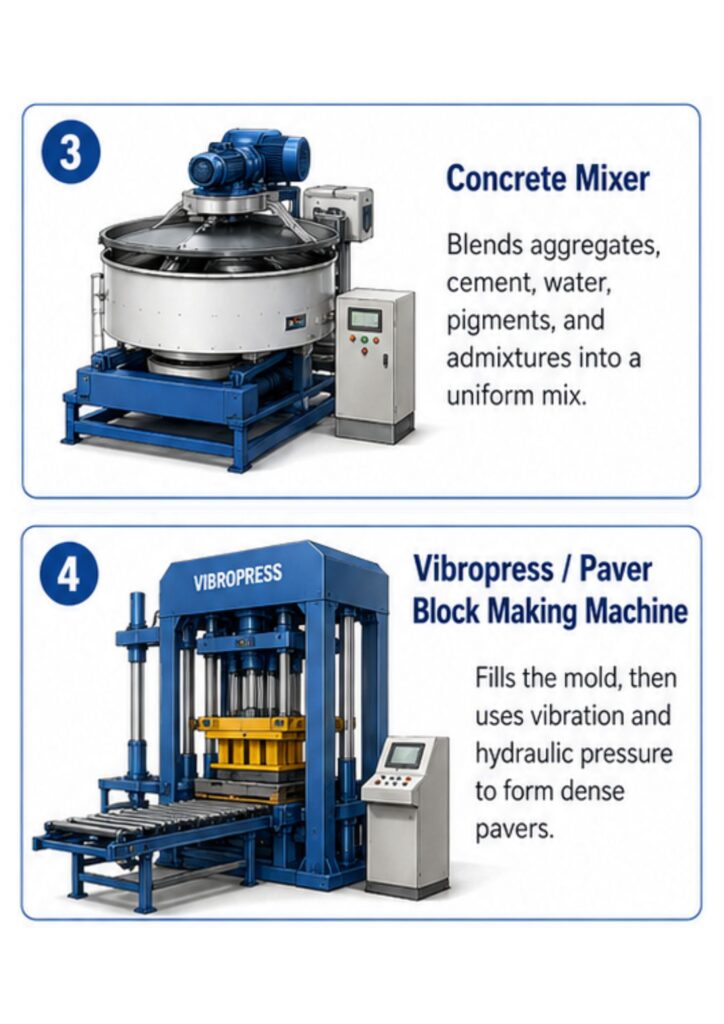
The concrete mixer blends the aggregates, cement, water, pigments, and additives into a uniform mix. This is where the raw ingredients become the material that will eventually form the paver. A poorly mixed batch can create weak spots, inconsistent color, or surface defects.
The vibropress, also called a paver block making machine, is one of the most important paver machines in manufacturing. It fills the mold with the concrete mix, then uses vibration and hydraulic pressure to form dense pavers. The vibration helps distribute the mix evenly inside the mold, while pressure helps create strength and dimensional stability.
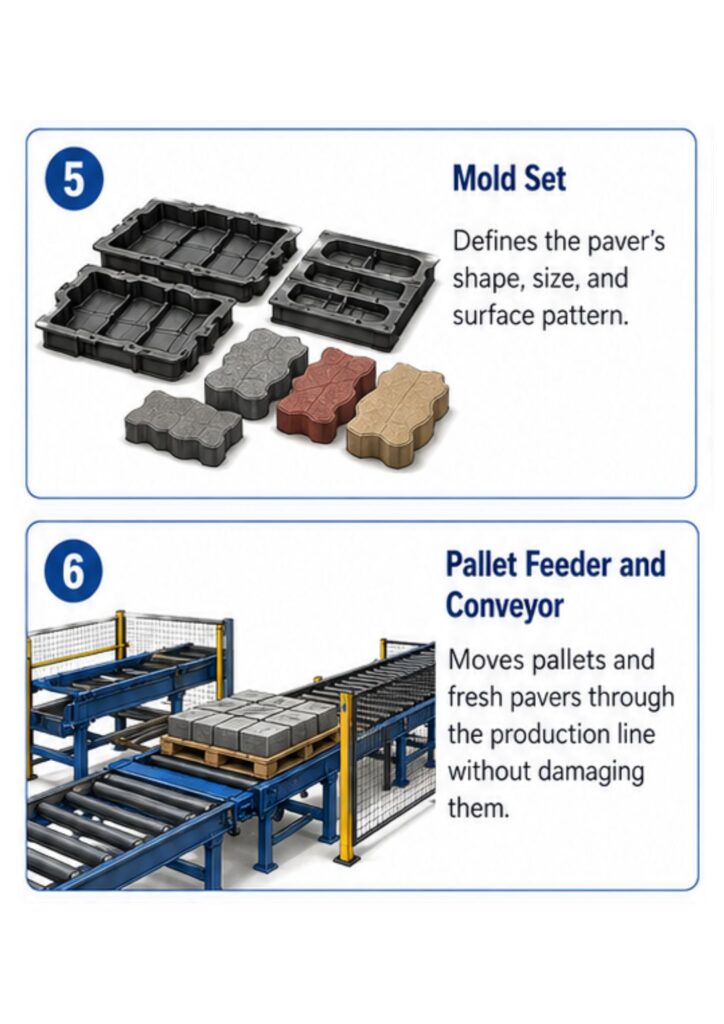
The mold set defines the shape, size, and surface texture of the paver. Different molds can create rectangular pavers, interlocking pavers, cobblestone styles, plank shapes, and other decorative formats. This is why pavers can have such a wide variety of looks while still being produced through a controlled industrial process.
The pallet feeder and conveyor move fresh pavers through the production line without damaging them. Since new pavers are still fragile before curing, careful handling is essential.
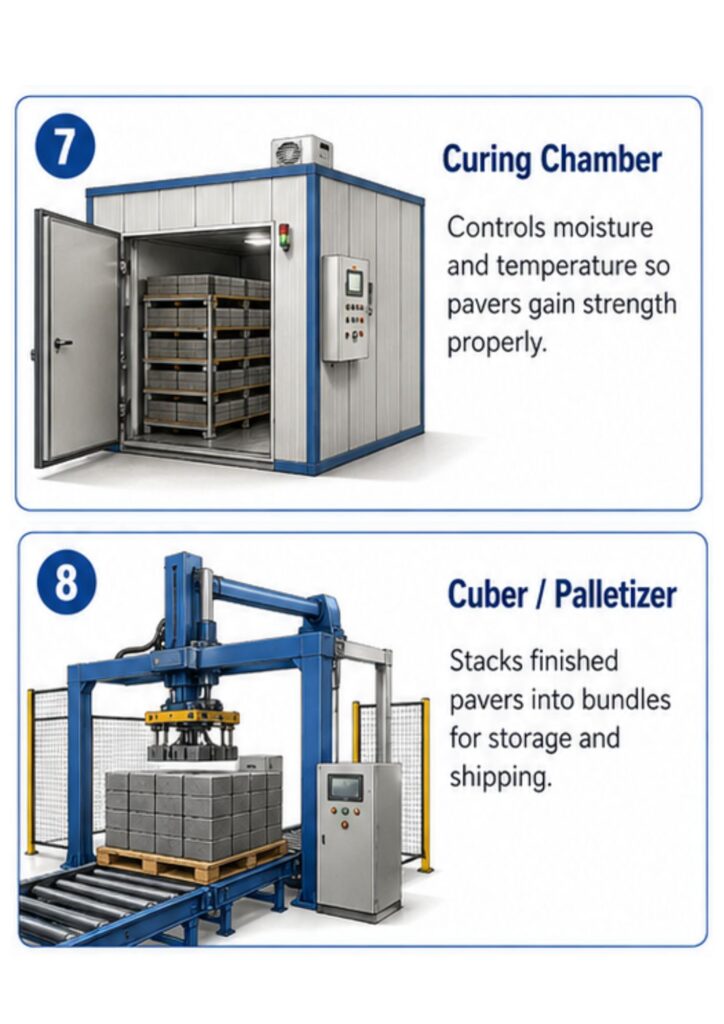
After that, the curing chamber controls moisture and temperature so the pavers can gain strength properly.
Finally, the cuber or palletizer stacks finished pavers into bundles for storage, transport, and delivery to the job site.
This whole manufacturing process shows why paver quality begins long before installation. If the pavers are inconsistent, weak, or poorly cured, even a skilled installation team may have difficulty achieving the best possible result.
Paver machines used during installation
Once the pavers arrive at the property, a different group of paver machines becomes important. Installation equipment is used to prepare the site, move materials, establish the correct elevation, place the pavers, make cuts, compact the surface, and finish the joints.
This is where professional experience becomes especially important, because every property has its own conditions.
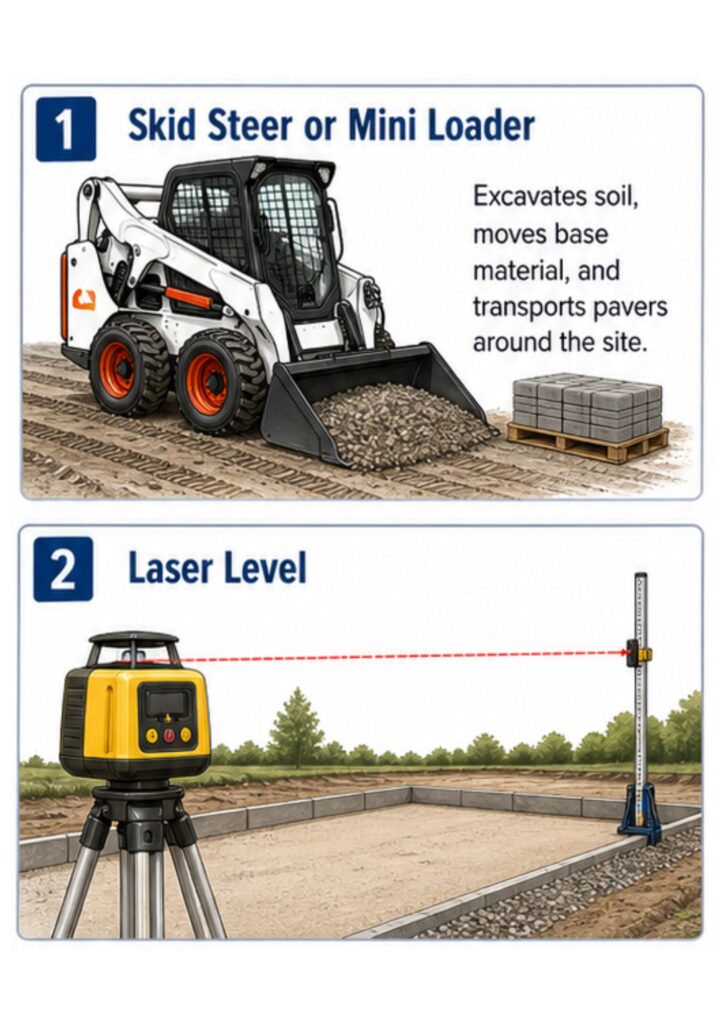
A skid steer or mini loader is often used at the beginning of the project. It can remove soil, transport base material, move pallets of pavers, and help keep the job site organized. This machine saves a lot of physical labor, but it also needs to be used carefully, especially in residential areas with driveways, landscaping, irrigation lines, or limited access.
A laser level helps check elevation and slope. This is one of the most important tools in professional paver installation because drainage depends on proper grading. If the slope is wrong, water may collect on the surface or flow toward the wrong area.
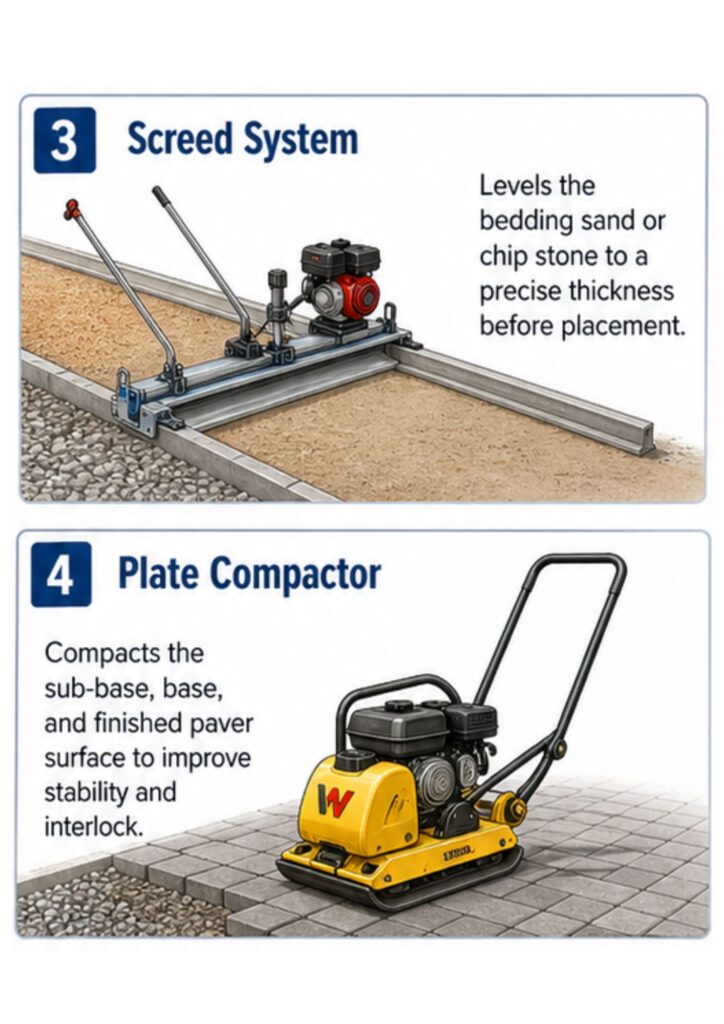
The screed system is used to level the bedding layer before the pavers are placed. This layer may be bedding sand or chip stone, depending on the installation method. The goal is to create a precise, even surface so the pavers sit at the correct height. If the bedding layer is uneven, the finished surface can become uneven as well.
The plate compactor is another essential piece of equipment. It is used to compact the sub-base, the base material, and, later, the finished paver surface. Proper compaction helps reduce settling and improves the interlock between the pavers. This is one of those steps that may look simple from the outside, but it requires the right technique. Too little compaction can leave the surface unstable.
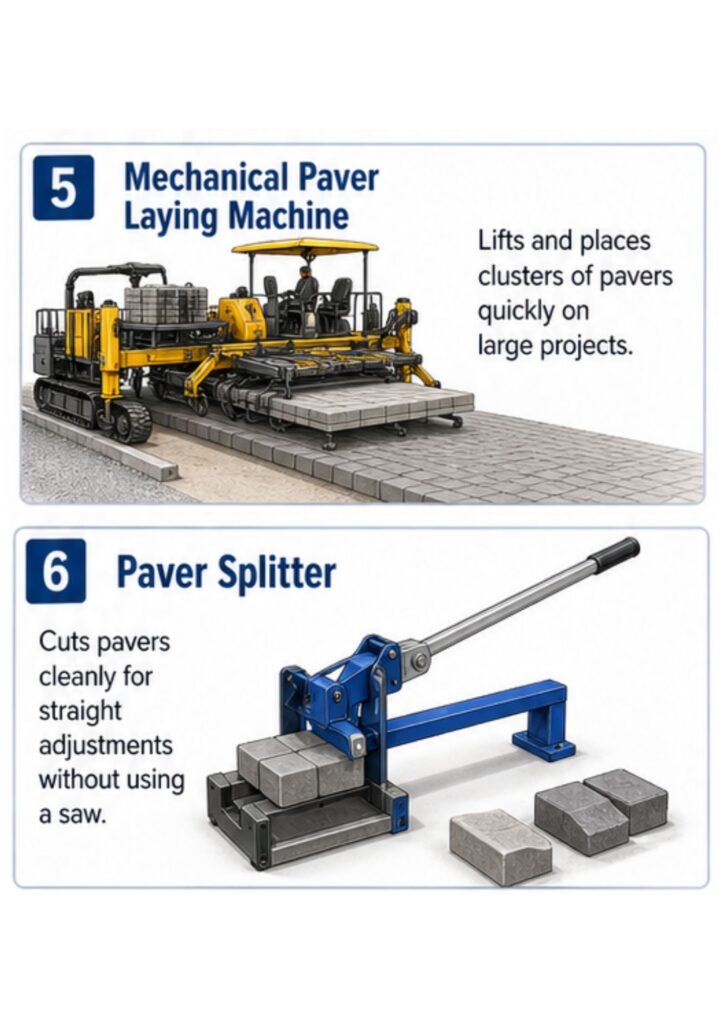
Mechanical paver laying machines are reserved for the largest of projects. These machines lift and place groups of pavers at once, which can improve efficiency on wide driveways, commercial walkways, parking areas, or large patios. However, they are not ideal for every project. Residential installations with curves, borders, steps, pool edges, or tight access often require more hand placement and detailed adjustments.
A paver splitter is used to make straight cuts without a saw. It can be useful for simple adjustments, especially when a clean split is enough for the design.
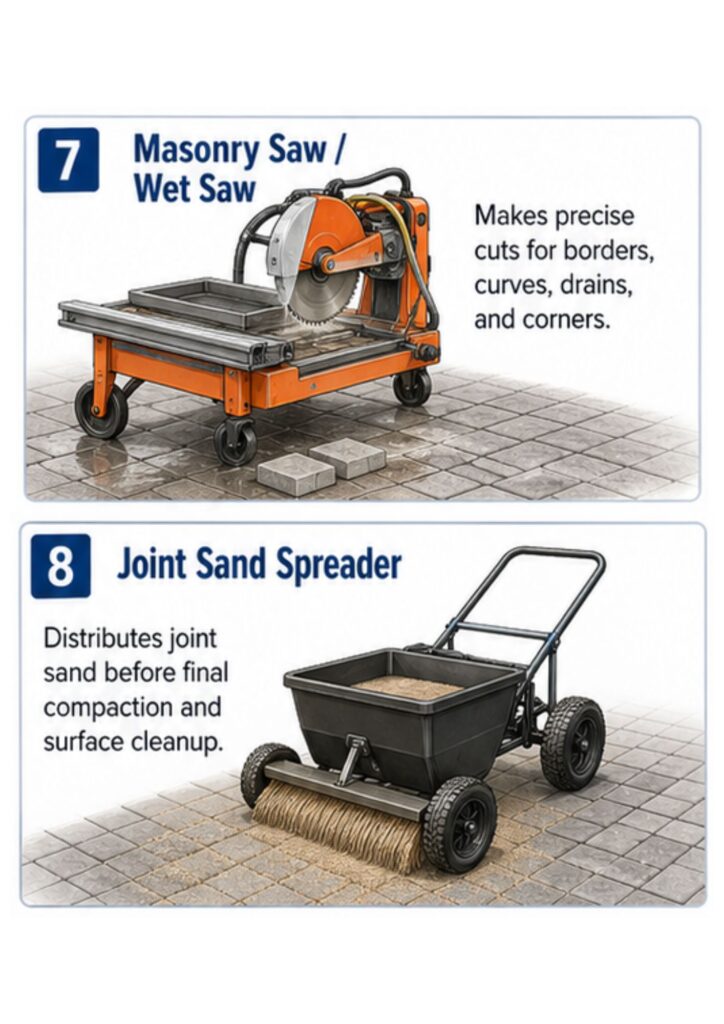
For more precise cuts, installers often use a masonry saw or wet saw. This machine is important around borders, drains, corners, curves, steps, and transitions where each piece needs to fit accurately.
Finally, a joint sand spreader helps distribute sand across the paver surface before final compaction and cleanup. Joint sand fills the spaces between pavers and helps lock the system together. The type of sand, the way it is applied, and the final compaction process all influence the stability and appearance of the surface.
This is why paver machines used in installation do not replace professional skill. They support it. A machine can move gravel, cut pavers, or compact a surface, but it cannot design the drainage plan, evaluate the base, choose the right paver thickness, or decide how to finish a tricky edge around a pool deck or patio.
Paver machines do not replace professional installers!
Paver machines are useful, but they do not replace hardscape professionals. Actually, the more technical the equipment becomes, the more important professional experience becomes. A machine can move, press, cut, compact, or place materials, but it cannot understand the full context of a property.
There is no single set of paver machines that fits every project. The real value is knowing when to use each machine.
This is where many DIY projects get into trouble. The visible part of paver installation looks approachable. A homeowner may think, “How hard can it be?” Then the project starts, and suddenly there is excavation depth, crushed stone, bedding sand, slope, compaction, edge restraint, cutting dust, drainage, joint material, and pattern alignment.
The right contractor understands which tools to use and when to use them. That decision affects cost, schedule, appearance, and durability.
Professional installation protects the investment because pavers are supposed to last. So don’t take any chances; find a professional hardscape contractor you can trust in your area to help you.
And if you are around Sarasota, in FL, we here at JS Brick are ready to offer our help. For more than 20 years, we’ve been helping homeowners achieve their dream hardscape project. Reach out anytime for a free estimate on our services and become one of those homeowners yourself.