Thin stone pavers provide a practical way to update patios, pool decks, walkways, balconies, and other outdoor surfaces without introducing the thickness of conventional paving units. They deliver the texture and visual character associated with natural stone while making it easier to work around doors, steps, coping, drains, and existing concrete.
They are best designed for renovation projects where the homeowner wants a significant visual change but would prefer to preserve a stable surface below, like a previous concrete installation. The reduced profile can be especially useful when elevation is limited.
Still, thin does not mean simple; successful installation depends on the condition of the substrate, the application, the stone, drainage, setting materials, and expected traffic.
And those are all the exact elements we are going to discuss in this article – so keep up with us.
Jump to:
Thin Stone Pavers: What Exactly Are They?
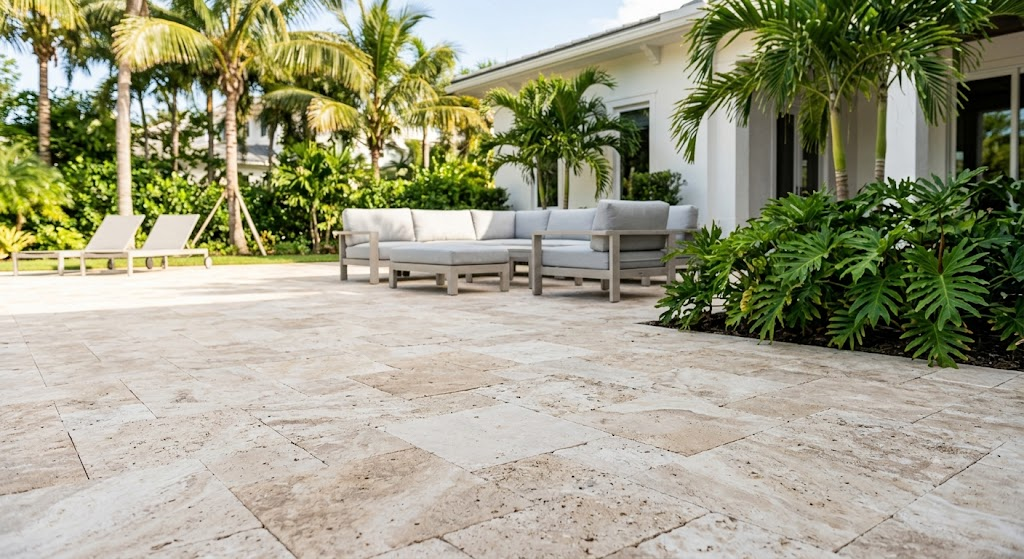
Thin stone pavers are paving units manufactured or cut with a lower thickness than traditional full depth pavers. They may be produced from natural materials such as travertine, limestone, marble, granite, or slate, depending on the supplier and intended use.
The exact thickness varies by product. For that reason, we never recommend choosing a material based on the word “thin” alone. The manufacturer’s technical information should explain where the product can be used, which installation method is required, and whether it is suitable for pedestrian or vehicular areas.
How They Differ From Full-Thickness Pavers
Traditional pavers are commonly installed over a prepared aggregate base and bedding layer. Their depth, shape, edge restraints, and joint system work together to create a stable pavement.
Thin stone pavers are more frequently installed over an existing rigid surface, such as a structurally sound concrete slab. Some products can be placed over a bedding material, while others require an exterior mortar or approved adhesive system.
The Concrete Masonry and Hardscapes Association describes thin paving units used over concrete or cement-stabilized bases, including applications on patios, pool decks, walks, balconies, and similar pedestrian surfaces. Its guidance also distinguishes between systems that use bedding sand and systems installed without it.
This difference matters because a thin paver does not behave like a miniature version of every conventional paver. A product intended for a bonded patio overlay may not have the thickness or installation characteristics required for a driveway.
If you want a broader explanation of materials and applications, visit our guide on what pavers are and how they are used.
Where Thin Stone Pavers Are Commonly Used
Thin stone pavers are frequently considered for concrete patios, pool decks, covered lanais, entry areas, walkways, steps, and balconies. They can also help modernize an outdoor space without forcing a major change in elevation.
Around pools, the reduced thickness may simplify transitions near coping and deck drains. Near a doorway, it may provide more flexibility than a thick paving unit. Even so, every fraction of an inch matters. The combined depth of the stone, mortar, bedding material, and any membrane must remain below thresholds and maintain appropriate clearances.
The existing surface also needs enough slope to move water away from the home. A thin overlay follows the general geometry below it, so a slab with poor drainage usually requires correction before installation.
Advantages and Limitations of Thin Stone Pavers
The main advantage of thin stone pavers is their ability to deliver a substantial design change with a relatively low profile. They can cover worn or visually dated concrete, introduce natural color variation, and coordinate outdoor surfaces with the architecture of the property.
Natural stone can create a refined appearance because each piece has its own texture, veining, pores, and tonal variation. That individuality is part of the appeal. A patio made from natural stone should not look like every piece was printed by the same machine.
How Thin Stone Pavers Should Be Installed and Maintained
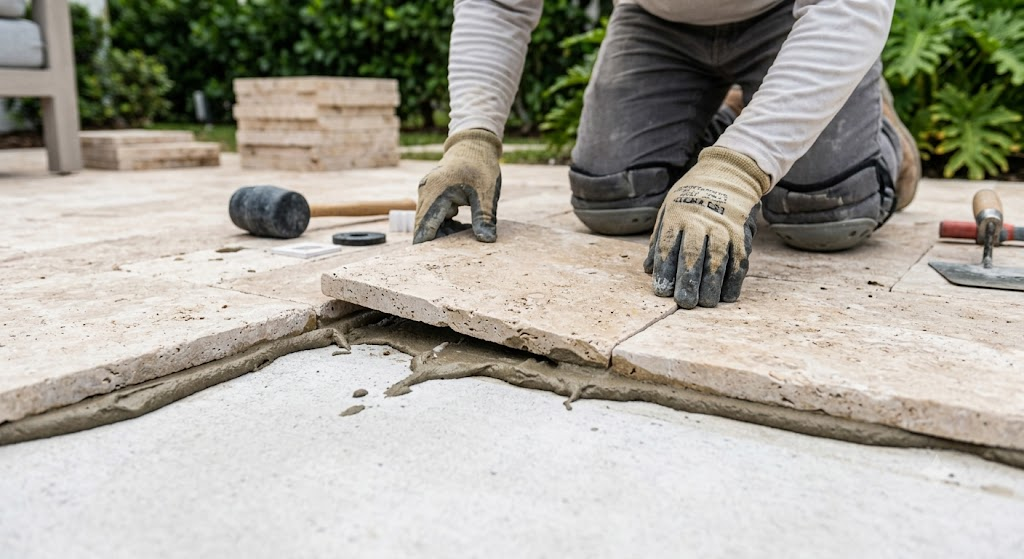
The installation begins with a detailed evaluation of the surface below. We look for cracks, movement, low spots, coatings, contaminants, drainage problems, and elevation conflicts. The installer should also confirm product thickness and the recommended setting system.
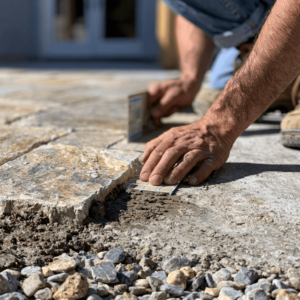
A normal installation over concrete may involve cleaning and preparing the slab, repairing suitable defects, addressing movement joints, planning drainage, applying the specified setting material, placing the stone, and filling or finishing the joints.
Preparing the Substrate
The concrete must be clean and structurally sound. Paint, oil, loose sealers, algae, dust, and deteriorated material can interfere with adhesion.
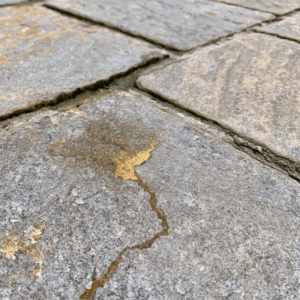
Cracks should be classified before they are treated. A dormant hairline crack and an active settlement crack are very different conditions. Depending on the assembly, movement joints in the concrete may need to continue through the finished surface.
Slope must also be confirmed. Exterior paving should direct water toward an approved drainage area. Thin stone pavers cannot compensate for every low spot or reverse pitch in the slab.
Our complete guide to installing pavers provides additional context about layout, slope, edge restraint, cutting, and joint preparation. The base method may differ for an overlay, but the need for careful planning remains the same.
Choosing the Setting Method
A bonded installation typically uses an exterior mortar system compatible with the stone and concrete. Coverage, mortar selection, joint placement, curing, and expansion details should follow the manufacturer’s requirements.
Some thin paving products use a bedding system over the concrete. CMHA also publishes a broader specification for paver overlays installed over existing concrete or asphalt bases, including pedestrian and vehicular areas. The specification notes that project details should be adapted by qualified professionals.
Either way, drainage remains essential in both methods. Water that enters joints must have a safe route out of the assembly. Trapped moisture can contribute to staining, mineral deposits, biological growth, or bond problems.
Cleaning and Long-Term Care
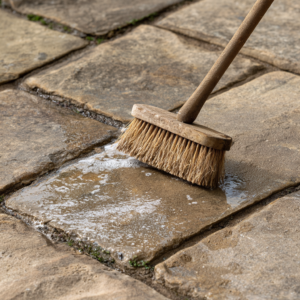
Routine maintenance should begin with sweeping and gentle rinsing. When deeper cleaning is needed, the product should be compatible with the specific stone.
When it comes to natural stone, the Natural Stone Institute recommends neutral cleaners, stone soap, or a mild liquid dishwashing detergent with warm water for general natural stone care. It also warns that excessive cleaner can leave a film and recommends thorough rinsing.
Acidic products should not be used casually, especially on calcium-based stone such as limestone, marble, and travertine. Sealing may help control absorption and staining, but the need for sealer depends on the stone, location, finish, and desired appearance.
JS Brick: Choose a Professional Installation in Florida
In the end, thin stone pavers can be an excellent solution when the material, substrate, and installation method are compatible. But their installation is far from simple; any mistakes and both the pavers and the previous structure below can be ruined beyond repair, turning a dream renovation project into a costly nightmare.
That’s why we always recommend hiring professional hardscape contractors to help you. They can assess your situation and design the best course of action to tackle the project. So find one you can trust around your area.
Here at JS Brick, we evaluate the entire outdoor area before recommending an overlay. And our 26 years of experience have proven that every step needs to be carefully planned in projects of that type. If you happen to be near us in Sarasota, FL, contact our team anytime for a free assessment, material guidance, and a professional installation plan!
We’ll be waiting for you.