This is a question we are getting a lot recently, and one that sounds simple until you start looking at the details. And to answer it, we must first leave one very important thing clear.
A driveway is not just a patio where a car will be parked every once in a while. It is a working surface that receives vehicle weight, turning tires, weather exposure, oil drips, sand, heat, rain, and the occasional delivery truck that somehow always finds the weakest point of the pavement.
So, when homeowners ask us if porcelain pavers are a smart choice for driveways, the honest answer is yes, but only when the right porcelain paver is selected, and the installation is designed for vehicular use. And these are all the elements that we are going to discuss in this article, so read to the end to see exactly what awaits you.
You may also like: How thick are pavers? A complete guide to paver thickness
Jump to:
Are Porcelain Pavers Good For Driveways?
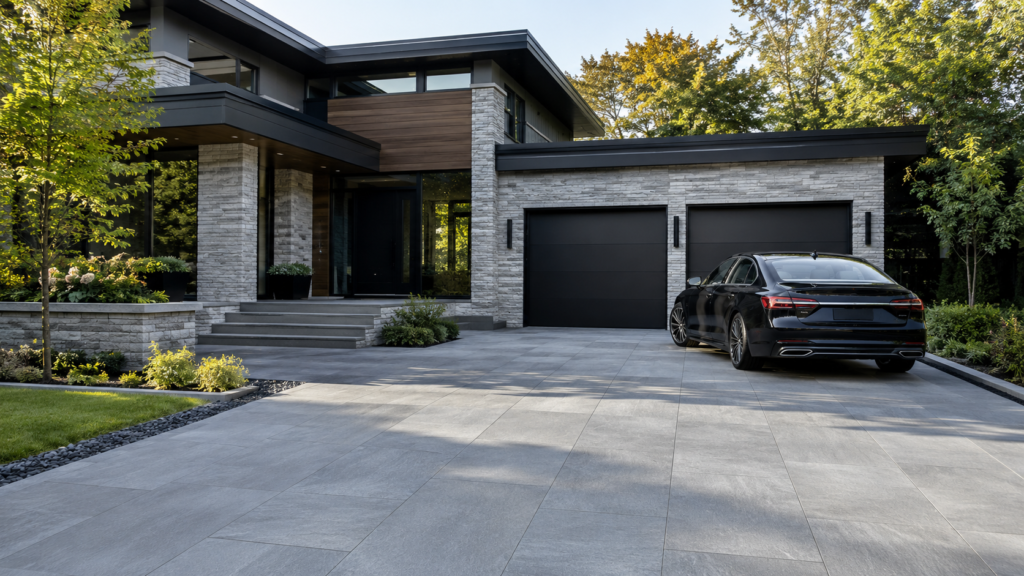
Porcelain pavers can be good for driveways because they offer excellent density, low water absorption, strong stain resistance, and a clean visual finish that many homeowners love. In our experience, the question is rarely whether porcelain is beautiful. The real question is whether porcelain pavers are good for driveways that need to perform every day under real vehicles on real soil.
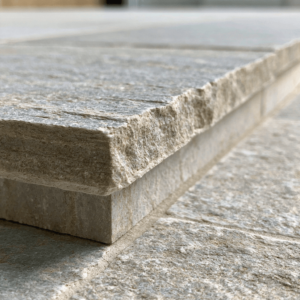
The answer depends on three things: product rating, thickness, and installation method. Outdoor porcelain pavers are different from indoor porcelain tiles. Driveway porcelain pavers are typically thicker, textured, and manufactured for exterior loads. Industry standards matter here because ceramic and porcelain products can be evaluated through recognized testing methods.
For example, ASTM C648 covers the determination of breaking strength for ceramic tile, porcelain tile, and paver tile, which is one reason technical data sheets should always be reviewed before choosing a product. ASTM C648 explains the scope of this kind of breaking strength test.
Porcelain pavers also have practical advantages. They are resistant to fading, staining, scratching, and abrasion, which makes them attractive for outdoor areas that need visual consistency over time. We have already discussed these qualities in our guide to the pros and cons of porcelain pavers, where we explain that porcelain is especially valued for low maintenance and durability in outdoor spaces.
Still, are porcelain pavers good for driveways in every situation? No. They are not the best option when the driveway receives frequent heavy vehicles, poor base preparation, or a product that is too thin for the application.
A driveway is a system. The paver is the visible part, but the base, bedding layer, drainage, edge restraint, joint spacing, and compaction are what decide whether the surface behaves like a professional installation or like a puzzle that gave up halfway through the game.
Benefits of Porcelain Pavers
Porcelain pavers are manufactured from refined clay and minerals fired at very high temperatures. This process creates a dense, hard surface with low porosity. Traditional concrete, brick, and natural stone pavers each have their own advantages. But for driveways, the important point is that porcelain behaves less like a porous masonry unit and more like a dense exterior tile system.
That density helps porcelain resist staining from leaves, dirt, and many everyday spills. It also helps the surface maintain color because porcelain is less likely to absorb contaminants. This is especially useful in areas where sun exposure, humidity, and organic debris can age outdoor materials quickly.
Appearance
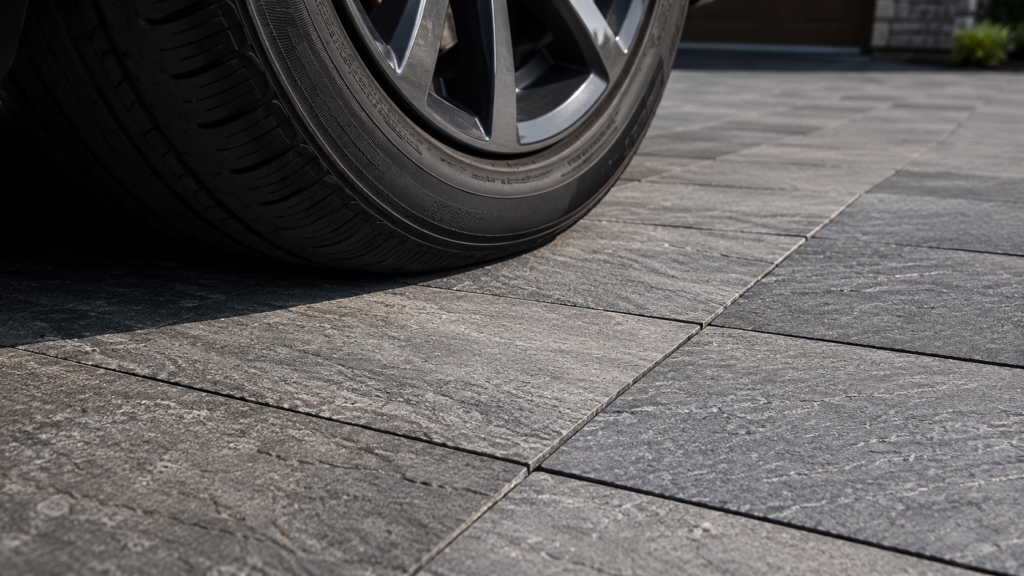
The first major benefit is appearance. Porcelain pavers can imitate stone, concrete, wood, and other textures with impressive realism. This gives homeowners a refined driveway without some of the maintenance concerns associated with porous natural materials.
For modern homes, large-format porcelain pavers can create a sleek, architectural look. For coastal and Mediterranean properties, stone-look porcelain can offer elegance without needing the same level of sealing as some natural stones.
Easy Maintenance
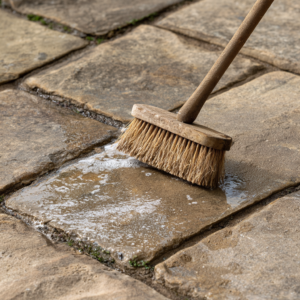
Porcelain pavers are also much easier to clean because their dense surface resists absorption. But be careful! That does not mean they never need care. Driveways still collect tire marks, dust, sand, oil, and organic debris.
Porcelain usually requires less sealing and less intensive maintenance than some other paver materials. When people ask themselves whether porcelain pavers are good for driveways, this is often the point that gets their attention. A beautiful driveway is nice. A beautiful driveway that does not demand your entire Saturday is even nicer.
Weather Resistance
The third big benefit of porcelain pavers is weather performance. As we mentioned, porcelain pavers designed for exterior use can handle rain, sun, and temperature changes very well.
The Tile Council of North America is one of the organizations involved in tile industry standards, testing, and installation resources, which reinforces why homeowners should look for products that follow recognized technical criteria rather than choosing by appearance alone.
Flexibility
The fourth benefit is design flexibility. Porcelain pavers can be used to connect the driveway visually with walkways, patios, and pool decks. This is useful when the goal is a cohesive outdoor design. A driveway does not need to look like a separate utility zone. With the right material, it can become part of the property’s curb appeal.
Why Professional Installation Matters More Than People Think
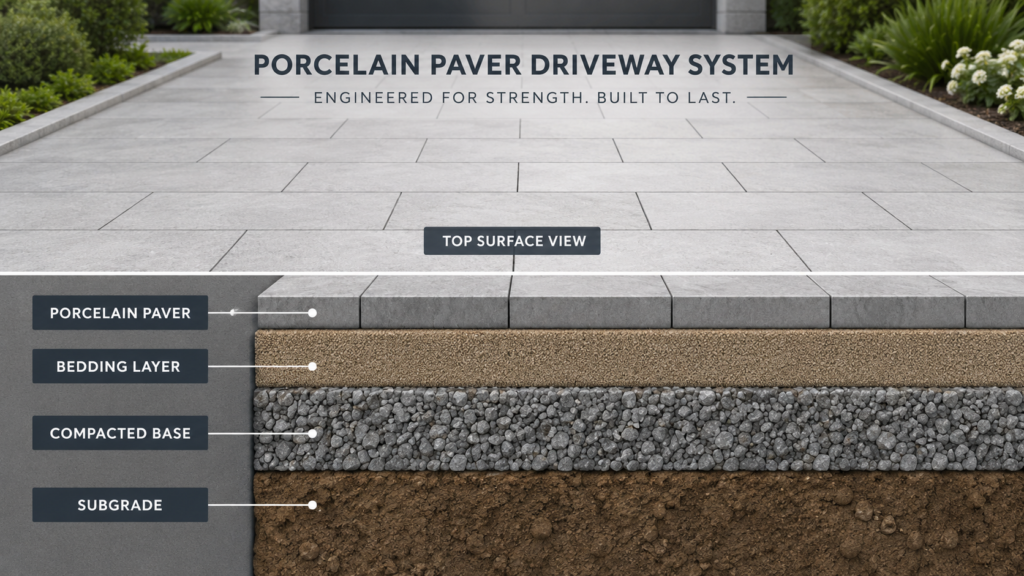
Porcelain pavers are strong, but they are also rigid. That means the base must be stable and properly prepared. A weak base can create movement, hollow spots, rocking, or cracking.
In our article on how to install porcelain pavers, we explain that porcelain pavers are durable once installed, but they require careful handling and professional installation because mistakes can become expensive quickly.
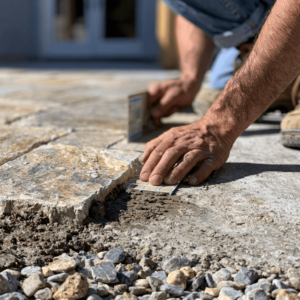
For driveways, the installation must account for vehicle movement, turning pressure, drainage, and edge restraint. The bedding layer needs to be even. The joints need proper spacing. The base must be compacted according to the site conditions. If the driveway has poor drainage, water can compromise the foundation over time.
So, basically, porcelain pavers are only as good as the installation itself. That’s why we always recommend hiring a professional hardscape contractor to help with. So find one you can trust in your area.
And if you happen to be around Sarasota, FL, we here at JS Brick have been providing paver installation, supply, and maintenance services since 2000, with a focus on quality products, professional service, and customer care.
For homeowners who want to understand whether porcelain pavers, concrete pavers, brick pavers, or another material is the right fit, our driveway paver installation service is the natural next step. So reach out for a free estimate on our prices!