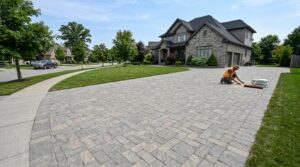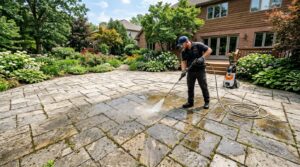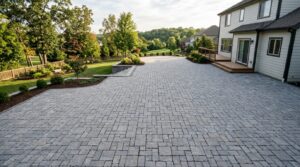
Your paver joints are washing out, sprouting weeds between the stones, or leaving a white film across the surface. Polymeric sand was supposed to prevent all of that. If you’re searching for what is better than polymeric sand, you’re probably watching your patio or driveway deteriorate and wondering whether the product was the problem, or something else was.
We’ve installed and maintained pavers across Sarasota, Venice, Bradenton, and Osprey since 2000. Over those years we’ve pulled out failed polymeric sand and replaced it with the same product, with resin compounds, with plain sand, and sometimes with nothing at all while we fixed what was actually broken underneath. The joint material matters. It’s also the last decision in a sequence that starts with your base, your drainage, and your joint dimensions.
Several alternatives perform better than polymeric sand in specific conditions. Air-curing resin compounds handle wet-weather installation without the activation gamble. Conventional joint sand works where stabilization isn’t structurally required (and costs a fraction of the alternatives). Clean aggregate fits permeable paver systems designed for stormwater infiltration. Plant-based binders suit narrow joints that need flexibility. Which one fits depends on your base, your joint geometry, your traffic, and your climate.
Jump to:
Figure Out Why the Joint Failed First
Replacing polymeric sand with something more expensive doesn’t help if the real problem is underneath the pavers.
Activation error is the failure we see most often in Sarasota. Polymeric sand hardens when water triggers its binder. A sudden afternoon thunderstorm during installation can wash uncured product onto paver faces, leaving haze (distinct from the efflorescence that comes from minerals in the paver itself) that’s hard to remove. Too little water leaves the sand loose at the bottom of the joint. Too much floods it out entirely. The window between “enough” and “too much” is narrow, and Florida’s summer humidity makes it narrower.
Poor drainage below the pavers causes a different kind of failure. When water sits in the bedding layer instead of draining through the base, it softens the joint from below. We’ve torn out patios where the polymeric sand looked intact on top but had turned to paste underneath because the crushed rock base lacked proper compaction or slope. A minimum 1% slope away from structures, combined with a well-compacted base of at least 6 inches for patios, prevents most of that.
Joint geometry also plays a role. Polymeric sand needs adequate depth and width to form a stable plug. Joints narrower than 1/8 inch or shallower than one inch often don’t hold any stabilized material well, regardless of brand.
If your base is shifting, your drainage is poor, or your joints are too tight for the product, a more expensive filler will fail the same way. Fix the foundation first, then pick the joint material that fits. Once you’ve ruled out base and installation problems, the question becomes whether a different joint material genuinely matches your pavement better.
Air-Curing Resin Compounds
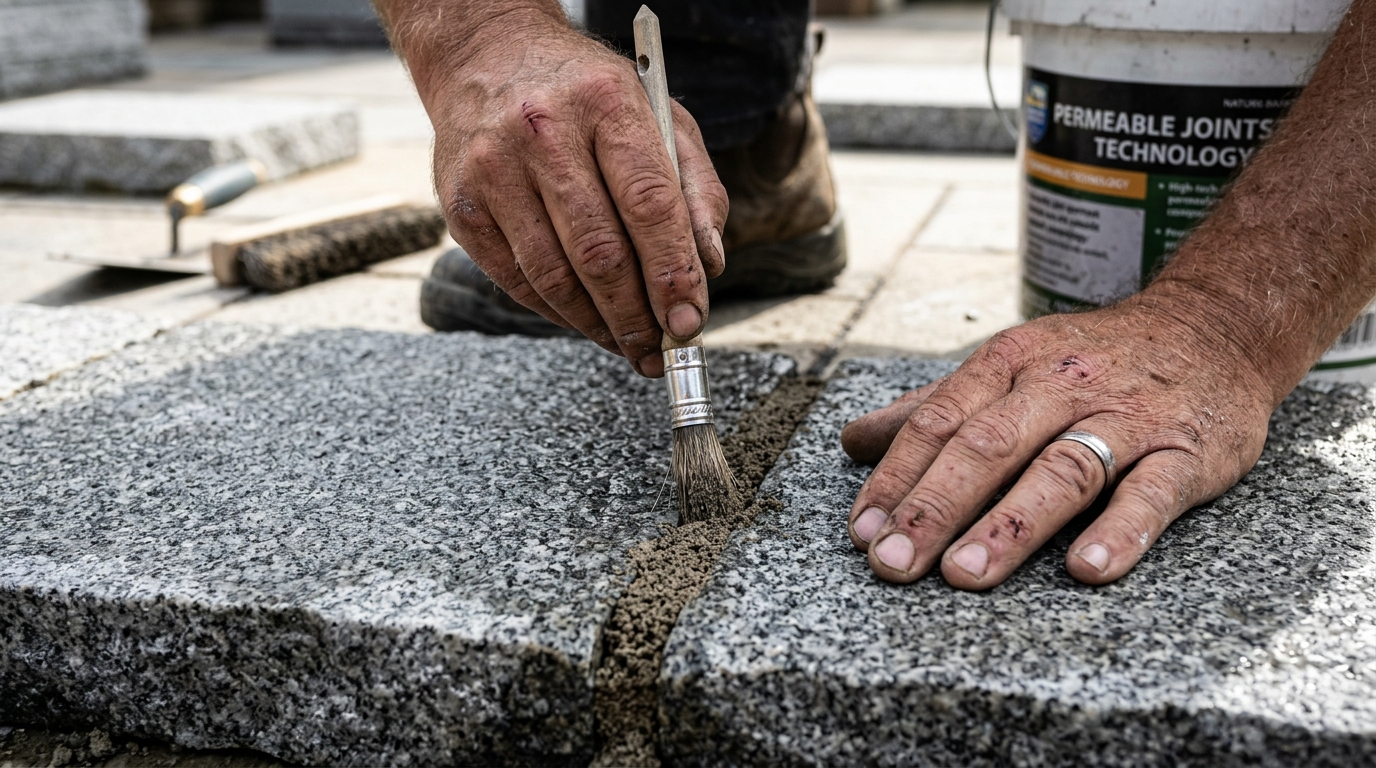
The most common upgrade from polymeric sand is an air-curing resin compound. Products like Gator NITRO and EASYJoint use resin binders that harden through air exposure rather than water activation. That difference matters in Florida: you can install them in damp conditions without the activation-timing gamble that polymeric sand demands.
Gator NITRO uses water during installation only to help push the material into joints. Its technical sheet specifies a minimum joint depth of 20 mm (about 3/4 inch) and permits light residential vehicle traffic on driveways. EASYJoint, by contrast, excludes driveways entirely on its Original product data sheet and requires joints at least 3 mm wide with 25 mm depth for standard paving. These are materially different products sold under a similar label. Always check the specific product’s technical sheet, not just the category.
The limitation that matters most for Sarasota installations: resin compounds require stable paving. If your pavers are shifting because of an inadequate base or missing edge restraint, the resin will crack and separate. Gator NITRO’s warranty explicitly excludes movement of the paving. Resin is a better joint filler for a sound pavement, not a structural fix for a compromised one.
Resin compounds cost more per pound. But if they eliminate the activation failures that force you to strip and redo polymeric sand every couple of years, the installed cost over a decade can be lower. That math only holds when the base is right to begin with. For homeowners whose base and pavers are sound but who don’t need the binding strength of resin or polymeric sand, there’s an option that costs a fraction of either.
When Conventional Joint Sand Is Enough
Plain graded joint sand, with no polymer or resin binder, is a legitimate choice. CMHA’s technical guidance describes joint stabilization as optional for many interlocking concrete pavements. The sand fills the joint, friction between pavers provides interlock, and edge restraint holds the field together. Stabilization reduces sand loss, weed growth, and insect intrusion, but it’s an enhancement rather than a structural requirement.
Conventional sand makes particular sense for projects where you may need to lift and reset pavers, such as around a young tree whose roots are still growing or over utility runs you might access later. Pulling up a paver with resin-bound joints means breaking the bond and potentially damaging adjacent stones. With plain sand, you pop the paver out, fix what’s underneath, and drop it back.
If you want some protection against weed growth and sand washout without committing to a rigid binder, a liquid joint stabilizer applied after filling with conventional sand offers a middle ground. PROSOCO’s Sand Joint Stabilizer consolidates the sand with a water-based polymer that also affects surface water penetration. It has substrate and joint-width restrictions, but it preserves the ability to do spot repairs more easily than a fully bound joint.
Pairing conventional sand with a quality paver sealer adds surface protection and can slow sand displacement from rain and foot traffic. We often recommend this approach for pool deck pavers where barefoot comfort and easy maintenance matter more than vehicular load ratings.
Conventional sand and resin compounds both assume your pavement is designed with solid joints that keep water on the surface. Permeable paver systems work on the opposite principle.
Permeable Aggregate for Stormwater Pavement
If your project needs to manage stormwater infiltration, the answer isn’t a better paver joint filler. It’s a different pavement system. Permeable interlocking concrete pavement (PICP) uses open-graded aggregate in the joints, bedding, and base to let water pass through the entire assembly and into the soil below.
CMHA’s permeable pavement guide specifies washed ASTM D448 aggregates, including No. 8 stone for standard joints and No. 89 or No. 9 for narrower gaps. The aggregate must have less than 2% passing the No. 200 sieve so fines don’t clog the void structure that makes the system work.
Plugging polymeric sand or resin into a permeable pavement defeats its purpose. And dropping permeable aggregate into a conventional paver installation without the supporting base and subgrade design just lets material wash through. These are distinct systems with distinct specifications.
Permeable pavement also requires maintenance. A USGS study monitoring three permeable surfaces in Madison, Wisconsin found that sediment accumulation reduced infiltration over time, with interlocking pavers removing 69% of total suspended solids but losing permeability in the process. Vacuum sweeping partially restored performance. In Sarasota, where afternoon storms carry significant sediment, that maintenance cycle belongs in your plan from day one.
Beyond resin, plain sand, and permeable aggregate, a few other materials show up in joint-filler searches. Each fills a narrow role.
Plant-Based Binders and Mortar
Products like Envirobond’s EnviroSAND combine joint sand with an organic binder derived from plant materials. Envirobond advertises flexibility, repairability, and suitability for narrow joints below approximately 3/8 inch. Their FAQ, however, excludes impervious concrete bases and areas exposed to concentrated runoff, which matters in Florida where heavy rain concentrates water fast. If your pavers sit on a concrete slab or beside a downspout, check those exclusions before buying.
Cement mortar and exterior tile grout come up in searches too, usually from homeowners who’ve seen European stone patios with rigid, fully grouted joints. These materials work in bonded installations where pavers or stone tiles are adhered to a concrete substrate with built-in expansion joints. This approach is standard for porcelain pavers installed over concrete. Grouting a dry-laid, sand-set paver system is a different story: the pavers need to flex slightly with the base, and rigid mortar can’t accommodate that movement. Cracks follow.
Environmental claims about these alternatives vary widely. A 2022 study testing eight joint-grout products found substantial differences in leachate ecotoxicity depending on binder chemistry, with epoxy-based products showing the strongest effects and some polyurethane and modified-cement products showing none. “Resin” and “natural” are broad categories. If environmental impact matters to you, ask the manufacturer for test data on their specific formulation rather than relying on a marketing label.
Knowing what each material does still leaves the question of what it costs, and material price per bag is a poor way to answer it.
What These Alternatives Actually Cost
| Product Category | Approximate Price | Package Size | Cost per Pound |
|---|---|---|---|
| Conventional paver sand | $5 to $10 | 50 lb | $0.10 to $0.20 |
| Standard polymeric sand | $20 to $40 | 50 lb | $0.40 to $0.80 |
| Techniseal SmartSand (specialty polymeric) | $74.99 | 50 lb | $1.50 |
| EASYJoint (air-curing resin) | $55.95 | 28 lb | $2.00 |
| Gator NITRO-X (fine-joint resin) | $85.99 | 27.5 lb | $3.13 |
The conventional and polymeric ranges come from Home Depot’s published guide. The specialty prices reflect current online and distributor listings. Your actual delivered cost will differ based on color, freight, tax, and local availability.
The more useful comparison is cost per square foot installed, including joint preparation, old material removal, labor, waste, and the likelihood of doing it again in five years. A $6 bag of plain sand that washes out every rainy season and an $86 pail of resin compound that lasts a decade aren’t really competing at the bag level. Factor in the cleaning and joint preparation required before any reapplication, and the total cost picture shifts considerably.
Cost comparison only makes sense after you’ve matched the material to the pavement. For our crew, that matching process starts with the specifics of Sarasota’s soil and weather.
How We Match Joint Material to the Pavement in Sarasota
Sarasota’s sandy soil drains fast in most neighborhoods, which is good for paver bases but means loose joint sand can migrate downward if the bedding layer isn’t graded properly. Our standard installation starts with a compacted crushed rock base (6 inches for a patio, 8 to 10 for a driveway) topped with 1 inch of ASTM C33 bedding sand, screeded level. CMHA’s construction guidance warns against stone dust and limestone screenings in the bedding layer because they compact unevenly and can trap water laterally. We follow that guidance.
Joint width and depth determine which filler works. A herringbone pattern with tight 1/8-inch joints on concrete pavers needs a fine-joint product if you’re using resin. Wider joints on travertine pavers (often 3/16 to 1/4 inch) give polymeric sand or standard resin enough cross-section to bond properly.
Florida’s rainy season, roughly June through October, creates a practical scheduling challenge for water-activated polymeric sand. If the forecast shows a 60% chance of afternoon storms (and it usually does from July through September), air-curing resin compounds reduce the risk of a ruined installation. That’s not a reason to pay more for every project. It’s a reason to plan the installation timing or choose the product that tolerates the conditions you’ll actually face.
When a homeowner asks us what’s better than polymeric sand, we walk the site first. We check the base condition, the existing joint dimensions, the drainage slope, and the paver type. The right answer for a driveway that takes daily vehicle traffic is different from the right answer for a backyard patio that sees bare feet and patio furniture.
A free estimate tells you exactly what your patio, driveway, or pool deck needs. Our crew can walk your hardscape and point out what a photo can’t show, from base movement to joint depth to drainage issues that no filler will fix on its own. Reach out before the rainy season tests your base.

Frequently Asked Questions
Can I apply a new joint compound over old polymeric sand?
Remove the old material first. Layering new product over failing polymeric sand traps moisture and prevents the new material from bonding at the correct depth. Most resin compounds require at least 3/4 inch (20 mm) of clean joint depth to perform properly. Use a scraper, oscillating tool, or pressure washer to clear the joints before refilling.
Will an alternative to polymeric sand eliminate weeds permanently?
Stabilized joints reduce weed growth but do not eliminate it. Seeds germinate in surface debris that accumulates on top of the joint, not just inside it. CMHA describes stabilization as reducing the potential for weeds and insects, not eliminating them. Periodic cleaning and sealing extend the weed-free interval significantly.
Is resin jointing safe for a driveway?
Only if the specific product is rated for it. EASYJoint Original’s data sheet excludes driveways, while Gator NITRO permits light residential vehicle use. Engineered systems like ROMEX D1 carry heavier commercial ratings within specific assemblies. Check the product’s technical sheet for your application before purchasing.
Can I use play sand or decomposed granite instead of graded joint sand?
These are not interchangeable. CMHA allows ASTM C144-type sand for paver joints but specifies ASTM C33 bedding sand, and its guidance rejects stone dust and screenings for bedding. Using the wrong gradation can trap water, inhibit drainage, or wash out of joints faster than a properly specified material.
How long should I wait to pressure wash after applying a resin compound?
Cure times vary by product. Gator NITRO requires 28 days before pressure washing. EASYJoint requires at least 14 days. Washing too early can dislodge uncured material from the joints. Follow the manufacturer’s data sheet for the product you used, not a general rule of thumb.
Does polymeric sand haze affect paver sealer performance?
Yes. Polymeric sand haze, the white film left by improperly activated binder, can interfere with sealer adhesion and appearance. If you’re planning to seal your pavers, the joints need to be clean and fully cured first. We typically wait at least 24 hours after joint filling before sealing, and longer in humid conditions.