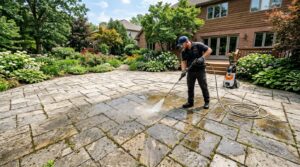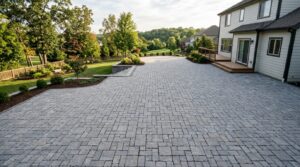
You swept polymeric sand into your paver joints, activated it with water, and now you’re watching the sky. How long does it take for polymeric sand to harden enough to walk on, drive on, or leave alone in the rain?
Most products reach a walkable state within 24 hours. Vehicle traffic needs 48 to 72 hours. Full cure for sealing or pressure washing can take up to 30 days. Those numbers shift based on your product, your joint width, and whether you’re working in full Sarasota sun or under a screened lanai where the air barely moves.
We’ve been installing pavers in the Sarasota area since 2000, and polymeric sand questions come up on nearly every job. Here’s what actually determines your timeline.
Jump to:
Cure Milestones by Product: The Comparison That Matters
Different brands publish different numbers. The table below compares cure milestones from current manufacturer data sheets so you can find your specific product and plan around it.
| Milestone | Techniseal HP NextGel / SmartSand | Sika Evolution | Alliance Gator G2 Products |
|---|---|---|---|
| Foot traffic | Immediate per data sheet | At least 24 hours | Not explicitly stated on TDS |
| Vehicle traffic | 48 to 72 hours | At least 72 hours | Not explicitly stated on TDS |
| Rain resistance | 60 min (emergency); 24 hr recommended | 24 hr; 48 hr for joints over 1/2 in. | 15 min (traditional installs only) |
| Pressure washing / sealing | 30 days typical | Follow label after full cure | Lab tests at 7 and 28 days |
Sources: Techniseal HP NextGel data sheet, Sika Evolution data sheet, Alliance Gator Maxx G2 data sheet.
Notice the range. “Immediate” foot traffic on one product, “at least 24 hours” on another. And Alliance Gator’s 15-minute rain-safe claim applies only to specific traditional installations, not every application or overlay. The label on your bag is the only number that counts for your project.
But those numbers describe different things. “Walkable” and “cured” are not the same stage, and confusing the two is where most problems start.
Why “Set” and “Cured” Are Not the Same Thing
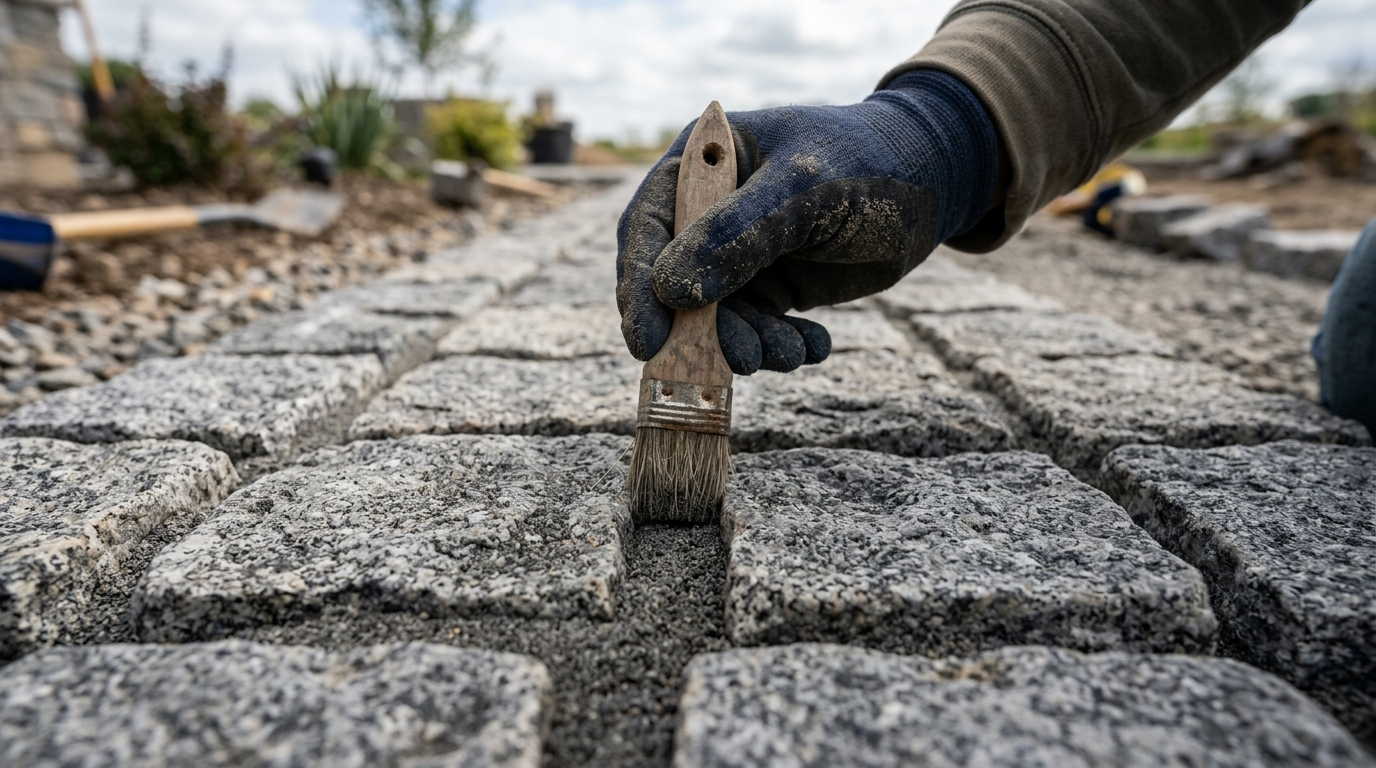
Polymeric sand isn’t concrete. It doesn’t generate heat and set on a fixed chemical schedule. Water activates a polymer binder mixed into the sand grains. As the water evaporates, the binder bonds everything together. Techniseal compares this process to paint drying: the surface skins over first, but the material underneath stays soft longer.
That’s why there are separate milestones, each one representing a deeper level of cure:
- Within minutes to hours, the surface of the joint skins over. It feels firm to a light touch.
- Between 1 and 24 hours (product dependent), the sand reaches a rain-resistant stage. A quick shower won’t wash it out, but a heavy downpour still can.
- Foot traffic readiness ranges from immediate to 24 hours, depending on the brand.
- Vehicle traffic needs 48 to 72 hours across all major products we work with.
- Pressure washing and sealer application should wait 7 to 30 days, until the full depth of the joint has cured.
The gap between “walkable” and “maintenance ready” surprises most homeowners. We’ve seen people pressure wash a patio five days after installation and blow the sand right out of the joints. The surface felt hard, but the full depth hadn’t finished curing. Thirty days sounds like overkill until you’re re-doing a job you already paid for.
In Sarasota’s heat, the early milestones often arrive faster than the label suggests. But our humidity and afternoon rain can stall the later stages, or undo them entirely. Here’s what shifts the clock.
Six Conditions That Change Your Cure Time
The number on the bag is a lab result. Your driveway is not a lab. These are the variables we watch on every installation.
1. Joint width and depth
Wider joints hold more sand and trap more moisture. Sika’s data sheet doubles its rain-protection window from 24 to 48 hours for joints wider than half an inch. A 3/4-inch joint on a herringbone driveway pattern holds substantially more material than a 1/4-inch joint on a tight-fit patio. Plan for the wider joint, not the best-case scenario.
2. Shade and microclimate
This is the factor most installation guides underplay. A pool deck in full sun can surface-set in under an hour. The same product on a north-facing walkway behind the house, shaded by the roof overhang and a privacy hedge, may still feel soft the next morning. Under a screened lanai, airflow drops and humidity stays trapped. We’ve seen cure times nearly double in shaded Sarasota lanais compared to open patio installations ten feet away.
3. Humidity
Polymeric sand cures by losing water. When the air already holds 85% relative humidity (a normal Sarasota afternoon from May through October), evaporation slows. The binder can’t solidify if the water can’t leave. This is why we schedule polymeric sand work for the morning, when humidity is at its daily low, aiming for several hours of drying before afternoon moisture peaks.
4. Overwatering during activation
The activation step has a narrow target. You need water to penetrate at least 75% of the joint depth to activate the binder throughout. Too much water floods the joint, dilutes the polymer, and extends drying. Techniseal’s HP NextGel sheet warns that overwatering lengthens cure and can harm long-term performance. A gentle shower setting on the hose, applied in controlled passes, is what works. A fire-hose blast creates problems.
5. Drainage beneath the paver base
If the crushed rock base under your pavers doesn’t drain, water wicks up into the joints from below. The surface dries in the sun, but the lower half of the joint stays wet. Sika explicitly requires a drainage base and excludes permanently wet settings from its product’s acceptable use. This is one reason we spend so much time getting the paver base right before a single paver goes down. A proper base isn’t just about preventing settling. It’s about letting water leave the entire system, joints included.
6. Temperature
Cold slows everything. Sika requires ambient temperature above 41°F for 48 hours after installation. Techniseal HP NextGel sets the floor at 32°F. In Sarasota, we rarely worry about freezing, but those rare January mornings in the low 40s can slow a cure noticeably. The bigger local factor is extreme heat: a dark paver surface in July can hit 140°F or higher, which dries the top so fast it skins over before water has penetrated the full joint depth. That traps moisture below the surface and can create weak spots that crack out later.
All six variables interact. A shaded driveway with wide joints, installed on a humid afternoon with marginal drainage, is a recipe for extended cure or outright failure. A sunny patio with narrow joints, solid base drainage, and a morning install during dry season? That sand can feel rock-hard by sunset. Proper screeding of the bedding sand layer before paver placement also influences how well joints dry from below.
But the variable that keeps Sarasota homeowners up at night isn’t any of these. It’s rain.
What to Do When Florida Rain Threatens Fresh Joints
Between June and September, afternoon thunderstorms in Sarasota aren’t a maybe. They’re a when. If you’ve just activated polymeric sand and dark clouds are building to the east, here’s the protocol we follow in the field.
The first 60 minutes: highest risk
Rain in the first hour is the worst-case scenario. Uncured sand washes out of the joints, floods onto the paver surface, and can leave a white haze (efflorescence) that takes real effort to remove. If you see a storm approaching and your sand is freshly activated, cover the area with a tarp or plastic sheeting. Even partial coverage over the most recent section helps.
After 60 minutes but before 24 hours: product dependent
Techniseal SmartSand states it can withstand unexpected rain after 60 minutes, though it still recommends a full 24-hour rain-free window. Alliance Gator SuperSand G2 claims rain safety after 15 minutes for traditional installations, but that specific claim applies to defined conditions, not every project type. If a quick shower passes and the sand wasn’t visibly displaced, inspect the joints once they dry. You may be fine.
After 24 hours: usually manageable
By this point, most products have enough surface cure to handle a rain event. The joints may temporarily soften while wet and re-harden as they dry. That behavior is normal and documented by both Techniseal and Sika. If joints stay perpetually soft and never firm up again, the problem is usually poor base drainage, not insufficient cure time.
Post-rain inspection
After any rain during the first 72 hours, check three things:
- Are the joints still full, or has sand washed out onto the paver surface or pooled in low spots?
- Is there white haze or film on the paver faces?
- Does the sand feel firm when you press a screwdriver tip into the joint, or does it push in with no resistance?
If the sand washed out or never firms up, you’re looking at removal and re-application: vacuuming or scraping out the failed material, letting the joints dry completely, and starting over. It’s not catastrophic, but it’s a full day of work you didn’t plan for. That’s why we time polymeric sand application around the forecast with at least a 24-hour dry window, always starting early to bank as many dry hours as possible before afternoon convection builds.
Once the sand has genuinely hardened, the next timing question is about what you can safely do to the surface.
When to Seal or Pressure Wash After Polymeric Sand
This is where most DIY timelines go wrong. The sand feels hard after a couple of days, so the homeowner rents a pressure washer or applies paver sealer that same weekend. Too soon.
Techniseal’s SmartSand sheet restricts pressure washers for 30 days and recommends confirming the joints have fully hardened before sealing or cleaning. HP NextGel lists a typical 7-to-30-day wait depending on climate and installation conditions.
In Sarasota’s heat, joints firm up faster than in cooler climates. But “firm on the surface” and “cured through the full depth” are different things. A pressure washer at 3,000 PSI directed into a joint that’s only cured on the top quarter-inch will blow the soft sand out from underneath, leaving a hollow channel that fills with weeds and washes out in the next storm.
Our standard recommendation: wait at least 30 days before sealing or pressure washing. If you installed during the rainy season or in a heavily shaded area, extend that window. When in doubt, press a thin screwdriver into the deepest part of the joint. If it penetrates easily, the sand needs more time.
There’s one more scenario that changes all of these rules, and it applies to a growing number of Sarasota properties built with stormwater management in mind.
Permeable Pavers Need Different Joint Fill Entirely
Permeable pavers are designed to let stormwater pass through the joints and into an aggregate reservoir beneath the surface. That’s the entire point: infiltration, not joint stability.
The Federal Highway Administration describes permeable interlocking concrete pavement (PICP) joints as filled with open-graded stone chip, not polymeric sand. Joint openings in those systems typically make up 8 to 10% of the pavement surface, and the design aims to drain stormwater within 24 to 72 hours after a rain event.
Standard polymeric sand in those joints would seal them shut and defeat the drainage design. If your property has a permeable paver system, or you’re considering one for stormwater management, the jointing material has to match the engineered design. That’s a conversation about hydrology, not just aesthetics or weed prevention.
Not sure whether your existing pavers sit on a permeable or conventional system? Our crew can check the base and joint material during a site visit and tell you in five minutes.
Frequently Asked Questions
Can I walk on polymeric sand the same day I install it?
Some products allow it. Techniseal HP NextGel and SmartSand permit immediate foot traffic per their data sheets. Sika Evolution requires at least 24 hours. Always check your specific product’s label rather than relying on a general rule, because formulations differ.
How long before I can park on a driveway with fresh polymeric sand?
Plan for 48 to 72 hours minimum. Sika Evolution calls for at least 72 hours. If you have wide joints, cool temperatures, shade, or high humidity, add time. Vehicle weight can displace sand that feels set on the surface but hasn’t cured through the full joint depth.
Will rain ruin my polymeric sand?
It depends on timing. Rain within the first hour carries the highest risk and can wash sand out of the joints entirely. After 24 hours of drying, most products can handle a rain event. The joints may soften while wet and re-harden once dry. Plan your installation around at least a 24-hour dry forecast.
Why is my polymeric sand still soft after two days?
The most common causes are overwatering during activation, persistent moisture from poor base drainage, heavy shade preventing evaporation, or wide joints holding excess water. If the base under your pavers doesn’t drain, the sand stays wet from below no matter how many hours of sun pass above.
When can I apply paver sealer over polymeric sand?
Wait at least 30 days. Techniseal recommends confirming full hardening before applying sealer. In humid or shaded conditions, extend that window. Sealing over uncured sand traps moisture in the joint and can cause the bond to fail prematurely.
Can I use polymeric sand in permeable paver joints?
Generally, no. Permeable paver systems rely on open joints filled with stone chip to allow stormwater infiltration. Standard polymeric sand blocks that drainage path and undermines the system’s purpose. Use only the joint material specified in your permeable pavement design.
Polymeric sand does its job well when the base drains, the joints are properly filled, and the weather cooperates during the cure window. If you’re planning a paver installation or dealing with joints that never quite hardened the way they should, a free estimate lets us walk the surface, check what’s happening underneath, and give you a clear answer before the next rainy season tests everything.