Stone walkway pavers can completely change the way an outdoor space feels. A walkway is one of those features people sometimes treat as purely practical until they realize it is often the first thing guests see, the line that guides movement through the yard, and the detail that quietly ties the whole landscape together.
When stone walkway pavers are chosen and installed correctly, they do more than create a path from point A to point B. They add texture, rhythm, drainage awareness, curb appeal, and that satisfying “this yard finally makes sense” feeling.
So let’s discuss everything there is to know about stone walkway pavers in this article.
You may also like:
Jump to:
Stone Walkway Pavers: A Strong Choice for Outdoor Paths
Stone walkway pavers are popular because they bring together durability and visual character in a way few materials can match. Concrete can be clean and efficient, poured slabs can be simple, and gravel has its charm, but stone walkway pavers create a finished surface that still feels connected to the landscape.
The first technical advantage is modularity. A walkway made with individual pavers has joints that help the surface respond better to small movements in the ground. In areas where moisture, sandy soil, tree roots, and heavy rain can all influence outdoor surfaces, that flexibility matters.
A rigid slab may crack when the base shifts. Stone walkway pavers, when installed over a proper compacted base and bedding layer, can be adjusted, repaired, and maintained more easily over time.
Another important point is drainage. A walkway should never behave like a tiny river aimed at your front door. The base, slope, joint material, and edge restraints all work together to move water away from structures and reduce pooling.
The Concrete Masonry and Hardscapes Association explains that interlocking concrete pavement construction involves key layers such as base material, bedding sand, pavers, and joint filling, which is the same kind of layered thinking that makes a walkway perform well instead of simply looking good on installation day.
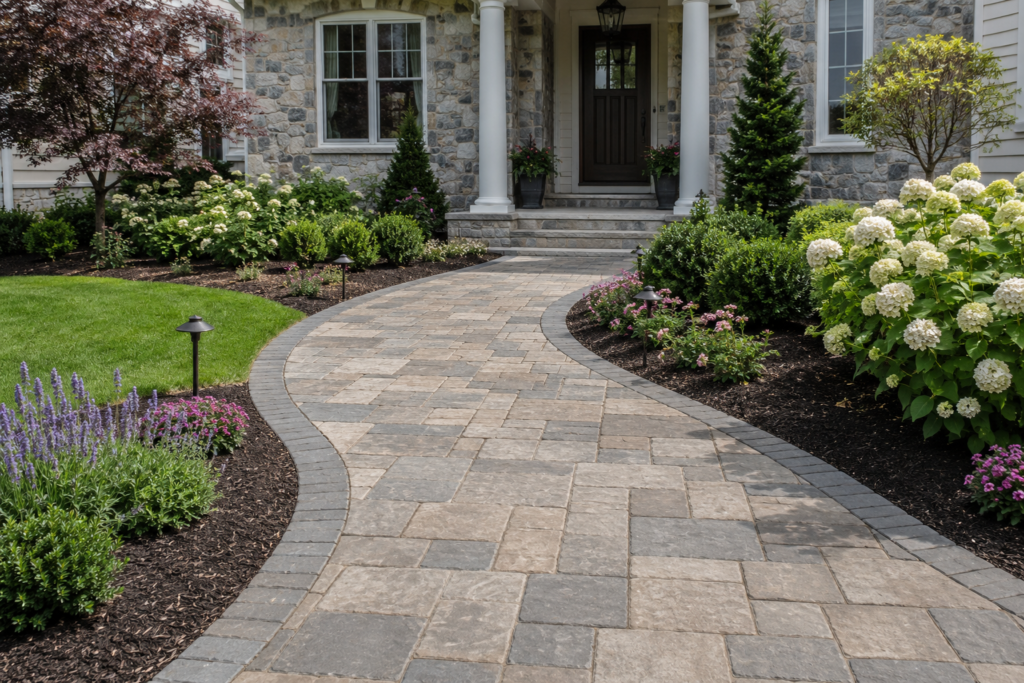
Design is where stone walkway pavers really start to shine. A straight walkway can create a formal entrance. A curved walkway can make a garden feel more natural and inviting. Larger stones can give a clean contemporary look, while smaller units can add texture and movement.
How Proper Installation Affects Stone Walkway Pavers
The beauty of stone walkway pavers depends heavily on what happens underneath them. Most walkway problems do not begin at the surface. They begin with poor excavation, weak compaction, insufficient base depth, bad slope, or missing edge restraints. In other words, the part nobody takes pictures of is usually the part that decides whether the walkway still looks good years later.
A professional installation starts with a site evaluation. We look at soil conditions, expected foot traffic, drainage direction, nearby roots, transitions to driveways or patios, and the final height of the walkway. The goal is to avoid awkward edges, trip points, puddles, and pavers that begin shifting after the first rainy season.
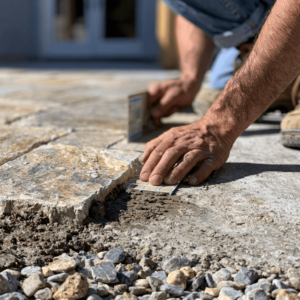
After the layout comes excavation. The area needs to be dug to the right depth so the base, bedding layer, and stone walkway pavers can sit at the correct finished elevation. Then the base material must be installed and compacted in layers.
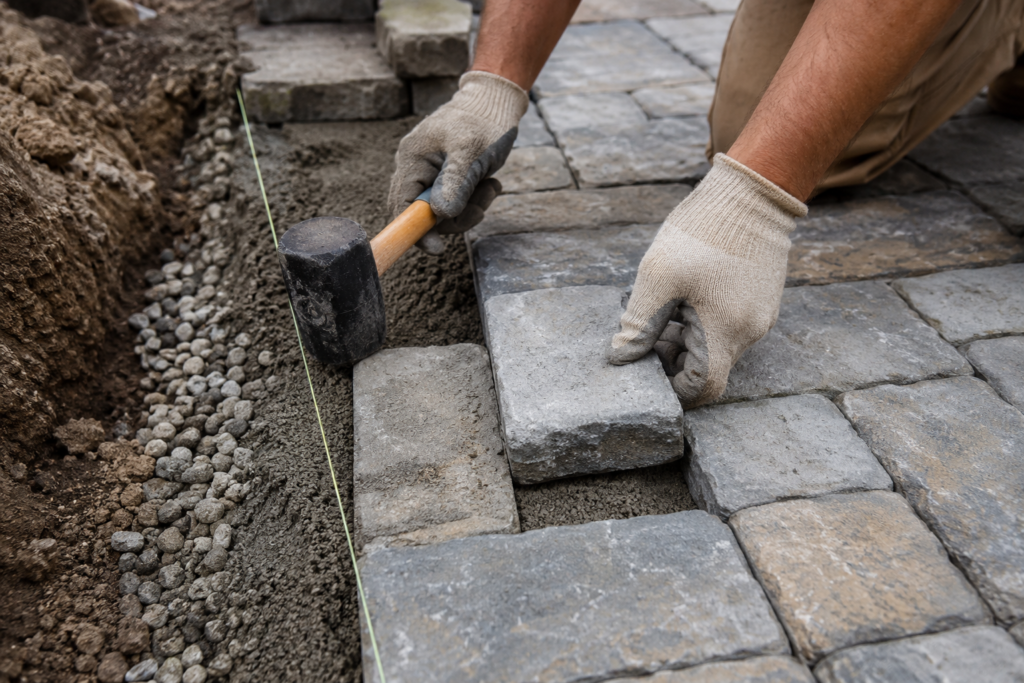
Skipping proper compaction is one of the fastest ways to end up with uneven pavers. A walkway might look perfect for the first few weeks, then little dips begin to appear, and suddenly the path has more waves than a beach day.
Bedding material is also critical. It helps create a level setting surface, but it should not be used to compensate for a poorly prepared base. Then the pavers are placed according to the chosen pattern, cut where needed, restrained at the edges, compacted, and finished with joint material.
For homeowners who want to understand what happens when surfaces begin to move, our article on paver leveling is a useful next read, especially because it explains why uneven pavers happen and how they can be corrected.
Stone Walkway Pavers: Choose the Right Material
Choosing the right material is one of the most important decisions in a stone walkway paver project. Each stone has its own personality, and yes, stones do have personality, at least when someone has spent enough time looking at patios, walkways, driveways, and pool decks.
Some stones feel elegant and formal. Others feel relaxed and natural. Some handle heat beautifully, while others stand out for strength, texture, or color variation. The main point is that stone walkway pavers should be selected according to the way the walkway will be used.
A front entrance usually needs a more polished and consistent look. A garden path can feel more organic and irregular. A sidewalk may need extra attention to drainage and slip resistance. In areas exposed to intense sun or frequent rain, for example, the surface texture and maintenance requirements become even more important.
Here is a practical comparison of common stone options for stone walkway pavers.
| Type of Stone | Main Characteristics | Advantages | Disadvantages |
|---|---|---|---|
| Travertine | Natural limestone with soft tones, a porous texture, and a refined appearance. | Stays relatively cool underfoot, has an elegant look, is good for warm climates, and works well around patios and pool areas. | It can be more porous than other stones, may need sealing, and can be sensitive to harsh cleaners. |
| Limestone | Sedimentary stone with a smooth, classic look and neutral colors. | Timeless appearance, comfortable texture, works well in traditional and modern landscapes. | It can stain if not sealed properly, is softer than granite, and may weather over time. |
| Granite | Dense, hard natural stone with strong resistance and visible mineral patterns. | Extremely durable, excellent for high-traffic walkways, resistant to wear and weather. | Usually more expensive, they can feel visually heavier, and some finishes may become slippery when wet. |
| Slate | Layered stone with rich colors and a textured surface. | Distinctive natural look, good slip resistance when textured, strong visual character. | It can flake in some conditions, color variation can be intense, and it may require careful installation. |
| Sandstone | Grainy stone with warm colors and a natural, earthy appearance. | It has a comfortable and organic look, blends well with gardens, and is available in many tones. | More porous, can absorb stains, and may erode faster in wet or high-traffic areas. |
| Bluestone | Dense stone, often seen in blue, gray, and charcoal tones. | Strong, elegant, versatile, good for formal walkways and outdoor living spaces. | Darker colors can absorb heat, may cost more, and availability varies by region. |
| Flagstone | A broad category of flat natural stones, often irregular in shape. | Great for rustic and natural paths, flexible design options, and strong landscape appeal. | Irregular pieces require skilled installation; joints can be wider, and the surface may be less uniform. |
Hire Professional Help to Deal with Stone Walkway Pavers
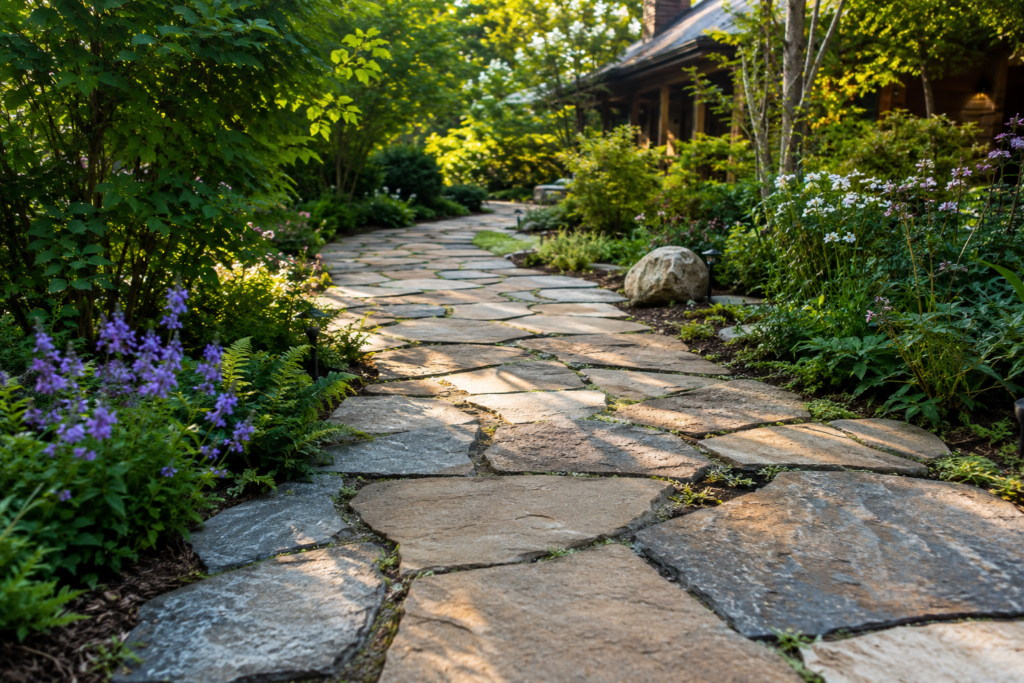
As you can see, things are not as simple as they seem. From installation to choosing the right material, things can quickly get out of hand. That’s why professional help is so important, not only in the case of stone walkway pavers but in any hardscape project.
A professional can evaluate how the walkway will be used, how much sunlight and moisture the area receives, and how the new path should connect with existing patios, driveways, pool decks, or landscape beds. That kind of planning helps the final result feel intentional instead of improvised.
And in case you are around Sarasota, FL, we here at JS Brick bring experience in brick and paver installation and maintenance to every project, helping homeowners create outdoor surfaces that are beautiful, stable, and built with long-term performance in mind.
If you are planning stone walkway pavers for your home, contact us today for a free estimate and let our team help you design and install a walkway that adds curb appeal, function, and lasting value to your outdoor space.