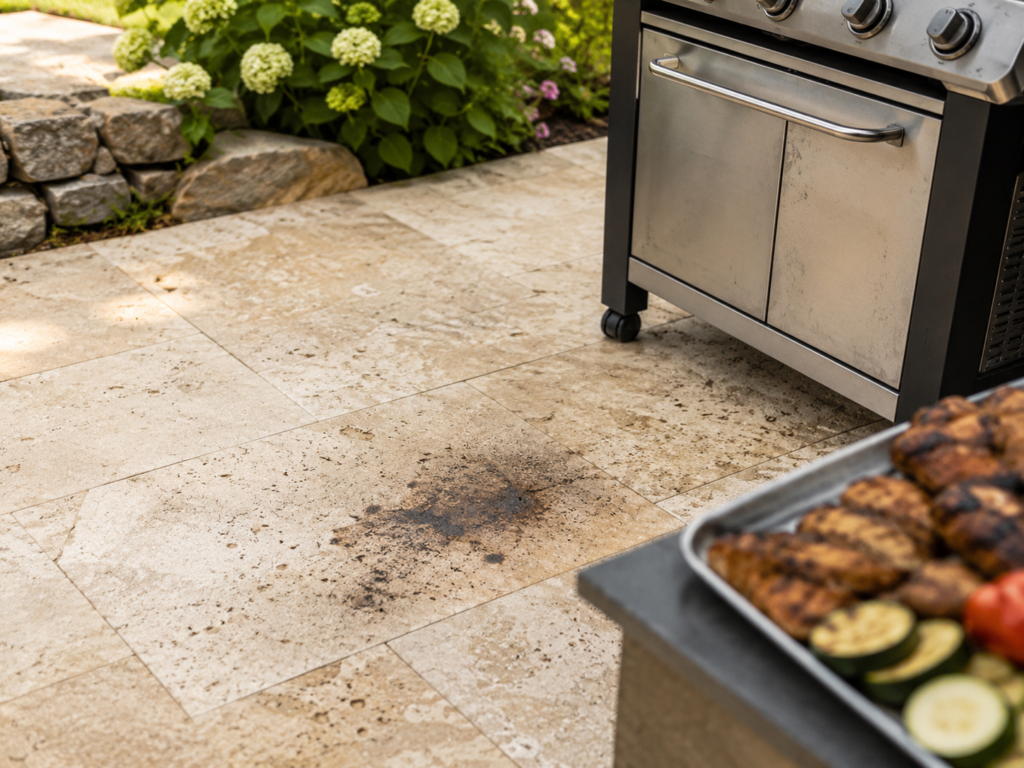
A beautiful outdoor space can handle a lot, but even the most carefully designed patio or walkway can be affected by a dropped piece of food near the grill or a spilled container of oil. These accidents can leave behind dark grease marks that take away from the clean appearance of your stone pavers.
Learning how to get grease out of stone pavers is not just about removing a stain. It is about protecting a valuable outdoor surface while using methods that match the material. Natural stone requires more care than ordinary concrete because harsh chemicals, excessive scrubbing, or improper cleaning techniques can cause permanent damage.
The safest approach is to understand the type of stain, choose the right cleaning method, and restore the pavers without compromising their finish or durability. After all, the goal is not simply to make the stain disappear for a day. The goal is to clean the pavers in a way that keeps the entire outdoor space looking good for years.
Our goal in this article is to present you with the best and safest methods available today to get grease out of stone pavers – so keep up with us.
You may also like: Stone pavers around pool – how to design a safer pool deck
Jump to:
Why are Grease Stains so Difficult?
To understand how to get grease out of stone pavers, we start with the material itself. Stone pavers are beautiful because they are natural, textured, and full of character, but those same qualities also make them more likely to absorb liquids.
Grease does not simply sit politely on top of the surface. It can move into the pores of the stone, darken the area, and cling to the material below the surface. That is why wiping the top with a towel often leaves a shadow behind.
Different stones react differently. Travertine, limestone, marble, sandstone, granite, and other paving stones all have their own density, porosity, and sensitivity. Some stones tolerate cleaning products well, while others can etch, discolor, or lose their finish if the wrong product is used.
The first rule is to avoid panic cleaning. Panic cleaning is when someone grabs bleach, vinegar, a metal brush, or the strongest degreaser in the garage and attacks the stain as if it insulted the family. I understand the emotion, but the stone rarely appreciates the drama.
Acidic products can harm some natural stones, especially calcium-based stones like limestone and travertine. Very aggressive scrubbing can roughen the surface. High-pressure washing, when used too closely, can disturb joints or push water and residue deeper into the installation.
How To Get Grease Out Of Stone Pavers: Step By Step
Start by Absorbing Fresh Grease
For a fresh spill, blot the area gently with a clean cloth or paper towel. Do not rub hard, because rubbing spreads the grease and can push it deeper.
After blotting, cover the stain with an absorbent material such as baking soda, cornstarch, clay-based cat litter, or an oil-absorbent product. Let it sit for several hours, or overnight if possible. Then sweep it away carefully.
This first step matters because porous pavers behave a little like a sponge. The faster you remove excess grease from the surface, the less material is available to soak downward.
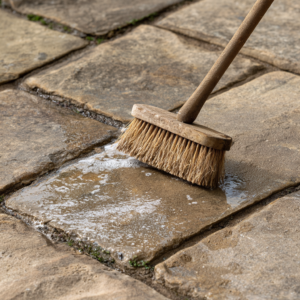
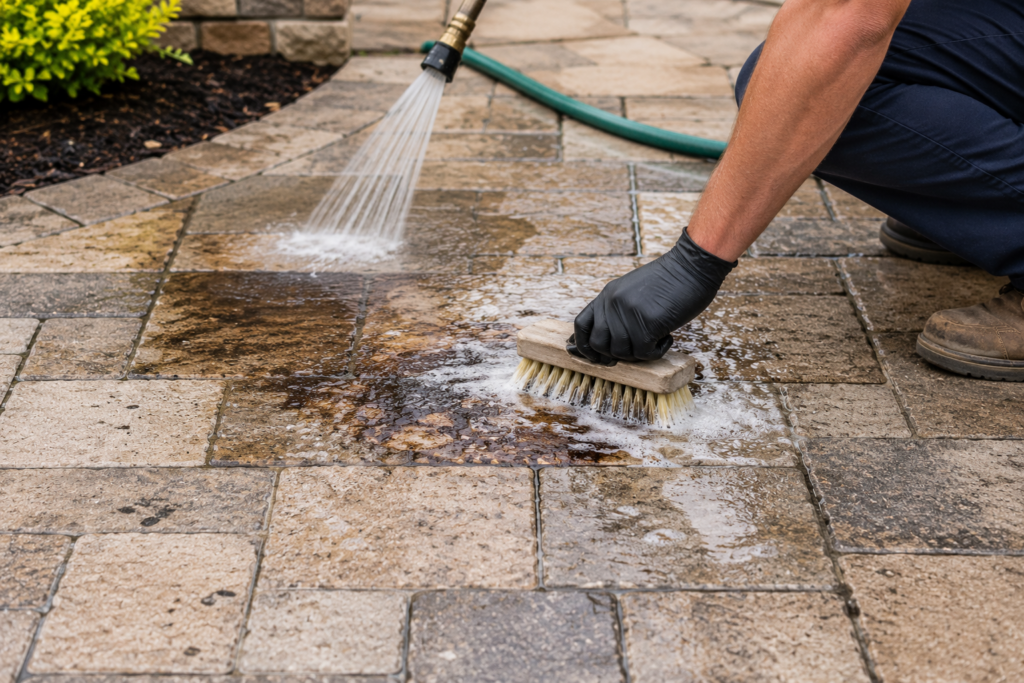
Once the absorbent is removed, wash the area with warm water and a pH-neutral stone-safe cleaner or a small amount of mild dish soap. Use a soft nylon brush, not a wire brush. Rinse thoroughly with clean water and let the pavers dry.
Use a Stone-Safe Degreaser Carefully
If the stain remains visible, a stone-safe degreaser may help. Always read the label and test the product in a hidden area first. I prefer products that are made for natural stone or pavers because general-purpose cleaners can be too harsh.
Apply the cleaner according to the instructions, allow proper dwell time, scrub gently, and rinse completely.
This is where patience beats power. A grease stain might need more than one light cleaning. Scrubbing harder is not the same as cleaning better. It is usually better to repeat a safe process than to damage the stone with one aggressive attempt.
Make a Poultice for Deeper Grease Stains
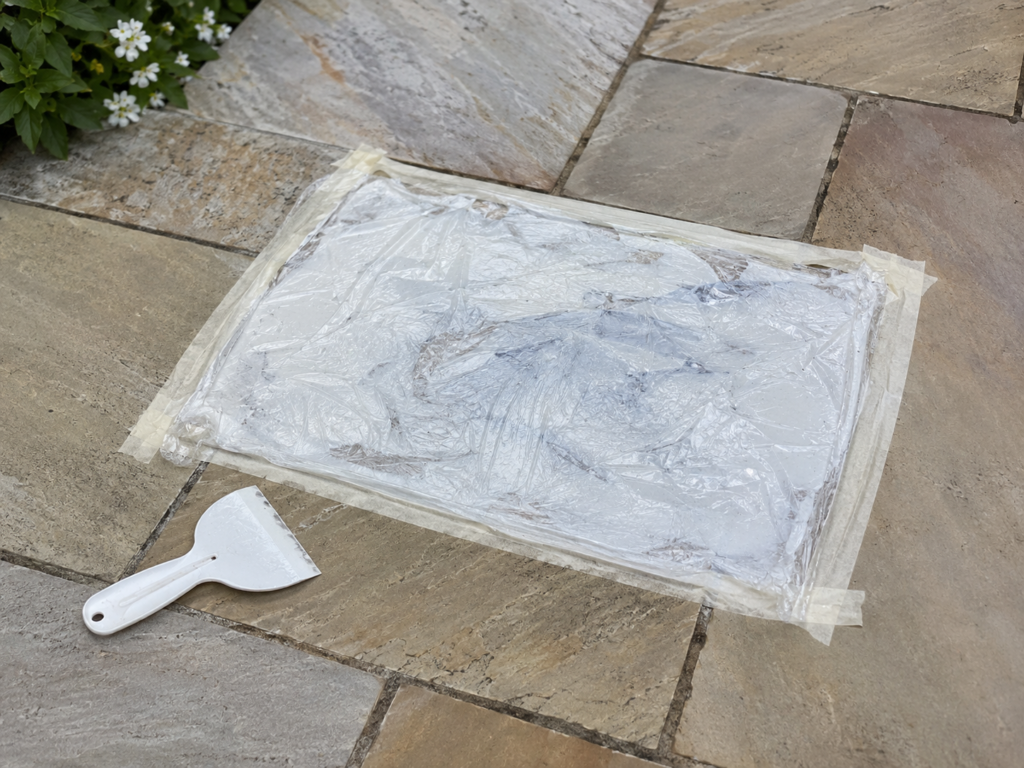
For old or stubborn stains, a poultice is often the most useful method in getting grease out of stone pavers. A poultice combines an absorbent powder with a cleaning liquid to form a paste.
The paste sits over the stain, is covered for part of the process, and then dries. As it dries, it helps draw the dissolved grease into the absorbent material. Stone care guidance commonly recommends leaving a poultice in place for 24 to 48 hours and repeating the process if needed.
For outdoor stone pavers, the exact poultice formula should match the stone and the stain. A common mild starting point is baking soda mixed with water into a thick paste, but deeper oil-based stains may require a commercial stone poultice or a poultice made with a stone-approved degreasing agent.
Spread it slightly beyond the stain, cover it with plastic, tape the edges, and let it sit. After about a day, remove the plastic and allow the paste to dry fully. Then scrape it off with a plastic scraper, rinse with clean water, and let the area dry before judging the result.
What Not to Do When Cleaning Grease From Stone Pavers
A big part of learning how to get grease out of stone pavers is knowing what to avoid. Many outdoor cleaning mistakes come from treating stone pavers like plain concrete.
Natural stone may be strong under your feet, but chemically, it can be surprisingly fussy. I always tell homeowners that stone is a bit like a fancy guest at a barbecue; it can handle the party, but it does not want vinegar spilled on its shoes.
Avoid Acidic and Harsh Cleaners
Vinegar, lemon juice, muriatic acid, and strong acidic cleaners can etch or dull certain stones. Bleach may also discolor surfaces, harm nearby landscaping, and create runoff concerns. Ammonia and highly alkaline cleaners can be risky depending on the stone and sealer.
The safer path is to use pH-neutral cleaners or stone-specific products whenever possible.
Another common mistake is mixing products. Never combine cleaners unless the manufacturer specifically says it is safe. Besides being risky for the stone, chemical mixing can be dangerous for the person doing the cleaning.
Be Careful With Pressure Washing
Pressure washing can be helpful in paver cleaning, but it needs the right pressure, distance, tip, and technique. Too much pressure can remove joint sand, scar the surface, or leave uneven cleaning marks. On older installations, it can also expose loose pavers or weak joints.
Do Not Seal Over a Grease Stain
Sealing can protect pavers, but sealing over grease is like putting a picture frame around the problem. The stain may become more visible, more difficult to remove, or trapped under the coating. Before sealing, the surface should be clean, dry, and free of contaminants.
Let our team help you with professional hardscape maintenance
In the end, getting grease out of stone pavers comes down to acting quickly, using stone-safe methods, respecting the material, and knowing when a stain needs professional care.
Of course, professional help is always recommended because, as you can see, things are not as simple as they seem. So look for a hardscape professional you can trust in your area.
And if you happen to be around Sarasota, FL, we here at JS Brick can gladly offer you that help. We have been serving the area with paver installation and maintenance services since 2000, and our paver cleaning and sealing service helps protect your investment and make pavers last for decades.
So reach out to us anytime for a free estimate on our prices and services!