Stone pavers around pool areas can turn a simple backyard into a space that feels safer, cooler, more comfortable, and much more intentional. But choosing the right pool deck surface is not just about finding something that looks good in photos.
Around a pool, every detail has a job. The material needs to feel pleasant under bare feet, handle constant water exposure, support proper drainage, resist daily wear, and still match the style of the home.
That is why such a project deserves a closer look before any material is chosen. In this article, we will walk through why pavers work so well near pools, which materials are worth considering, how drainage and installation affect long-term performance, and what details make a pool deck feel truly finished.
Read also: Is flagstone cheaper than pavers? Know the truth
Jump to:
Why Stone Pavers Around Pool Areas are so Effective
Stone pavers around pool areas work well because they solve several problems at once. Unlike a plain poured slab, pavers are individual units installed over a prepared base.
That gives the surface flexibility and makes future repairs easier. If one area settles or a piece becomes stained, the affected pavers can often be lifted and replaced without removing the whole deck.
Safety is the first serious point. Pool decks get wet, and wet surfaces need texture, smart material selection, and proper maintenance. Pool areas deserve careful planning to avoid any accidents. There are laws that define residential pool safety features and barriers, and all of them state that the deck should be considered part of a complete pool environment, not just a decorative border.
Stone pavers around pool spaces also give homeowners strong visual control. Travertine, for example, can create a relaxed resort look. Limestone can feel bright and natural. Marble can look refined when used in the right finish and shade.
In our guide on pavers around the pool, we explain why lighter shades are usually smarter in hot places, especially where full sun hits the deck for hours.
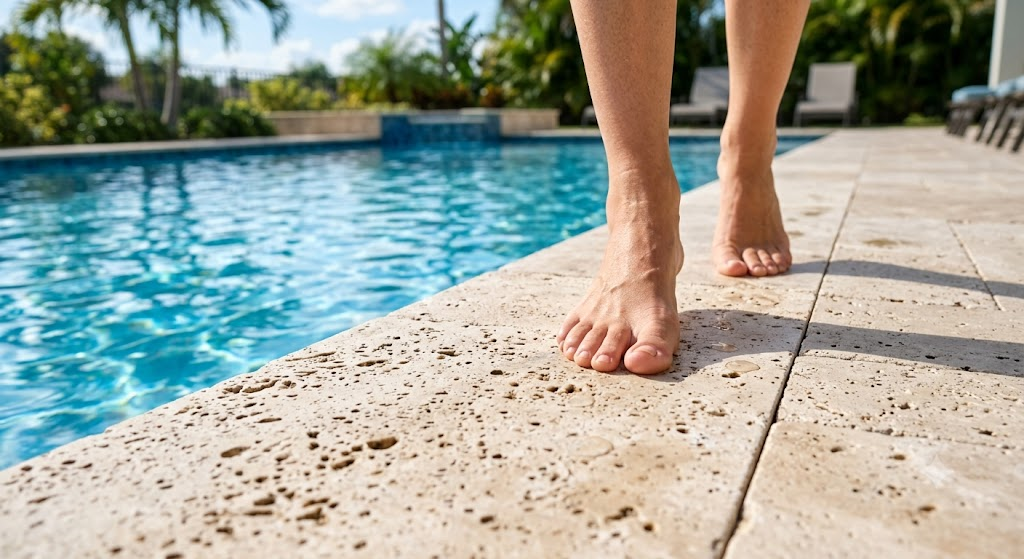
Another aspect worth mentioning is that pool decks are one of the few hardscape surfaces people use barefoot all the time. That changes the rules.
A driveway can be bold and dark. A walkway can be dramatic. Stone pavers around pool areas, however, need to feel comfortable for the feet.
Heat depends on material, color, finish, shade, maintenance, and joint material. Dark pavers often absorb more heat than lighter options. In our article about pavers that don’t get hot, we discuss how light-toned travertine, limestone, and porcelain can help improve comfort in sunny spaces.
The same logic applies to sealers and joint fillers. A glossy finish or dark joint sand can change how the surface feels underfoot, so small choices matter.
Choosing the Right Material
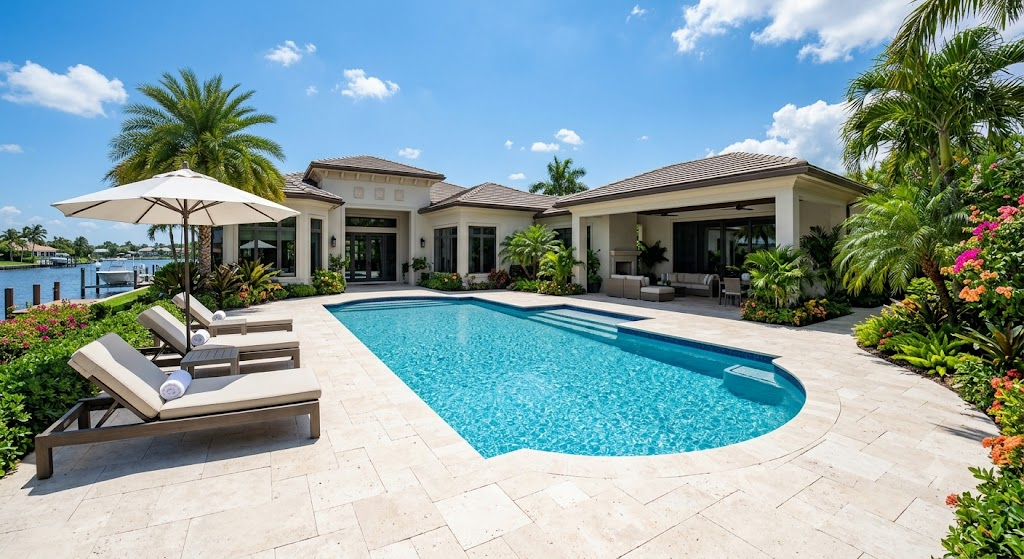
Choosing stone pavers around pool spaces starts with one simple question: How will this area be used? The best material is the one that matches the home, the climate, the budget, the maintenance expectations, and the way people actually live.
Travertine is popular because it has natural beauty and tends to stay comfortable compared with many darker or denser surfaces. Its texture can also support grip when wet. Limestone has a softer natural appearance. Marble can look bright and luxurious, but it needs a thoughtful conversation about finish, sealing, and daily care.
Concrete pavers deserve attention, too, even when homeowners search for stone pavers around the pool. Many people use that phrase to describe a stone look rather than the exact material. Concrete pavers can be manufactured to resemble natural stone while offering reliable design flexibility.
The Concrete Masonry and Hardscape Association notes that many pavers have textured surfaces that provide slip resistance for wet areas like pool decks, which is why performance should always be part of the selection process.
Porcelain pavers are another strong option for modern pool environments. They are dense, clean-looking, and available in finishes that imitate stone with impressive realism.
Drainage and Base Preparation: Decide Durability
However, the paver surface is what homeowners see. The base is what makes the surface last. So just as important as the material of choice is the installation itself.
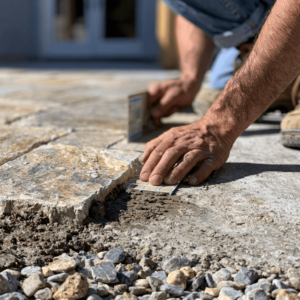
A good installation depends on excavation, compaction, base material, bedding layer, slope, edge restraints, and joint filling. Around a pool, drainage becomes even more important because water is constant. Splashing, rain, irrigation, and cleaning all put moisture on the deck.
Stone pavers around pool areas should be sloped correctly so water moves away from structures and does not collect in low spots. Puddles can encourage algae, make the surface slick, and weaken the installation over time.
Professional Help With Stone Pavers Around Pool
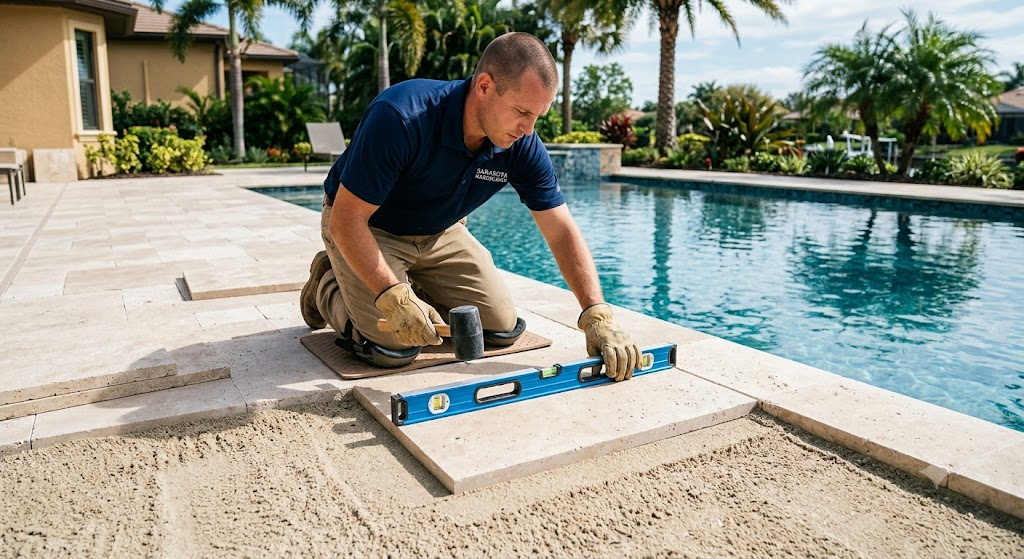
As you could see, there are a lot of variables involved in a stone paver installation around a pool. There are many criteria to be determined, and things can quickly get too complex for DIY enthusiasts.
Therefore, to make sure all these criteria are met, the best course of action is to hire professional hardscape contractors to help. Paver installations are not as easy or simple as people make them out to be, and that goes double for paver installations around pools.
So don’t take any chances and find a professional you can trust in your area to help you. And if you happen to be around Sarasota, FL, you can always count on us here at JS Brick.
We have been helping homeowners with paver installation and maintenance services since 2000, with a focus on quality products, exceptional service, and customer care. Our pool deck paver installation service is built around helping homeowners choose suitable materials and then installing them with no subcontractors involved.
When we design stone pavers around pool projects, we look at the whole backyard. We study sun exposure, existing coping, screen enclosures, drainage points, doors, steps, landscape beds, outdoor kitchens, and the general rhythm of the space.
A pool deck is not just a border around water. It is a walking path, a lounging area, a gathering place, and often the unofficial dining room for half the year. So reach out to us for a free estimate and let’s start planning your project!