Learning how to clean stone pavers correctly protects more than their appearance. The cleaning method can affect the stone finish, joint material, sealer, color, drainage, and long-term condition of the installation.
A product that removes a stain quickly can also create permanent etching or discoloration when it is incompatible with the stone. So doing it safely is as important as doing it effectively.
Here at JS Brick, we approach stone paver cleaning by identifying the material and the source of the problem first. Dirt, algae, rust, oil, leaf stains, efflorescence, and mold require different treatments. Reaching for the strongest chemical in the garage is rarely the best opening move.
In this article, we want to share our 26 years of paver maintenance experience with you and teach the best and safest methods to take care of your pavers. So let’s get to it!
Jump to:
How to Clean Stone Pavers: Routine Maintenance
Routine cleaning is the safest way to prevent grime from becoming embedded in the stone. It also gives homeowners an opportunity to notice loose joints, drainage problems, stains, weeds, or surface damage before the issue spreads.
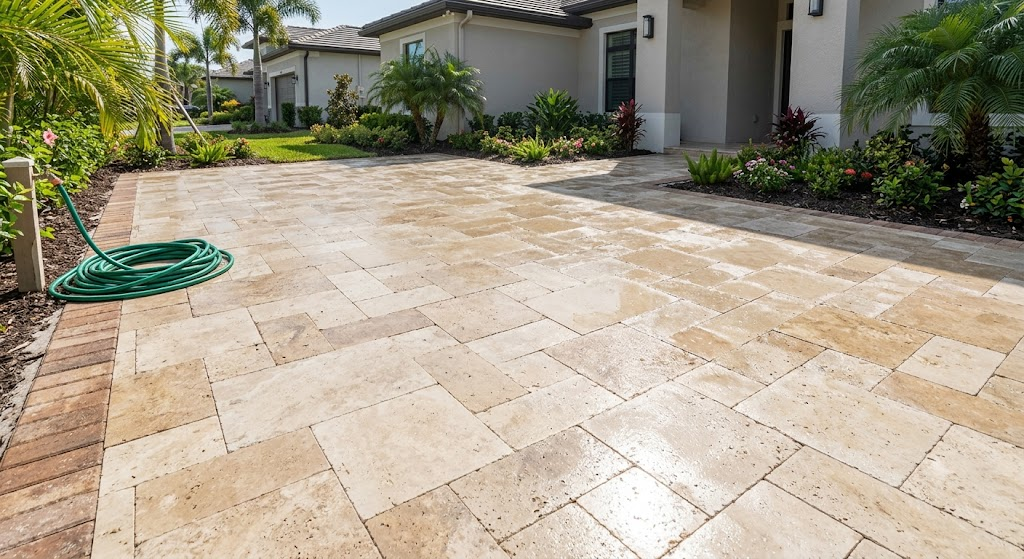
For most installations, regular maintenance begins with dry debris removal, followed by water and a stone-safe cleaner when needed.
Remove Leaves, Sand, and Loose Debris
The first step in learning how to clean stone pavers is surprisingly low tech. Sweep the area with a soft- or medium-bristle outdoor broom.
Leaves, soil, mulch, food crumbs, and sand can hold moisture against the surface. Organic debris may also release tannins that leave brown stains, particularly on light and porous stone.
Debris should be removed from corners, furniture legs, planters, drains, and low areas. If the patio has joint sand, aggressive sweeping directly into the joints should be avoided. The objective is to remove loose material without emptying the spaces that help stabilize the paving system.
A leaf blower can be useful when operated at a moderate setting. It should not scatter joint sand across the yard or force debris deeper into drainage openings.
Homeowners who want a broader maintenance overview can review our frequently asked questions about pavers, cleaning, and sealing.
Rinse With Clean Water
After sweeping, rinse the surface using a garden hose. Begin near the structure and work toward the drainage outlet, provided the patio was designed to slope in that direction.
A normal rinse can remove dust, pollen, and light soil without exposing the stone or joints to aggressive pressure. Water should not be directed beneath loose edges or forced into open cracks.
This is also a useful moment to observe drainage. Water that remains in low spots may encourage algae and organic growth. Recurring puddles can indicate settlement, clogged drains, or an insufficient slope.
Use a Neutral Stone Cleaner
For general cleaning, choose a pH-neutral cleaner that is approved for the specific natural stone. The Natural Stone Institute recommends a neutral cleaner, stone soap, or a mild liquid dishwashing detergent with warm water. It advises using the cleaner at the recommended concentration, since excess soap can leave streaks or a film.
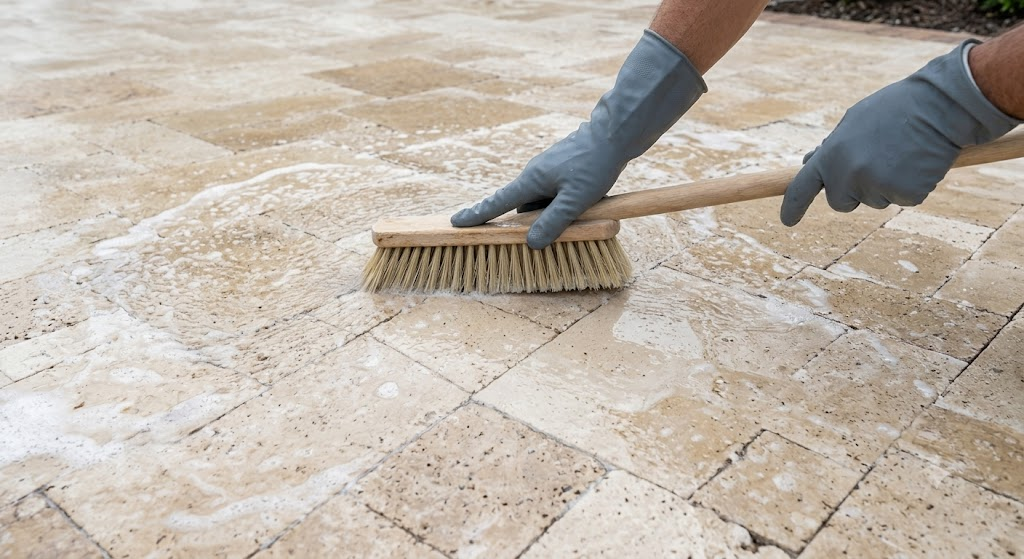
Apply the solution to a manageable section, allow the recommended dwell time, and agitate it with a soft-bristle brush. Do not allow the cleaner to dry on the surface.
Rinse thoroughly and repeat only when necessary. Working in smaller areas helps prevent uneven cleaning marks on warm or sunny days.
By following these steps, honestly, 80% of your job will be done. If you regularly focus on this preventive maintenance cleaning, you will rarely have to deal with any difficult stains and dirt.
And next, let’s discuss what to do with those.
Cleaning Specifics on Stone Pavers
Organic Growth
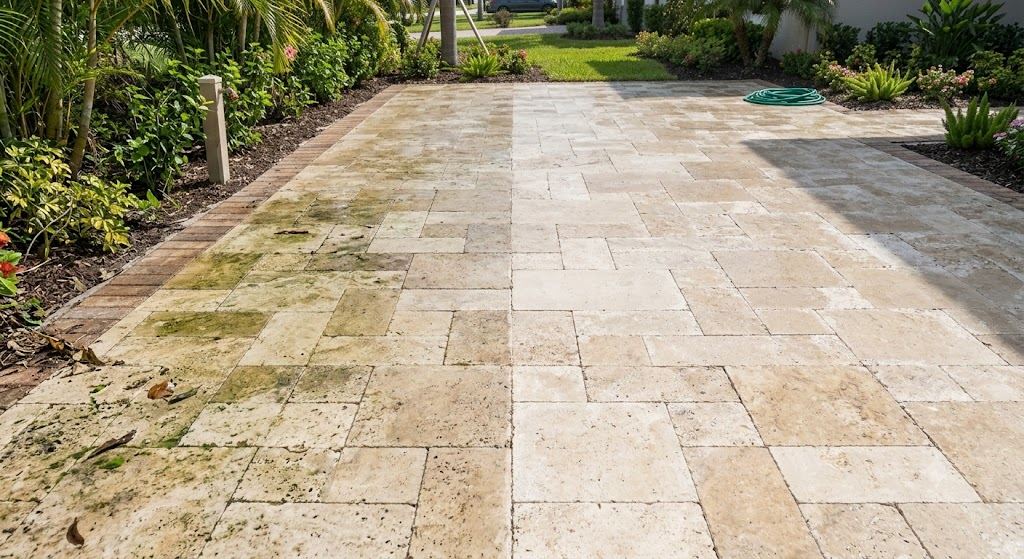
Algae, mold, and similar growth thrive where moisture, shade, and organic matter remain on the surface. Pool decks, areas beneath trees, and patios beside dense landscaping may require more frequent attention.
Begin with sweeping, wetting the area, and applying a stone-compatible cleaner intended for organic growth. Agitate gently and rinse thoroughly.
Household bleach is sometimes suggested for outdoor cleaning, but it should not be used without checking compatibility, concentration, nearby landscaping, metal fixtures, joint material, and sealer. Strong solutions can lighten surfaces, affect vegetation, or damage surrounding materials.
Our guide on how to clean algae from a concrete patio provides additional context about organic growth, although natural stone requires material-specific precautions.
Improving drainage, trimming vegetation, moving planters periodically, and removing leaves can reduce the conditions that allow algae to return.
Oil and Grease
Fresh oil should be absorbed rather than spread. Use an absorbent material suitable for outdoor surfaces, then remove it carefully.
Once oil penetrates a porous stone, surface scrubbing may not be enough. A poultice can sometimes draw the contaminant out of the pores. The correct solvent and absorbent material depend on the stain and stone.
In our experience, oil-based stains usually darken stone and generally need to be chemically dissolved so the source can be flushed or rinsed away. For this reason (and because solvents require careful handling), deep oil stains are often better assessed by a professional.
Rust and Mineral Deposits
Rust can come from metal furniture, fertilizer granules, irrigation water, tools, or corroding fixtures. General patio cleaners may have little effect because the discoloration is caused by a metal compound.
A rust remover should be explicitly labeled as safe for the stone. Many common rust and masonry cleaners contain acids that can etch limestone, marble, and travertine.
White deposits also require identification. They may be residue from hard irrigation water, salts transported by moisture, cleaner film, or joint material. Treating every white mark as the same problem can make it worse.
When the source is unclear, test the proposed method in an inconspicuous location or request professional cleaning.
Pressure Washing, Sealing, and Long-Term Protection
Pressure washing can be useful, but it is one of the most common ways homeowners accidentally damage pavers. Excessive pressure can erode softer stone, create visible cleaning lines, remove joint material, damage sealers, and force water into vulnerable areas.
The correct equipment setting depends on the stone, surface finish, age, joint condition, and cleaning objective.
Some dense and properly installed stone pavers can tolerate controlled pressure washing. Softer, weathered, flaking, or highly textured materials require more caution.
Begin with the least aggressive method. Use a wider fan tip, maintain a consistent distance, and keep the wand moving. A concentrated stream should never be used to carve dirt out of the surface.
Directing water straight into the joints can remove sand and reduce lateral support. If joint material is lost, it may need to be replenished after the surface dries.
If you prefer a lower-pressure approach, you can consult our guide to cleaning paving stones without a pressure washer. Our article on cleaning concrete pavers before sealing also explains the sequence of debris removal, inspection, cleaning, scrubbing, rinsing, and drying. Although concrete and natural stone are different materials, the methodical preparation process remains relevant.
JS Brick: Professional Cleaning Services for Hardscape Projects
In the end, knowing how to clean stone pavers begins with restraint. The safest sequence is to identify the stone, identify the stain, begin with a gentle method, and increase treatment strength only when necessary.
But, at the end of the day, nothing beats the experience of a professional hardscape contractor. So your best course of action is to find a professional you can trust in your area to help you.
And if you happen to be around Sarasota, FL, we here at JS Brick can gladly provide that help for you. Since 2000, our focus has remained on quality workmanship, professional service, and outdoor surfaces that are easier for our customers to enjoy and maintain.
Contact our team today for a professional and free evaluation!