Installing stone pavers over concrete can transform a plain, dated slab into an outdoor surface with more texture, character, and visual depth. It may also reduce demolition, debris removal, noise, and disruption when the existing concrete is stable enough to remain in place.
However, this overlay should be thought of as a shortcut that works in every situation. The concrete underneath must be evaluated carefully, the finished elevation must be planned, and water needs a reliable path away from the property.
In the end, stone pavers over concrete end up being a completely different hardscape system. The stone is the visible element, but the slab, setting material, joints, edges, transitions, and drainage details determine how well the finished surface performs.
So, before choosing this method, homeowners should understand when it works, how it is installed, and which conditions can turn an attractive idea into an expensive repair. And that’s exactly what we propose to discuss in this article.
You may also like: What are pavers? All your paver questions answered
Jump to:
Stone Pavers Over Concrete: Two Main Factors

As we mentioned, stone pavers over concrete can be installed successfully when the existing slab is structurally sound, stable, and properly sloped. The Concrete Masonry and Hardscapes Association recognizes concrete paver and bedding sand systems installed over existing concrete bases as a viable option, although project-specific design remains essential.
So before deciding if that’s what you want, you need to consider two factors.
1. The Existing Slab Must Be Worth Keeping
The first one is not whether the stone will look good. It probably will. The important question is whether the concrete deserves to become the foundation of the new surface.
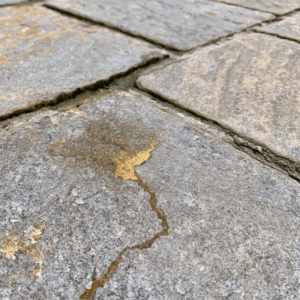
Minor hairline cracks may be manageable, but extensive settlement, severe spalling, broken edges, or sections that move independently can indicate deeper structural problems. Covering unstable concrete rarely corrects the original issue. It simply gives the problem a much nicer outfit.
A professional inspection should identify active cracks, low areas, drainage problems, surface contamination, and signs of movement. Our advice is that existing concrete should be in excellent condition, without significant cracking or deterioration, before pavers are installed over it.
When a concrete installation has failed because of soil movement, tree roots, erosion, poor preparation, or improper drainage, you can see how simply putting more things on top of it will not deal with the main problem, right?
In these cases, removing it and rebuilding the base may provide a more reliable result.
2. Finished Elevation Requires Careful Planning
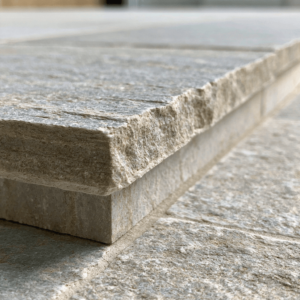
Installing stone pavers over concrete raises the final surface. Even a thin paver combined with mortar, sand, or another setting layer can affect door thresholds, steps, siding clearances, pool coping, drains, and connections to nearby walkways.
We recommend confirming that the space between the slab and any doorsill can accommodate the total thickness of the new assembly. This measurement should happen before materials are purchased.
In some projects, installers can select thinner overlay pavers, modify transitions, adjust drains, or carefully grind limited high spots. In others, there is simply not enough vertical clearance. A beautiful patio that blocks a door, creates a tripping hazard, or sends rainwater toward the house is not much of an upgrade.
How Stone Pavers Over Concrete Are Installed
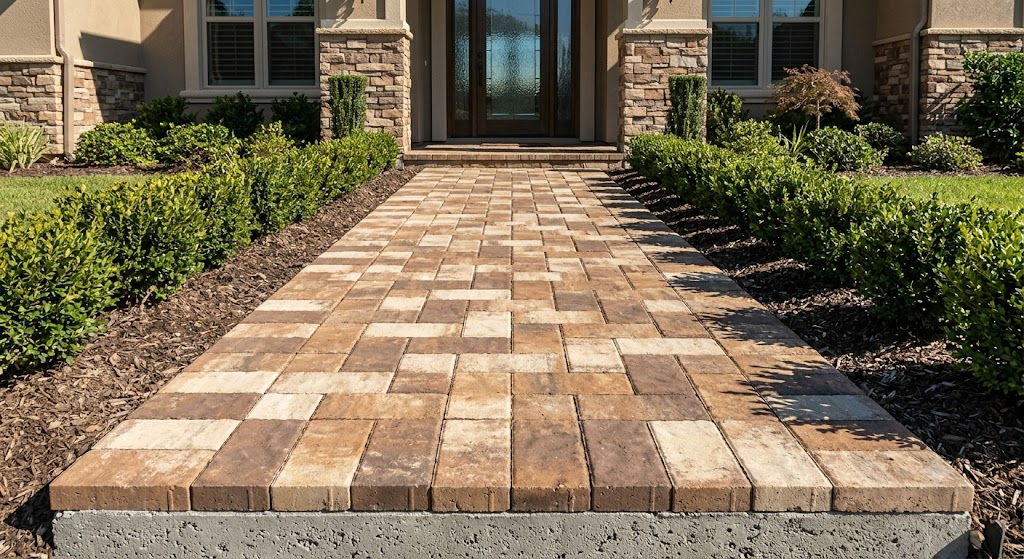
The correct method for installing stone pavers over concrete depends on the condition of the slab, the stone type, the expected traffic, the surrounding elevations, and the manufacturer’s specifications, but common approaches include mortar set, dry mudset, and sand set systems.
Surface Preparation Comes First
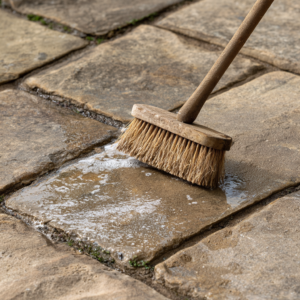
The concrete must be thoroughly inspected and cleaned. Dirt, algae, oil, loose coatings, sealers, and deteriorated material can prevent proper bonding or create an unstable bedding surface.
Cracks and control joints should also be evaluated rather than casually hidden. Depending on the system, some joints may need to remain reflected through the new surface or receive specific treatment. Installing directly over an unresolved moving crack can eventually transfer that movement into the pavers or their joints.
The slab should also maintain an appropriate slope. Our guide on how to level the ground for pavers explains why paved areas require deliberate grading rather than a perfectly flat surface. Even though an overlay uses concrete instead of a traditional gravel base, water still needs to move toward a safe outlet.
Drainage Cannot Be an Afterthought
Water can pass through joints between pavers. Once it reaches the concrete, it must be able to leave the assembly instead of remaining trapped below the stone.
In general, paver overlays over concrete may require vertical drain holes protected with geotextile, particularly near the upslope side of a header. The exact design varies according to the installation, but the objective is consistent. Moisture needs a controlled exit.
Standing water below the pavers may contribute to staining, mineral deposits, joint deterioration, algae growth, or bonding problems. Florida rain can be impressive enough without giving it permanent accommodations beneath the patio.
Bonded and Sand Set Systems
A bonded installation uses an exterior-rated mortar or approved adhesive to attach the pavers to the concrete. This method can produce a stable surface for patios, walkways, pool decks, and similar applications when installed according to product specifications.
However, a bonding layer should not be treated as a universal leveling compound. Dry mudset generally follows the shape of the slab below it and should not be expected to correct a substantially uneven patio.
In these cases, a sand set overlay is a much better option, as it places a controlled bedding layer over the concrete before the pavers are installed.
Open sides require dependable edge restraints because the units need lateral support to remain interlocked. Our article about edging a paver patio explains how perimeter restraint prevents spreading, joint loss, and gradual movement.
Start With a Professional Assessment
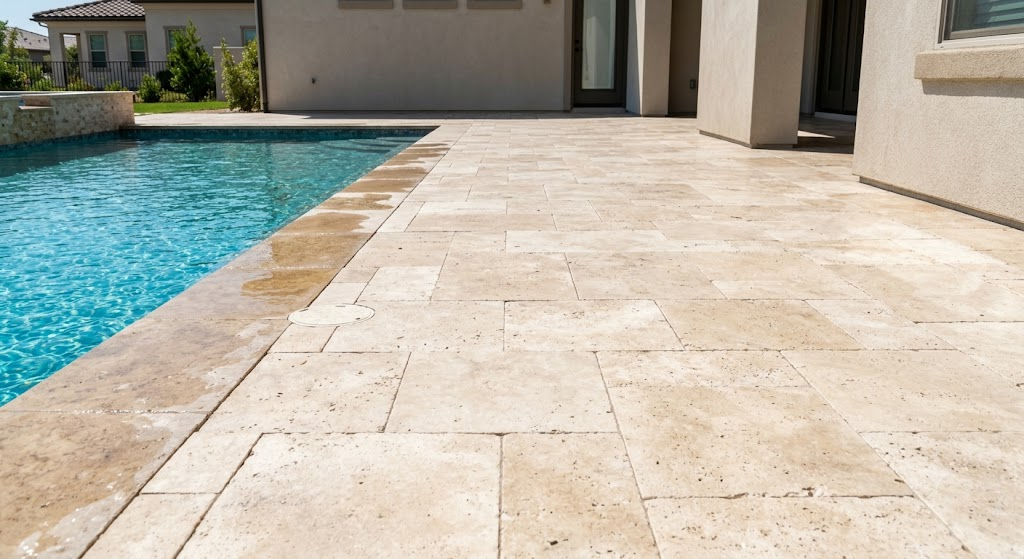
As you could see, things are not as simple as “putting some pavers on top of it.” Things are much more complex, and any successful project begins with an accurate assessment of the existing slab.
Stone pavers over concrete can create a durable and attractive outdoor surface, but their performance depends on preparation, elevation planning, drainage, edge restraint, compatible materials, and experienced installation.
Your best course of action, as it always is when it comes to hardscape, is to hire a professional to help you. So find a contractor you can trust near you.
And if you happen to be around Sarasota, FL, don’t worry. We here at JS Brick have been providing paver installation and maintenance services for the past 26 years, focusing on quality products, professional workmanship, and dependable customer care.
So contact us today for a site evaluation and a free estimate on our services. We will examine the existing surface, discuss suitable materials, and determine whether an overlay or complete reconstruction offers the best long-term solution for the property!