Porcelain pavers over concrete can be one of the smartest ways to transform a tired patio, driveway, pool deck, or outdoor living area without starting from zero. Instead of tearing out a slab that may still be structurally useful, the existing concrete can sometimes become the foundation for a cleaner, more modern, and much more elegant surface.
That sounds simple, and in many cases it is, but this is one of those projects where the details decide whether the result looks fantastic for years or starts causing headaches after the first heavy rain. The most important detail here is this: the right material is the 2 cm porcelain paver variation.
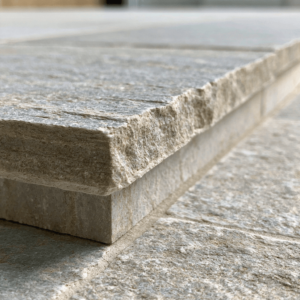
This thickness is designed for outdoor use and offers the strength, stability, and durability needed for exterior spaces. Thin indoor porcelain tile should not be treated as a substitute, because outdoor paver installations deal with different loads, weather exposure, moisture, and surface demands.
But there’s more more to the installation of porcelain pavers over concrete, so let’s dive in.
Read also: Pros and cons of porcelain pavers – a complete guide
Jump to:
Can You Install Porcelain Pavers Over Concrete?

Yes, porcelain pavers over concrete can be installed successfully, as long as the concrete is stable, properly sloped, clean, and suitable for the method being used.
The concrete slab should not be treated as a magic shortcut. It is a base, and like any base, it needs to be inspected before the porcelain pavers are placed on top. The main reason homeowners consider porcelain pavers is efficiency. If the old concrete is already there, removing it can add cost, mess, noise, and time to the project.
Porcelain pavers are especially attractive because they are dense, durable, and resistant to stains, fading, and moisture. That makes porcelain pavers over concrete a natural fit for patios, walkways, pool surroundings, and covered outdoor areas.
Still, the slab must cooperate. If the concrete has deep cracks, hollow spots, major settling, or poor drainage, installing the pavers without correcting those problems is like putting a beautiful rug over a broken floor. It may look nice for a moment, but the issue underneath is still there, quietly planning its comeback.
That’s why a good project starts with a diagnosis. The concrete should be checked for movement, drainage, surface contamination, and height limitations near doors, steps, drains, and pool coping. Even a strong porcelain paver installation can fail if water gets trapped underneath or if the finished elevation creates a trip point.
Here’s the Best Installation Method

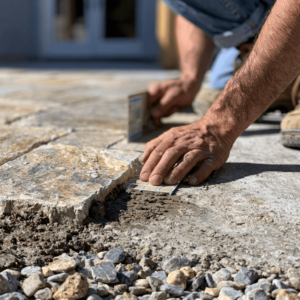
When installing porcelain pavers over concrete, the best method is to set the porcelain pavers in place with mortar or construction adhesive. This creates a more stable, secure, and long-lasting installation than loose setting methods when the project is being built over an existing concrete slab.
Mortar installation is often the preferred choice because it bonds the porcelain pavers to the concrete and creates a firm finished surface. Construction adhesive can also be used in the right situations, especially when the product is rated for exterior use and compatible with both concrete and porcelain.
In either case, the goal is the same: the pavers need to be properly fixed in place so the surface does not shift, rock, or become uneven over time.
This method is especially useful for patios, walkways, pool decks, and outdoor living spaces where homeowners want a clean and permanent finish. However, the success depends on proper preparation. The slab must be clean, free of loose debris, free of coatings that prevent bonding, and dry enough for the selected mortar or adhesive system to perform correctly.
This approach also helps avoid some of the issues that can happen with sand-set methods over concrete. Sand can trap moisture when placed over a non-draining slab, and trapped water can create instability. Pedestal systems can be useful in specific projects, but for a typical residential concrete overlay, mortar or construction adhesive is usually the better path when the slab is suitable.
Why 2 cm Porcelain Pavers are the Correct Choice for Concrete Overlays?
Because the 2 cm porcelain paver variation delivers a combination of beauty and performance that many outdoor materials struggle to match. Porcelain can mimic stone, wood, cement, and modern architectural finishes, while offering a dense surface that is easy to clean and resistant to many common outdoor stains.
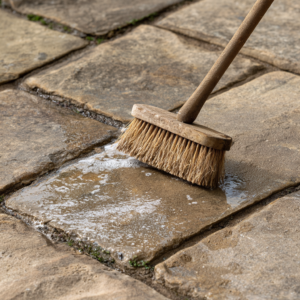
For homeowners who want a refined look without constant maintenance, porcelain pavers over concrete can be a very practical upgrade. Regular sweeping and occasional washing with mild soap and water can handle most routine cleaning.
Another advantage is design consistency. Concrete slabs often crack, discolor, or look plain over time – whereas porcelain pavers can refresh the entire space with a more intentional design. Large format porcelain pavers can create a sleek, contemporary look, while stone-inspired finishes can make a patio feel warmer and more natural.
Hire Professional Help to Install Porcelain Pavers Over Concrete

All in all, it looks simple once finished, which is exactly why professional work can be easy to underestimate. The clean surface hides layout planning, cutting, leveling, drainage correction, product selection, and edge treatment.
That means the goal is not just to place porcelain pavers over concrete. The goal is to create an outdoor surface that feels level, drains properly, complements the house, and keeps its beauty through daily use and for years to come.
All these aspects require a lot of careful planning; that’s why we always recommend never doing this kind of installation in a DIY capacity and always look for a professional hardscape contractor you can trust to help you.
Here at JS Brick, we have been helping homeowners in Sarasota, FL, and surrounding areas choose the right paver solution for their space, style, and long-term plans for the past 20 years. So if you happen to be in this area, give us a call anytime for a free estimate on our prices.
If this sounds like the upgrade your patio, walkway, or pool area needs, our team can inspect the existing surface and build a result that looks beautiful without turning the process into a puzzle.