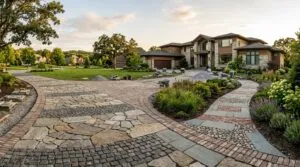
You’ve started looking at pavers for a driveway, patio, or pool deck, and now every search returns product catalogs, stock photos, and material names you didn’t expect to compare. The choices are real. But so is what no catalog shows you: the 10 to 14 inches of crushed rock, bedding sand, and compacted subgrade that decide whether your pavers stay level or start sinking after the first rainy season.
We’re an in-house crew based in Sarasota, installing and maintaining hardscape across Venice, Bradenton, Nokomis, and Osprey since 2000. No subcontractors, no middlemen. What follows is what we’d tell you standing in your yard before any contract gets signed.
Jump to:
What Pavers Are and What They Are Not
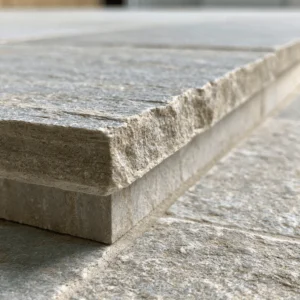
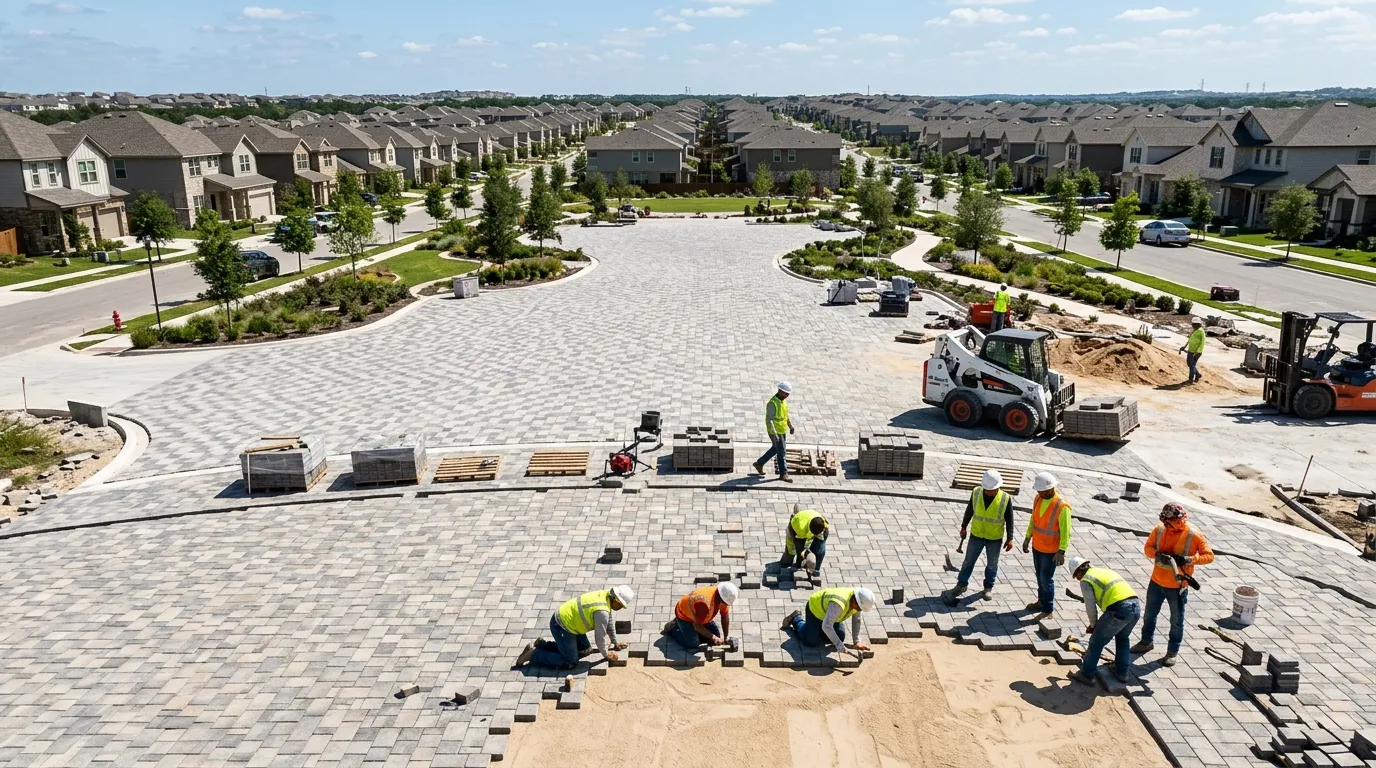
A paver is an individual unit, usually concrete, brick, or natural stone, set on a prepared base with sand-filled joints. Unlike a poured concrete slab, which is one continuous surface, a paver system is modular. Each piece interlocks with its neighbors through joint material, laying pattern, and edge restraint.
That modularity is the main practical advantage. A cracked slab means a jackhammer and a full repour. A sunken or damaged paver can be lifted, the base beneath it corrected, and the unit reset or replaced without touching the rest of the surface. We’ve pulled up pavers after a decade, relaid them on fresh bedding, and watched them look the same day they went back in.
Modern interlocking concrete pavers trace to the Netherlands in the late 1940s, designed as replacements for clay-brick streets. The engineering has evolved significantly, but the core idea hasn’t changed: manufactured units with tight tolerances, joint restraint, and a layered base that distributes weight across the entire system.
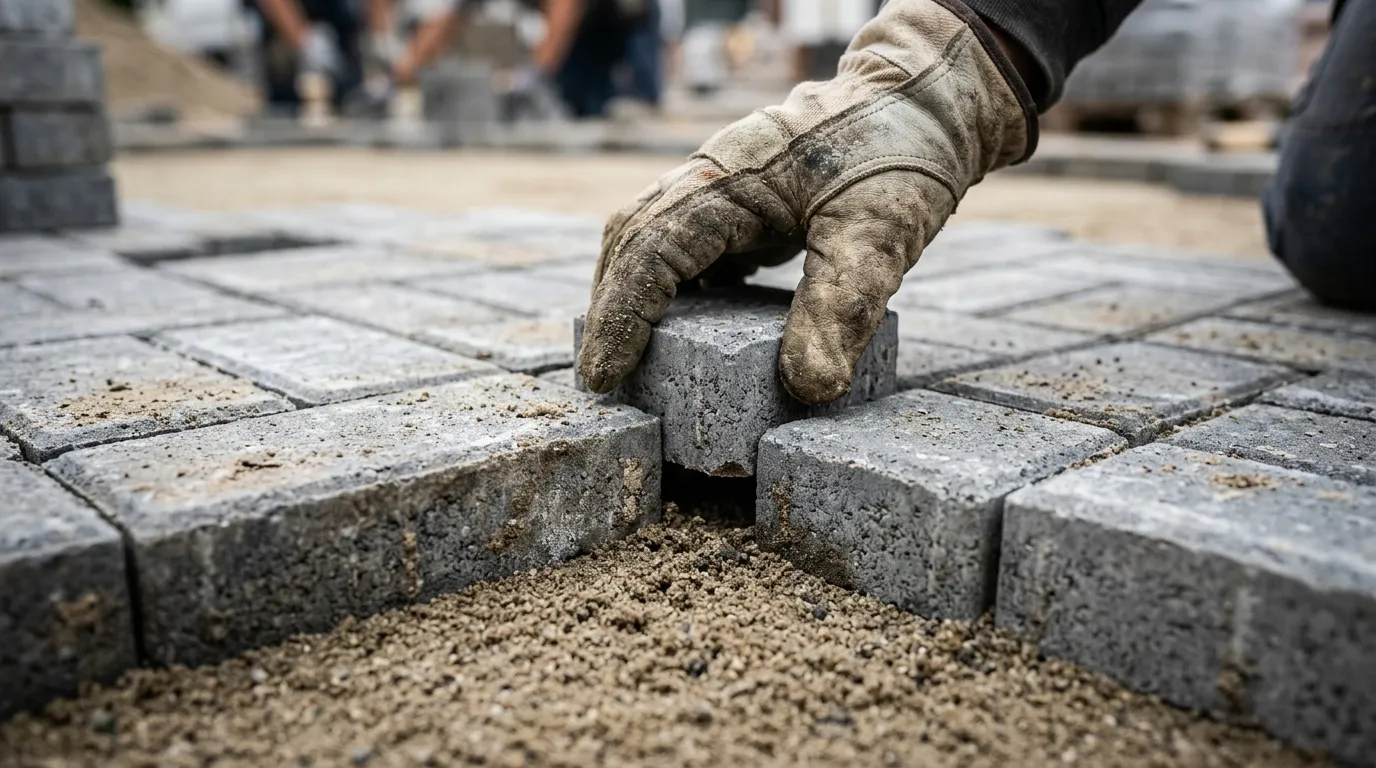
Here’s what most product pages skip entirely: the paver is just the finish. Beneath it sit layers of compacted crushed rock, screeded bedding sand, and edge restraints holding everything in place. The base is the structure. The stone is the surface. When a patio sinks two years in, the paver almost never failed. The base did.
Paver Materials: How Each One Handles Florida’s Heat and Rain
Not every paver material fits every application. The types of pavers each respond differently to Sarasota’s climate, which tests them in specific ways: UV exposure twelve months a year, surface temperatures above 140°F on dark colors in summer, afternoon storms that drop inches of rain in under an hour, and sandy soil that drains fast but shifts when compaction is skipped.
Here’s how the materials we supply and install perform in this environment.
Concrete Pavers
Concrete pavers are the most common residential choice and offer the widest range of shapes, colors, and textures. They’re manufactured to tight tolerances, available in thicknesses from 60mm for patios to 80mm for driveways, and accept sealers well. When a unit cracks or stains beyond cleaning, replacements are usually in stock years after installation. We install several manufacturer lines, including Belgard, which offers one of the broadest selections of textures and color blends available in our area.
The trade-off: new concrete pavers can show efflorescence, a white mineral haze that forms as moisture pulls calcium hydroxide to the surface. It’s cosmetic, not structural, and typically fades within the first year. Unsealed concrete also absorbs stains more readily than denser materials like porcelain.
Brick Pavers
Brick pavers are fired clay: dense, colorfast, and graceful as they age. The color runs all the way through the unit, so a chip doesn’t expose a different interior. Brick suits traditional and coastal architectural styles and handles Sarasota’s heat without the efflorescence concrete can show in its first year.
Brick offers less variety in shape and color than concrete, and fewer patterns are practical because the standard unit is a rectangle. For driveways, the brick must be rated for vehicular loads. ASTM C902 covers pedestrian and light-traffic paving brick, while ASTM C1272 addresses heavy vehicular applications.
Travertine Pavers
Travertine is natural stone, quarried and cut to size. It’s the top choice we install for pool decks in Sarasota because it stays noticeably cooler underfoot than concrete or brick in direct sun. The naturally pitted surface also provides grip when wet, which matters on a pool surround where people walk barefoot.
Travertine needs sealing to resist staining and algae growth in Florida’s humidity. It’s softer than manufactured concrete, so it chips more easily on driveway edges under repeated tire traffic. We use it primarily for pool decks, patios, and coping.
Porcelain Pavers
Porcelain pavers are the newest entrant in the Sarasota market. Fired at extremely high temperatures, porcelain is nearly impervious to water absorption. That means it resists staining and UV fading better than any other material we install.
The drawbacks: porcelain is more brittle under point loads, harder to cut cleanly on site, and costs more per square foot. Its very low porosity also requires modified bedding details because the interface between the unit and the sand layer behaves differently than it does under concrete or stone.
Natural Stone Pavers
Flagstone, bluestone, granite, and similar quarried materials each vary in thickness and color from piece to piece, giving a natural, organic look. That variation demands more installation skill to produce a level walking surface. Natural stone tends to be the most expensive per square foot, but it can also be the most durable when matched correctly to the application.
In our climate, porous stone varieties like certain sandstones absorb water and foster algae growth without regular sealing. We recommend selecting stone with low water absorption for any surface that stays damp or shaded part of the day.
| Material | Best Sarasota Application | Surface Heat | Efflorescence Risk | Relative Cost |
|---|---|---|---|---|
| Concrete | Driveways, patios, walkways | Moderate to high (dark colors run hot) | Yes, first year | $ to $$ |
| Brick | Patios, walkways, traditional homes | Moderate | Rare | $$ |
| Travertine | Pool decks, patios, coping | Cool underfoot | None | $$$ |
| Porcelain | Patios, modern designs | Low absorption, stays cooler | None | $$$$ |
| Natural stone | Patios, accent features | Varies by stone type | Possible | $$$ to $$$$ |
Explore the full range of paver colors to see how each material looks in actual Sarasota installations.
Where Pavers Belong: Matching Material and Base to the Job
Every application puts different demands on the paver and the layers beneath it. Getting this match wrong is the single most common cause of failure we see on callback jobs.
Driveways
A driveway takes the heaviest loads in residential hardscape: daily car traffic, delivery trucks, the occasional trailer. That means thicker pavers (80mm minimum for concrete, per FHWA guidance referencing the ASTM C936 standard for vehicular applications), a deeper crushed rock base (we typically excavate 12 to 14 inches total and compact in lifts), and a herringbone laying pattern. Herringbone is not decorative here: the 45-degree or 90-degree interlock distributes wheel loads across more joints than a running bond, which prevents individual units from rotating under tire pressure.
Patios
A patio allows more design freedom. Standard 60mm pavers on a 6-inch compacted base handle foot traffic well in Sarasota’s sandy soil. Pattern options open up here: running bond, basket weave, herringbone, or random layouts with multi-size units. This is where color and texture decisions have the most impact, because you’ll see this surface up close every day.
Pool Decks
Heat and water drive material choice around a pool. Travertine leads our pool deck installations because it stays cool and grips wet feet. Concrete pavers with a tumbled or textured finish work well too, but avoid dark colors: a charcoal paver around a Sarasota pool in July hits surface temperatures you cannot walk on barefoot. Coping along the pool edge needs a bullnose or tumbled profile to look finished and protect the bond beam beneath.
Walkways and Stepping Stones
Lighter traffic allows lighter construction, but the base still matters. A walkway with 4 inches of compacted base and proper edge restraint stays level and tight. Skip the restraint, and outside pavers creep outward over months until joints open and units wobble underfoot. Stepping stones set in turf or gravel follow the same principle on a smaller scale.
Retaining Walls, Fire Pits, and Steps
These use different products (retaining wall blocks, seat wall caps, specialized shapes for fire pits and seats) but share the same principle as flatwork: what’s underneath determines what happens on top. A retaining wall needs geogrid reinforcement, compacted backfill, and drainage behind the wall face, especially during Sarasota’s rainy season when hydrostatic pressure builds against the back.
Permeable Pavers: When Drainage Is the Real Problem
If your property floods during summer storms or your county requires stormwater management on new hardscape, permeable pavers may be part of the answer. But “permeable” doesn’t mean what most homeowners assume.
A permeable interlocking concrete pavement (PICP) system uses solid paver units with wider joints filled with small, open-graded aggregate instead of polymeric sand. Water enters through those joints, passes through an open-graded stone bedding layer, and collects in a crushed stone reservoir beneath. From there it either infiltrates into the soil, exits through an underdrain pipe, or both.
The pavers themselves are not porous. The system is. A standard paver patio with tight joints and polymeric sand is essentially impervious, regardless of how many individual pieces make up the surface.
EPA stormwater research documents 67% to 81% suspended-solids removal for PICP and runoff volume reductions ranging from 25% to 100% depending on soil, design, and ongoing maintenance. Those numbers are real, but the range is enormous because local site conditions and upkeep drive the outcome.
Maintenance is the part that gets consistently underestimated. A USGS field comparison in Madison, Wisconsin monitored PICP, pervious concrete, and porous asphalt side by side and found all three experienced clogging after roughly one year under heavy sediment and winter sand loading. In Sarasota, we don’t deal with road sand or freeze-thaw, but we do have sandy soil, oak leaves, and lawn clippings washing into joints during every summer storm. Vacuuming those joints on a regular schedule is not optional if you expect the system to keep draining.
The other mistake we see: filling permeable joints with polymeric sand. That defeats the entire drainage function. PICP joints use specific open-graded aggregate designed to let water pass through, and this distinction from conventional sand-set joints is not a small detail.
We install permeable pavers where the site conditions and the homeowner’s maintenance commitment justify them. For most residential patios and driveways in Sarasota, proper grading and a conventional paver system handle drainage well without the added upkeep burden. When a property genuinely needs on-site stormwater management, PICP is a real engineering solution, not a marketing label.
The Base: Where Every Paver Job Succeeds or Fails
This section matters more than any other, and it’s the one no product catalog will show you.
Sarasota County sits on sandy soil. Sand drains well, which helps after rain, but compacts unevenly if you don’t work it in controlled lifts. That fast drainage also means the fines in a poorly graded crushed rock base wash out during heavy storms, leaving voids underneath the pavers. Voids become dips. Dips become the reason someone calls us to rebuild a patio that’s barely two years old.
Here’s what a proper paver base looks like for our area.
Excavation
We dig below the planned finish grade to accommodate the full cross-section: paver thickness, 1 inch of bedding sand, and the crushed rock base. For a standard patio using 2 3/8-inch (60mm) pavers on a 6-inch base, that means roughly 10 inches of total excavation. For a driveway with 3 1/8-inch (80mm) pavers on a 10- to 12-inch base, we’re removing 14 inches of material or more.
The native soil at the bottom of the excavation (the subgrade) gets compacted with a plate compactor before anything else goes in. If it’s soft, organic, or waterlogged, we strip it out and bring in structural fill. Skipping this step is invisible on installation day and obvious by month six.
Crushed Rock Base
We use compactable crushed limestone or limerock, installed in lifts of no more than 4 inches and compacted after each lift. Dumping 8 inches of rock at once and running a compactor over the top leaves the bottom half loose. That loose zone settles under load and weather.
Standard depths in our installations:
- Patios and walkways: 6 inches of compacted crushed rock base.
- Driveways: 8 to 12 inches, depending on soil conditions and expected vehicle loads.
Slope and Drainage
Every paver surface needs to shed water away from structures. We grade the base at a minimum 1% slope: 1/8 inch per foot of run. Around pools, the slope directs water toward deck drains, not into the pool or toward the house foundation. This pitch gets established at the base level. Trying to correct drainage by varying bedding sand thickness creates uneven paver seats and ponding.
Bedding Sand
A 1-inch layer of coarse, washed concrete sand gets screeded level on top of the compacted base. The pavers sit directly on this layer. Too much bedding sand (we’ve seen DIY jobs with 3 inches) creates a soft cushion that shifts under any load. One inch, screeded flat, then compacted together with the pavers after they’re laid. That’s the full specification.
Laying Patterns, Edge Restraint, and Joint Sand
The laying pattern you choose is not just decoration. It determines how loads transfer between pavers and how well the field stays locked together over years of use.
Herringbone at 45 or 90 degrees creates the strongest interlock. Each paver bears against multiple neighbors at crossing angles, distributing loads across more joints than any other pattern. It’s the only one we recommend for driveways and any surface carrying vehicle traffic. Expect 10% to 15% material waste from angle cuts at edges. See how different laying patterns look across project types.
Running bond (offset rows, like a brick wall) produces clean visual lines with fewer cuts and works well for walkways and patios. It doesn’t interlock as tightly under lateral force, so it’s not suited for driveways.
Basket weave and pinwheel patterns alternate paver orientation in groups, adding visual interest to patios and courtyards. Less structural interlock, but more than sufficient for foot traffic.
A soldier course (pavers standing on their long edge along the border) and a sailor course (pavers laid flat but perpendicular to the field) define the perimeter. The border works hand in hand with the edge restraint to hold the field pavers tight.
Edge restraint is non-negotiable. Without a rigid boundary (concrete curb, aluminum channel, or heavy-duty plastic restraint spiked into the base), the outside row of pavers has nothing to push against. Over months, they creep outward. Joints widen. Polymeric sand falls out. The surface loosens from the edges inward. We’ve rebuilt patios barely two years old because the original installer skipped edge restraint to save an hour of labor.
Polymeric sand fills the paver joints in a conventional installation: a fine sand blended with polymers that activate with water and harden into a semi-flexible joint. In Sarasota, where afternoon storms drop heavy rain on a weekly basis half the year, polymeric sand resists washout, deters ant colonies from tunneling between units, and keeps the field locked. Standard sand functions mechanically but washes out far faster in our climate, requiring constant reapplication.
One critical exception: permeable paver systems use open-graded aggregate in the joints, not polymeric sand. Using polymeric sand in a PICP installation seals the very openings designed to let water through.
Sealing, Cleaning, and Long-Term Paver Maintenance
Florida’s combination of UV, humidity, and organic debris creates a specific maintenance cycle for pavers. Skipping it won’t destroy the stone structurally, but it will turn a clean hardscape into a surface you stop noticing because it always looks a little faded or dirty.
Sealing
A quality paver sealer protects against UV color loss, oil and organic staining, and joint sand washout. It also enhances the stone’s color with either a wet-look gloss or a natural matte finish. In Sarasota’s UV exposure, we recommend resealing every 2 to 3 years.
Timing makes a real difference. A sealer applied in full midday sun on a surface that wasn’t properly cleaned or dried will peel or develop a cloudy haze. Application during cooler morning hours, or in fall and winter, produces the best adhesion and clarity.
Not every installation needs sealing, though. If you prefer the natural weathered look and are willing to treat stains as they appear, unsealed pavers hold up fine structurally. Sealing is a maintenance and aesthetic decision, not a structural requirement.
Efflorescence
That white haze on new concrete pavers is efflorescence: calcium hydroxide migrating to the surface as moisture evaporates from within the unit. It’s purely cosmetic. It typically fades during the first year as rain and sun cycle it away. For stubborn deposits, an efflorescence cleaner followed by sealing resolves it. We recommend waiting 60 to 90 days after installation before the first seal coat to give the bulk of efflorescence time to work through.
Cleaning
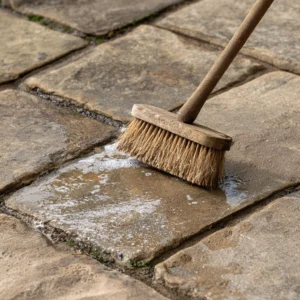
Pressure washing at 2,000 to 2,500 PSI with a surface cleaner attachment removes most organic buildup: mold, algae, tire marks, leaf tannin stains. Higher pressure or a zero-degree nozzle tip will dislodge polymeric sand from joints and can etch softer materials like travertine. We pre-treat heavy organic growth with a paver-safe detergent before washing to reduce the pressure needed.
In Sarasota’s humidity, algae and moss come back seasonally, particularly on north-facing surfaces and under tree canopy. An annual clean-and-seal cycle keeps the surface in solid condition year to year.
Joint Sand Maintenance
Check paver joints after heavy rain events. If polymeric sand has washed out in spots (common near downspout discharge areas or low sections of the surface), refill and reactivate before weeds take root. A small spot repair now prevents a full re-sanding job later.
What Pavers Cost and What Drives the Final Number
The honest answer: the base typically costs as much as the surface, sometimes more.
A national consumer guide estimates installed pavers at roughly $10 to $30 per square foot, versus $6 to $15 for poured concrete. Those ranges are broad because they average together a small walkway and a large driveway, different materials, and different parts of the country.
In Sarasota, here’s what shapes the actual number:
Material cost varies by type. Standard concrete pavers run $3 to $6 per square foot for the stone alone. Travertine ranges from $6 to $15. Porcelain sits at the high end. The material is typically 30% to 40% of the total installed price.
Base preparation is the biggest variable. Stable sandy soil needs standard excavation. A site with muck, heavy root systems, or an old concrete slab to demolish and haul off can add $2 to $5 per square foot before a single paver is laid.
Pattern and layout complexity affects labor hours directly. A rectangular patio in running bond installs faster than a curved pool deck with a herringbone field, soldier course border, and custom-cut coping. More cuts mean more time and more material waste.
Drainage work is a separate line item when the grading demands it. French drains, catch basins, or a full PICP reservoir system each add cost. But skipping drainage where the site requires it means paying for repairs later, usually at a higher total.
The cheapest paver bid you receive will almost always be cutting something you cannot see: base depth, number of compaction lifts, edge restraint quality, or joint sand type. When a driveway sinks in two years, the initial savings are gone and then some.
Over a 15- to 20-year window, a well-installed paver surface that gets cleaned and sealed on schedule often costs less to own than a poured slab that cracks and needs full replacement. A settled paver needs the base corrected locally, and the unit relaid. A cracked slab needs a jackhammer.
Browse our before-and-after project gallery for examples of what different materials, patterns, and scopes look like on real Sarasota properties.
Frequently Asked Questions
What are pavers made of?
Most residential pavers are manufactured concrete, fired clay brick, or natural stone such as travertine, bluestone, or flagstone. Porcelain pavers, fired at very high temperatures for near-zero water absorption, are a newer option. The right material depends on application, climate exposure, budget, and the look you want.
Are pavers better than poured concrete?
Pavers offer modularity: individual units can be lifted and replaced without disturbing the surrounding surface. Poured concrete costs less up front but cannot be spot-repaired the same way. Over 15 to 20 years with periodic maintenance, a properly installed paver system often costs less in total than a slab that cracks and needs full replacement.
Do pavers need a crushed rock base?
Yes. A compacted crushed rock base carries the load and keeps pavers level. In Sarasota’s sandy soil, we install 6 inches of compacted base under patios and 8 to 12 inches under driveways. Insufficient base depth or poor compaction is the leading cause of sinking and shifting we see in the field.
How long do pavers last?
Concrete and brick pavers commonly last 25 to 50 years when installed on a proper base with adequate drainage and periodic maintenance. The pavers themselves rarely fail. Settlement, joint erosion, and missing edge restraint are what shorten the useful life of an installation.
Can I install pavers myself?
A small walkway or patio is manageable for a handy homeowner who rents a plate compactor and follows proper base specifications. Driveways and large patios involve significant excavation, precise grading, and layered compaction that make professional installation more reliable. Factor in tool rental, extra material for cutting waste, and the cost of correcting an under-compacted base before comparing bids.
How often should pavers be sealed in Florida?
Every 2 to 3 years under Sarasota’s UV and humidity conditions. Clean the surface thoroughly and refill any depleted polymeric sand joints before applying sealer. Sealer applied to a dirty or damp surface will haze, peel, and waste your product and labor.
If you’re planning a paver project in Sarasota, Venice, Bradenton, Nokomis, or Osprey, a free estimate tells you exactly what your property needs: the right material, the correct base depth for your soil, and a clear number before any work begins. Reach out before the rainy season tests your base.