The cost to reset pavers varies depending on the size of the affected area, the severity of the settlement, and the condition of the underlying base. When homeowners notice uneven surfaces, sinking sections, or shifting bricks, the immediate concern is often whether full replacement is necessary.
In many cases, resetting pavers is a far more cost-effective solution that restores stability without the expense of removing and replacing the entire installation.
Understanding what influences the cost to reset pavers allows you to make a more informed decision and avoid unnecessary long-term expenses. And that’s what we are going to explore in this article.
You may also like: How much does it cost to have pavers installed?
Jump to:
What does it mean to reset pavers?
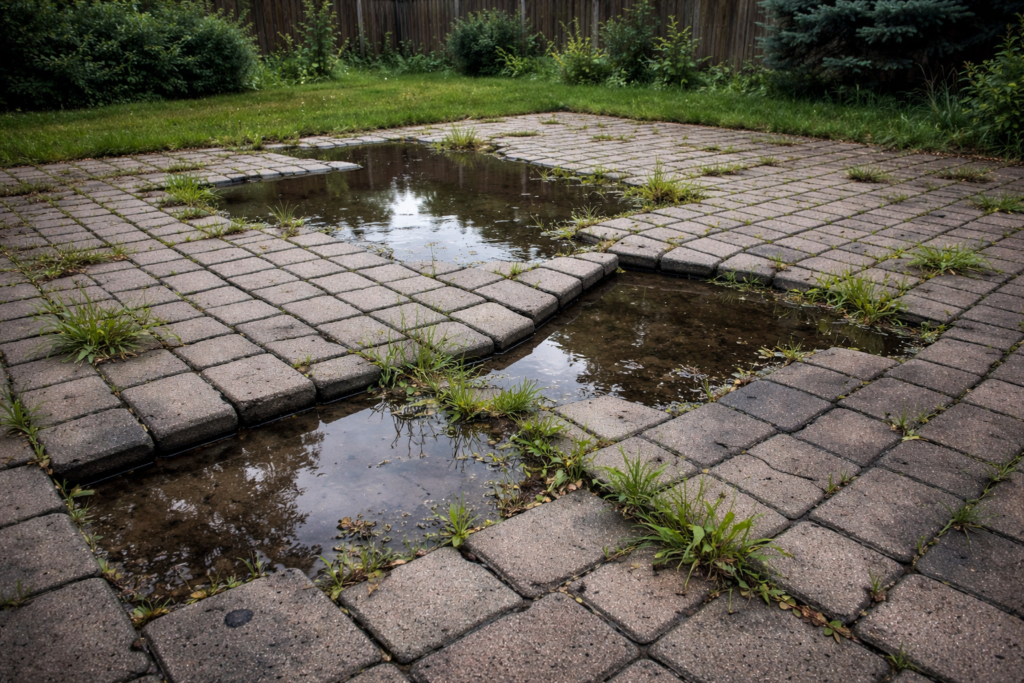
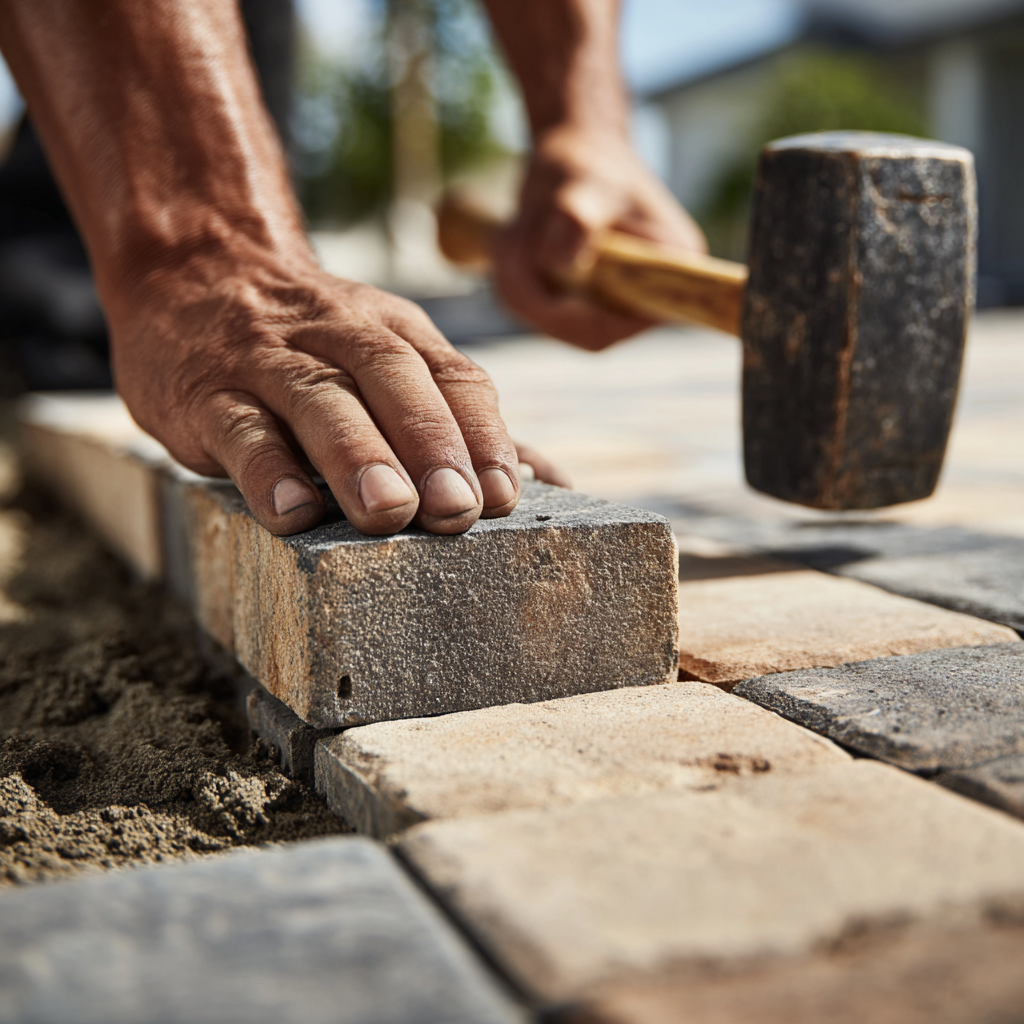
Resetting pavers involves removing the affected paver units, correcting the base underneath, re-leveling the surface, and reinstalling the original pavers. Unlike complete replacement, this process focuses on repairing the structural foundation rather than replacing the surface materials.
Pavers typically sink due to soil movement, erosion, poor drainage, or inadequate base compaction during the original installation. When the base shifts or weakens, the surface above it follows.
Resetting addresses the root cause of the instability. By correcting the base and ensuring proper compaction, the surface can be restored to its original level and function.
So – what’s the average cost to reset pavers?
The cost to reset pavers typically ranges between $8 and $18 per square foot, depending on the extent of the damage and the condition of the base.
For small repair areas, homeowners may pay between $300 and $800. For medium-sized patio sections, costs often range from $1,000 to $2,500. For larger driveway repairs, total costs can exceed $3,000, especially if the base needs partial reconstruction.
This cost depends on the size of the area and the complexity of the repair. Small patio sections generally cost less because they require less labor and minimal material replacement. Larger driveway areas, however, demand more excavation, additional base material, and extended labor time.
While prices vary by region, resetting pavers is typically significantly less expensive than complete removal and replacement. Replacement requires demolition, disposal of materials, and purchasing new pavers. Resetting reuses existing materials, which lowers overall material costs.
The final cost is influenced by labor hours, base repair requirements, and accessibility to the affected area.
Four factors that affect the matter at hand
Extent of the damaged area
The size of the affected section directly impacts the cost to reset pavers. Minor settlements confined to a small area can often be repaired quickly. However, widespread sinking across a driveway or patio increases labor time and material needs.
Larger areas require more excavation and additional aggregate to rebuild the base properly. The greater the damage, the more intensive the repair process becomes.
Condition of the existing base
One of the most significant factors influencing the cost to reset pavers is the condition of the underlying base. If the base is mostly intact and requires only re-leveling and additional compaction, the repair remains relatively straightforward.
If the base has deteriorated, eroded, or was improperly installed originally, it may need to be partially or completely rebuilt. This increases excavation depth, material volume, and labor hours.
The stability of the base ultimately determines how durable the repair will be.
Drainage and water management issues
Water infiltration is one of the primary causes of paver movement. Poor drainage allows water to accumulate beneath the surface, weakening the base material and causing erosion.
Correcting drainage may involve adjusting the slope, improving grading, or installing drainage solutions. These corrections add to the overall cost to reset pavers but are essential for preventing recurring issues.
Ignoring drainage problems often leads to repeated repairs.
Accessibility of the work area
Access plays a practical role in determining labor time. Driveways and open patios are typically easier to repair because equipment and materials can be transported efficiently.
Backyard areas with limited access may require manual transport of materials, increasing labor intensity and repair duration.
Ease of access influences the overall timeline and cost structure.
Resetting vs replacing pavers
Many homeowners question whether resetting is sufficient or if replacement is the better option.
Resetting is generally appropriate when the pavers themselves remain structurally intact. If the surface materials show no significant cracking or deterioration, restoring the base often resolves the issue.
Replacement becomes necessary when pavers are severely damaged, cracked beyond repair, or when the homeowner wishes to change the design or layout entirely.
In most cases where structural damage is limited to the base, resetting pavers provides substantial savings compared to full replacement.
Can you reset pavers yourself?
Attempting to reduce the cost to reset pavers by performing the repair independently may seem appealing. However, successful resetting requires precise excavation, proper base layering, and accurate compaction.
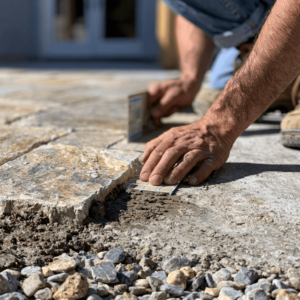
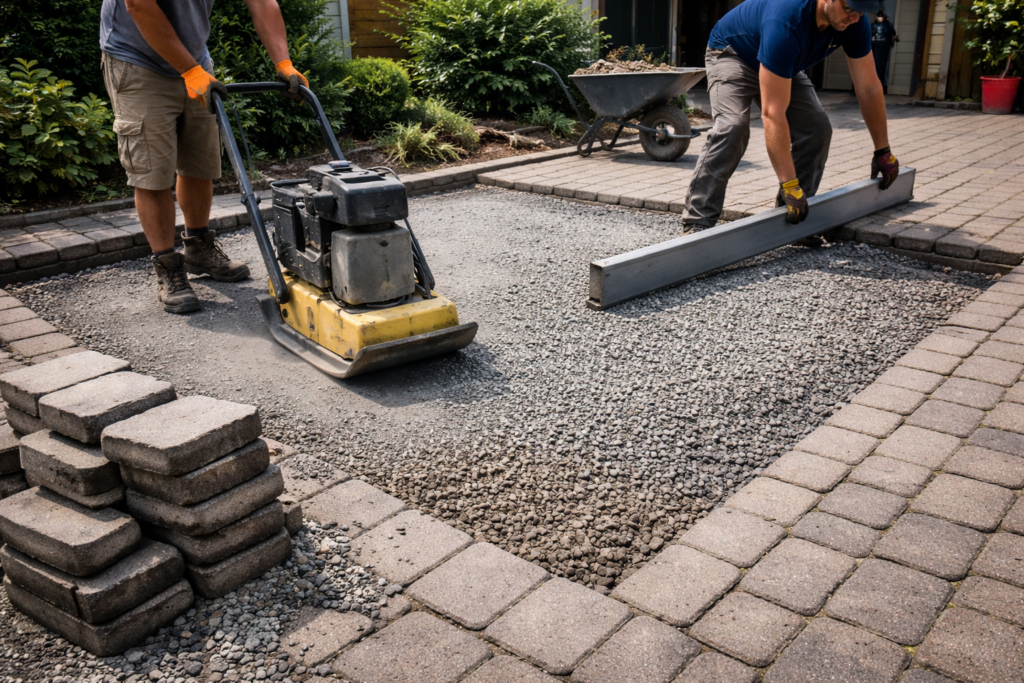
The process begins with carefully removing the pavers without damaging them. The unstable base material must then be excavated and replaced with compacted aggregate. Proper slope and drainage must be re-established before reinstalling the pavers.
Insufficient compaction or improper grading can result in recurring sinking. While DIY repairs may reduce immediate labor costs, improper execution can increase long-term expenses.
Professional experience ensures that the structural issue is corrected thoroughly rather than temporarily adjusted.
What’s the long-term value in all this?
The cost to reset pavers should be evaluated in terms of long-term value rather than short-term expense.
When the underlying base is properly rebuilt and compacted, resetting extends the lifespan of the existing installation. A well-executed reset can restore both appearance and performance without the cost of new materials.
Proper repair reduces maintenance frequency and protects the surrounding hardscape from additional damage.
Addressing the issue early often prevents larger structural failures that require more extensive and costly intervention.
How to minimize the cost to reset pavers
Early detection of uneven areas helps limit the scope of repair. Small areas of settlement are easier and less expensive to correct than widespread surface failure. Extra tips from our team include:
- Maintaining proper drainage around patios and driveways reduces erosion risk. Redirecting water away from hardscape surfaces preserves the integrity of the base.
- Avoiding excessive loads beyond the design capacity of the installation also prevents unnecessary stress on the foundation.
- Preventive attention significantly reduces long-term repair expenses.
Time to get professional help!
The cost to reset pavers is typically far lower than full replacement when the original materials remain in good condition. By correcting base instability, drainage problems, and compaction issues, resetting restores structural integrity and improves surface performance.
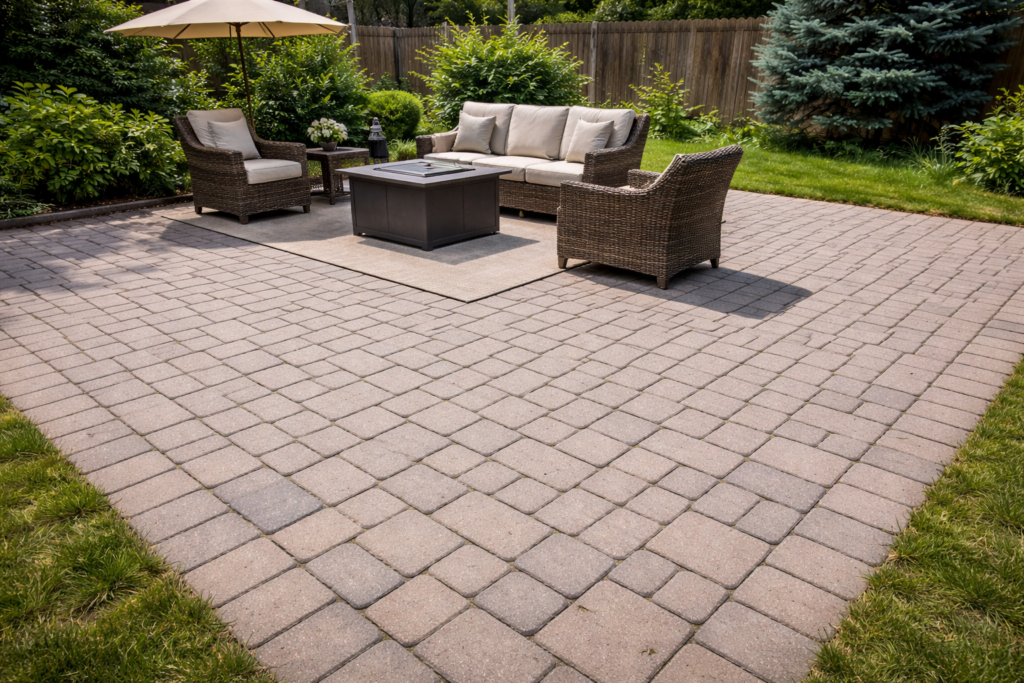
Before committing to replacement, evaluating whether resetting is sufficient can lead to significant savings. A properly executed reset provides renewed stability, improved safety, and extended longevity for patios and driveways.
However, whether a paver installation needs to be completely replaced or only some of its pavers reset, that’s for a professional to decide. So hire a professional hardscape contractor you can trust in your area and ask for their help.
And if you happen to be in our area of activity here in Sarasota, FL, we here at JS would be glad to offer you that help. You can contact us anytime for a free estimate on our services and join the long list of satisfied customers we have gathered over our 26 years of experience.