Your pool deck hits 150°F on a July afternoon in Sarasota. The kids won’t cross it without flip-flops. The dog avoids the patio entirely. Cool touch pavers promise to fix that problem, and some of them genuinely do. But after installing pool decks and patios across Sarasota County since 2000, we’ve learned the label “cool touch” tells you less than you’d expect.
The useful question isn’t whether cool-touch products exist. They do. The question is which combination of material, color, finish, and maintenance keeps a surface barefoot-comfortable through Florida’s ten-month sun season. That’s what we’ll work through here.
Jump to:
What “Cool Touch” Actually Means
Cool touch pavers reduce surface temperature primarily through solar reflectance. The surface bounces incoming sunlight away rather than absorbing it as heat. Some permeable pavers cool through evaporation when wet, but that mechanism stops working once the surface dries.
The EPA classifies cool pavements by their reflective or evaporative properties but notes there is no official standard or labeling program for “cool” paving materials. Any manufacturer can call a paver “cool touch” without meeting a universal threshold. The term is marketing language, not a regulated specification.
The metric worth asking about is Solar Reflectance Index (SRI). Higher SRI means more solar energy reflected away from the surface. But SRI varies dramatically by color within the same product line.
To illustrate, one well-documented cool-paver line publishes an SRI of 96 for its lightest color and only 70 for a darker shade in the same series. Same brand, same product line, 26-point gap. A homeowner who picks the darker tone for its look and expects the lighter tone’s thermal performance will be disappointed at the first barefoot walk to the pool.
And the “up to 40°F cooler” claims in brochures? That’s a comparative measurement against a specific conventional paver under specific test conditions. It does not mean the surface stays at 80°F when the air is 95°F. It means the surface might reach 130°F instead of 170°F. Meaningfully cooler. Still hot.
Color Drives Surface Temperature More Than Brand Name
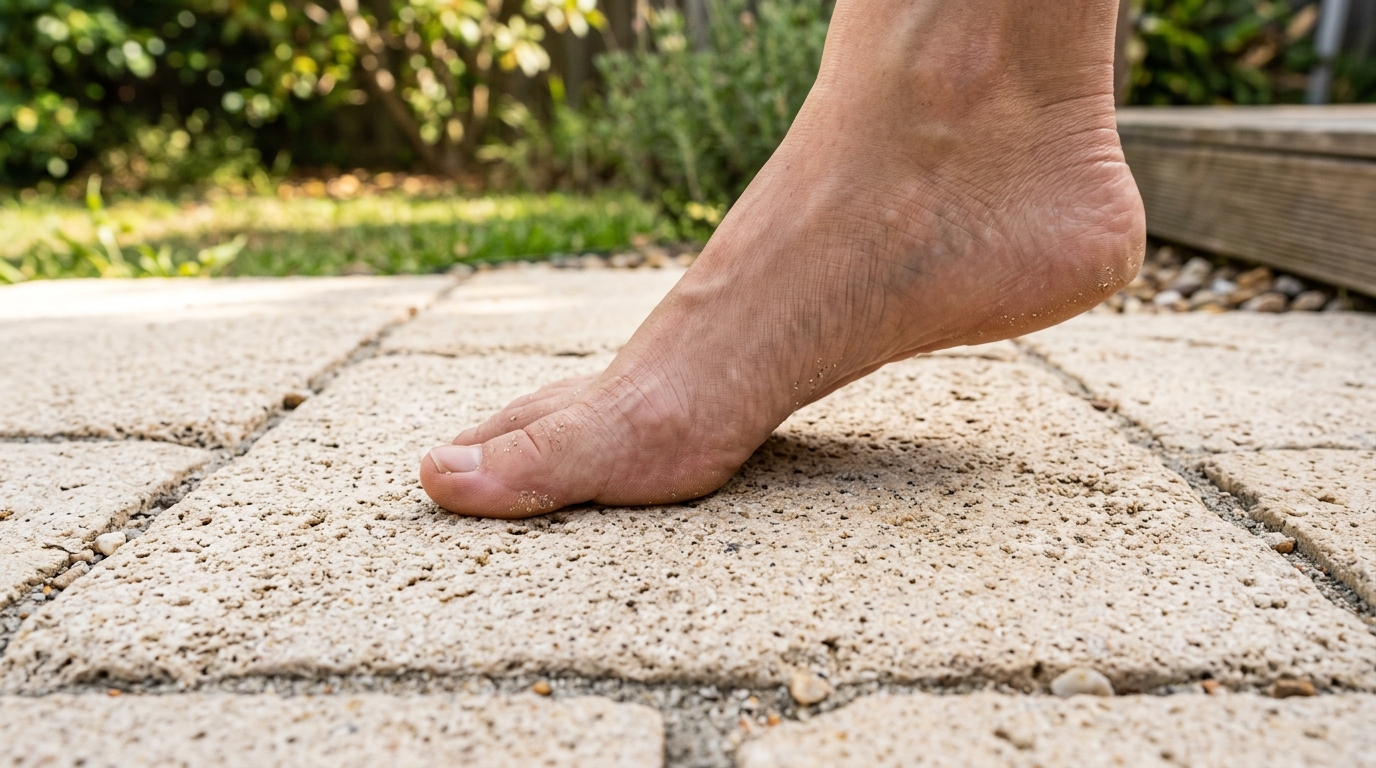
This is the single most useful thing we tell homeowners comparing cool touch pavers: a light-colored conventional paver will often outperform a dark “cool” paver.
Physics doesn’t care about product names. A lighter surface reflects more solar radiation. A darker one absorbs more. Engineered reflective properties help, but they cannot fully overcome the thermal penalty of a dark color. Published manufacturer data proves it within a single product line: SRI 96 for a pale tone, SRI 70 for a darker one.
We see it on job sites all the time. A cream-colored travertine paver around a pool in Osprey stays noticeably cooler at 2 PM than a charcoal-toned concrete paver two streets away, even when the charcoal carries a “cool” designation. The travertine wasn’t marketed as cool technology. It’s just light, dense, and naturally reflective.
That doesn’t mean every light paver is automatically comfortable or that dark pavers are always a mistake. It means color selection is the first filter, not the last. If you’ve decided on a darker tone for aesthetic reasons, a cool-touch formulation in that color will help. But it won’t match the surface temperature of a light color from the same line.
Our recommendation: pick three or four color samples in the material you’re considering. Lay them on your existing surface in direct afternoon sun for two hours. Touch them. That simple test accounts for your site’s orientation, shade patterns, and specific sun exposure in a way no SRI chart can replicate.
How the Main Materials Compare Around a Sarasota Pool
Homeowners choosing patio or pool deck pavers in our area usually narrow it down to four materials. Here’s how they compare on surface heat, traction, maintenance, and cost, based on what we’ve installed and maintained over two decades in this climate.
| Material | Surface Heat (Light Colors) | Wet Traction | Maintenance Level | Approx. Material Cost/sq ft |
|---|---|---|---|---|
| Travertine | Excellent | Good (tumbled/brushed finish) | Moderate (sealing required) | $5 to $25 |
| Porcelain | Very Good | Good (textured/matte finish) | Low | $8 to $20 |
| Concrete (standard) | Good | Good | Moderate | $5 to $15 |
| Concrete (cool-touch) | Very Good | Varies by series | Moderate | Project-specific quote |
| Clay Brick | Poor | Good | Low to Moderate | $5 to $15 |
Travertine
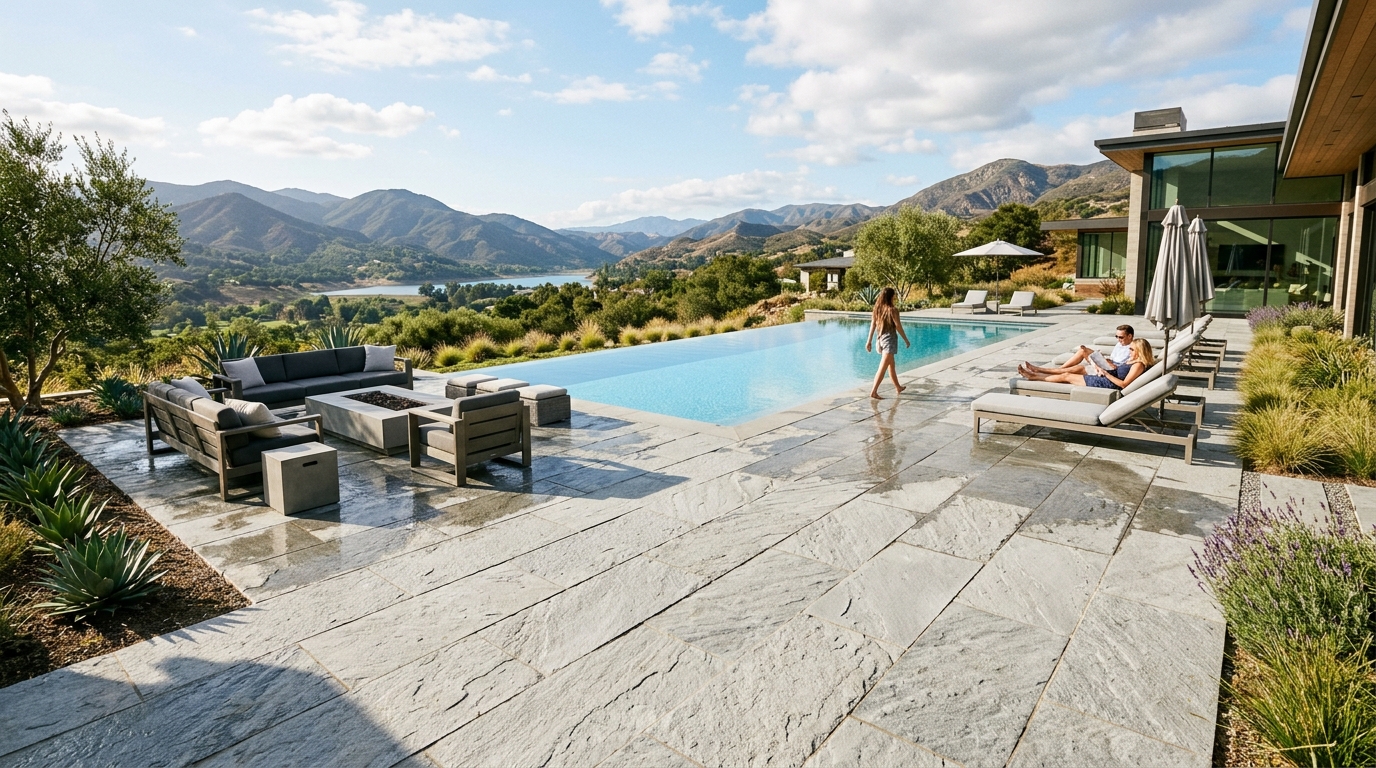
Natural travertine in light tones (ivory, cream, silver) is one of the coolest surfaces we install. The stone’s density and natural pore structure help dissipate heat. It’s been the default choice for high-end pool decks in Sarasota for good reason.
The trade-off: travertine is softer than concrete or porcelain. It can etch from pool chemicals if not sealed properly, and some polished finishes get slick when wet. Stick with tumbled or brushed finishes for pool decks. Installed costs run roughly $15 to $27 per square foot depending on grade and project complexity.
Porcelain
Porcelain pavers are fired above 2,200°F, making them extremely dense, stain-resistant, and practically zero-maintenance. In light colors with a matte or textured finish, they stay relatively cool and handle Florida’s rain cycles without absorbing moisture.
But porcelain isn’t immune to heat. Major porcelain manufacturers acknowledge that their pavers warm in direct sunlight and that color and finish directly affect comfort. Porcelain’s real advantage is durability and near-zero water absorption. Just don’t pick a dark polished finish and expect a cool pool deck.
Concrete Pavers
Standard concrete pavers in light colors perform reasonably well on heat. They offer the most flexibility for laying patterns, edge restraints, and design variety. They’re also the most affordable starting point, with material costs between $5 and $15 per square foot.
Engineered cool-touch concrete pavers push thermal performance further with reflective formulations. If you want the design flexibility of concrete with measurably better heat numbers, they’re worth pricing out. Just compare the specific color’s SRI data, not the brand’s best-case headline claim.
Brick
Clay brick pavers absorb and retain more heat than the other three. They look great on driveways and walkways where barefoot traffic isn’t a concern, but we rarely recommend them for pool decks in our climate. If you love the brick look poolside, use it as an accent border in a soldier course and fill the field with a cooler material.
Florida’s Base Requirements Don’t Change for Cool Pavers
A paver can have the best SRI on the market and still fail if the base beneath it isn’t built for Sarasota’s conditions. We’ve pulled up “premium” pool decks that settled, shifted, or flooded within two years because the installer skimped on base preparation.
Sarasota County sits on sandy soil with a water table that can rise to within inches of the surface during rainy season (June through October). That means two things for every paver installation, cool touch or otherwise.
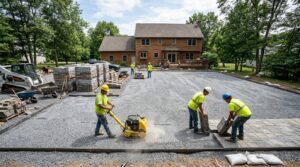
We install a minimum 6-inch compacted crushed rock base for residential patios and pool decks, stepping up to 8 to 12 inches for driveways depending on traffic load. The base has to be compacted in lifts (typically two 3-inch lifts for a 6-inch base), not dumped and smoothed. Skipping compaction in sandy soil is the fastest way to a wavy, settling surface within one rainy season. The same principle applies when laying pavers on gravel, where a properly compacted base keeps the surface flat. Base depth also correlates directly with paver weight, which affects both structural requirements and installation logistics.
Every surface we build also pitches at a minimum 1/4 inch per foot away from the house and pool. Standing water doesn’t just create algae and slip hazards. In Sarasota’s heat, pooled moisture beneath pavers creates a sauna effect that accelerates weed growth in paver joints and breaks down polymeric sand faster than normal wear would.
Cool touch pavers don’t change these fundamentals. If anything, they make proper installation more important. You’re paying a premium for surface performance, and that performance depends on a stable, well-drained base underneath.
One thing we do adjust for certain cool-touch products: joint width and sand type. Some engineered pavers have tighter dimensional tolerances than standard concrete. We verify the manufacturer’s joint spacing spec before ordering polymeric sand, because the wrong joint width means the sand won’t lock properly and you’ll lose it to the first hard rain.
Dirt and Neglect Will Cancel the Cooling
Here’s something no cool-paver advertisement mentions: reflectivity degrades when the surface gets dirty.
Phoenix documented this in its cool pavement program. Reflectivity on treated streets dropped from 33%-38% down to 19%-30% within ten months. That’s road-surface data, not residential paver data, but the principle applies to any reflective surface. Pollen, dust, mildew, leaf tannins, and the organic film that coats every outdoor surface in Florida all reduce the reflective properties you paid for.
In Sarasota, the maintenance cycle for keeping cool-touch pavers performing looks like this:
- Clean the surface at least twice a year. Once before rainy season (May) and once after (November). Use a low-pressure wash, not a 3,000 PSI blast. High pressure damages the surface texture that provides both reflectivity and slip resistance.
- Reapply polymeric sand in any joints where it has washed out or deteriorated. Open joints invite weed growth and ant mounds, both of which darken the surface and trap heat-absorbing organic material.
- Evaluate sealer condition every two to three years. A quality sealer protects against UV degradation, staining, and efflorescence, all of which preserve reflectivity. But a worn-out sealer can yellow or become slick when wet. Match the sealer to the paver manufacturer’s recommendation and to the specific wet-traction requirements of pool decks.
A cool-touch paver is not a “set it and forget it” product. It’s a surface that performs when maintained. In our climate, with afternoon thunderstorms half the year and year-round biological growth, maintenance is what separates a paver that stays cool at year five from one that performs like standard concrete.
What a Cooler Surface Cannot Do
Cool touch pavers reduce surface temperature. They do not eliminate the risk of contact burns.
Valleywise Health in Arizona documented 136 severe contact-burn admissions during summer 2023, with 14 deaths. Those injuries came from all hot surfaces (asphalt, concrete, metal, not specific paver brands), but they illustrate the reality: when ambient temperatures push past 100°F and surfaces sit in direct sun for hours, no paver technology makes the ground completely safe for prolonged bare-skin contact. A 30°F reduction on a 170°F surface still leaves you at 140°F.
There’s also a reflection trade-off. Phoenix’s cool-pavement research found that while treated surfaces were up to 12°F cooler, reflected solar energy increased midday human heat exposure by 5.5°F at body level. Cooler ground, warmer air around you. Around a residential pool this matters less (you’re cooling off in the water), but on a patio where you’re sitting for hours, it reinforces an obvious point: shade trees, pergolas, and umbrellas do work that pavers alone cannot.
A cool-touch paver is one layer of outdoor comfort. Combine it with shade, proper drainage, and a realistic maintenance schedule, and the system works. Expect the paver to do everything by itself, and you’ll be disappointed by February of the second year.
If you’re weighing materials and colors for a pool deck or patio in the Sarasota area, our crew can walk your property and show you what a photo or a spec sheet can’t: where your sun exposure is worst, what your soil conditions demand, and which combination of material and color fits your site. A free estimate starts with that conversation.
Frequently Asked Questions
Do cool touch pavers stay cool enough to walk on barefoot?
They stay cooler than standard pavers, not cool in an absolute sense. On a 95°F day in direct Sarasota sun, a light-colored cool-touch paver might reach 120°F to 130°F instead of 150°F or higher. That difference is real, but expect warm surfaces during peak afternoon hours. Shade structures and lighter colors improve barefoot comfort the most.
Are cool touch pavers worth the extra cost over standard concrete?
Around a pool or patio with regular barefoot traffic, yes. The temperature difference between a light cool-touch paver and a standard dark one can exceed 30°F in summer. For driveways and walkways where you wear shoes, the thermal premium is harder to justify. The decision turns on where people actually walk barefoot.
Which paver material stays coolest around a Florida pool?
Light-colored travertine and light-colored porcelain consistently perform best for surface temperature in our installations. Engineered cool-touch concrete pavers in pale tones come close. The specific color and finish matter more than the material name. Request samples and test them in your sun exposure before committing.
Does sealing cool touch pavers change their temperature?
It can. A high-gloss sealer may slightly increase surface temperature by altering how light interacts with the finish, and some sealers reduce wet traction. Use a matte or satin sealer recommended by the paver manufacturer. A properly matched sealer protects against UV degradation and efflorescence without compromising thermal or slip performance.
How long do cool touch pavers keep their cooling properties?
That depends on maintenance. Phoenix’s municipal data showed reflectivity declining by roughly one-third within ten months on road surfaces. Residential pavers cleaned twice a year and sealed on schedule retain reflective properties much longer. Neglected surfaces accumulate grime that absorbs heat, gradually erasing the thermal advantage.
Can I coat my existing hot patio instead of replacing the pavers?
Cementitious toppings (like Kool Deck, around since 1962) and acrylic coatings (like H&C Cool Feel) can reduce surface temperature on existing concrete. They cost less than full replacement, but they depend on the condition of your current slab. Cracked, settling, or poorly drained concrete needs structural repair first. A coating over a failing base won’t hold.