The discussion between marble vs travertine pool deck is one of the most important decisions when designing a pool area. Both natural stones offer elegance, durability, and long-term value, but they differ significantly in texture, heat absorption, maintenance requirements, and cost.
Understanding these differences is essential before investing in a pool deck that must withstand sun exposure, moisture, and constant foot traffic, especially when talking about harsh climates such as Florida’s.
In this guide, you will learn how marble and travertine compare in terms of durability, slip resistance, surface temperature, maintenance, and long-term performance. By the end, you will have a clear understanding of which material is best suited for your specific project – and how we can help you out every step of the way.
Read also: Paving Slabs for Swimming Pools: A Quick Guide
Jump to:
Marble vs Travertine Pool Deck: Key Material Differences
| What Matters Most | Travertine | Marble |
|---|---|---|
| Surface Temperature | Stays cooler in direct sun — great for hot climates | Stays comfortable in light colors; darker tones can get warmer |
| Slip Resistance | Naturally slip-resistant, even when wet | Depends on finish; textured works well, polished is slippery |
| Overall Look | Natural, warm, earthy feel | Smooth, refined, luxury appearance |
| Durability | Very durable; handles temperature changes well | Very strong and dense; premium structural performance |
| Maintenance | Needs sealing; low routine upkeep | Needs sealing; low routine upkeep |
| Installed Cost (avg.) | $15–$30 per sq ft | $20–$40 per sq ft |
| Best For | Comfort + safety around the pool | Upscale, high-end visual impact |
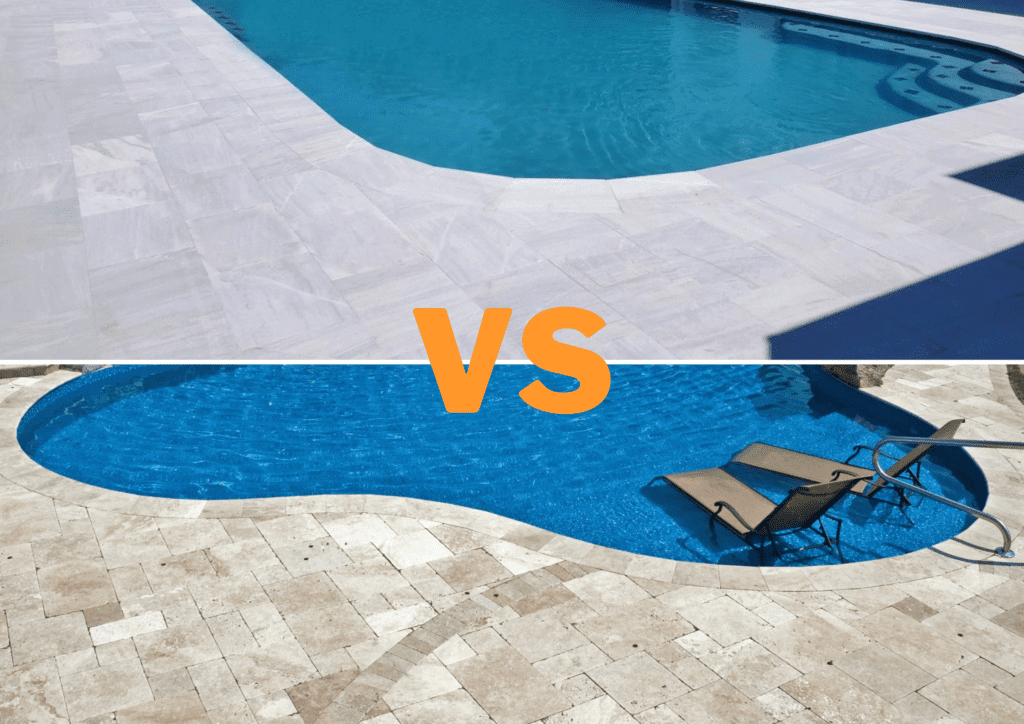
Marble and travertine are both natural stones formed under different geological conditions. Marble is a metamorphic stone created from limestone subjected to high pressure and temperature. Travertine is a sedimentary stone formed by mineral deposits from natural springs.
These formation differences influence density, porosity, and surface characteristics.
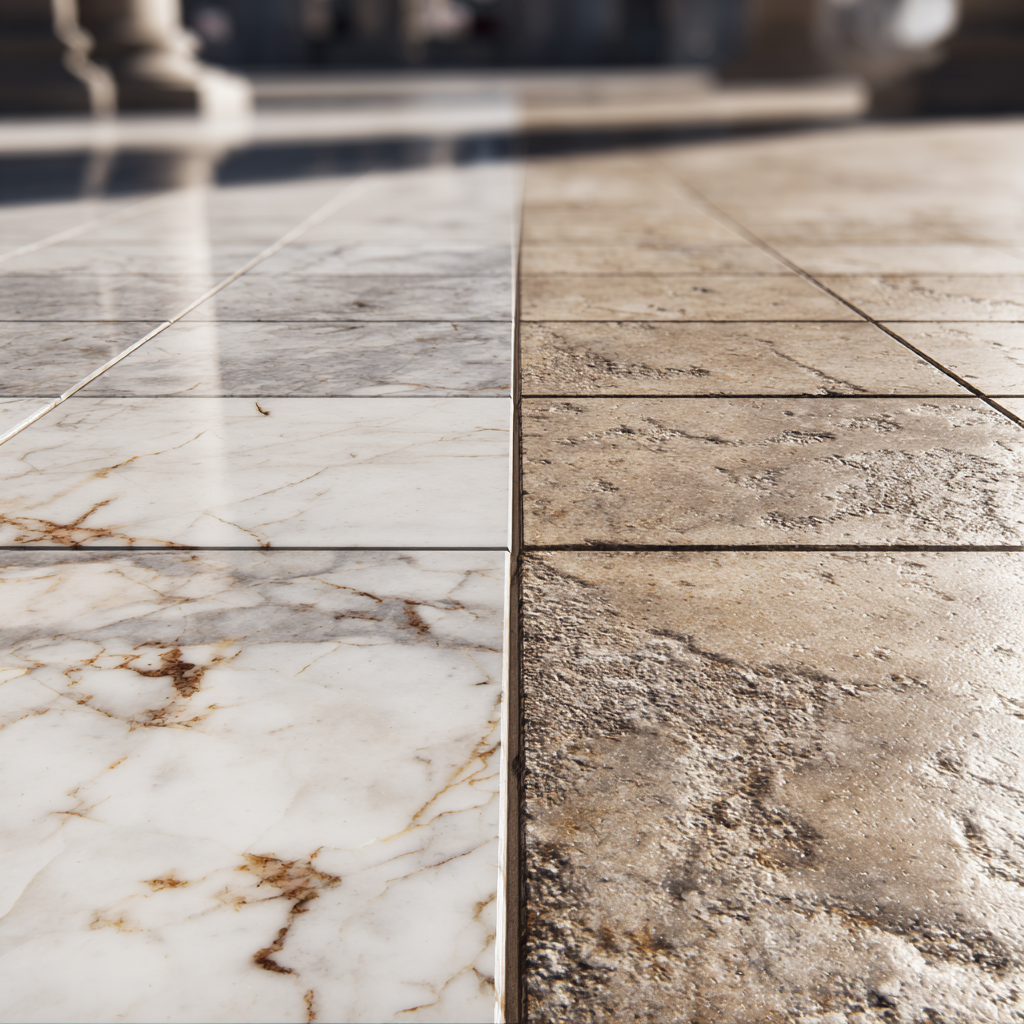
Marble typically has a smoother and more refined surface. Travertine has a naturally porous texture with small holes and voids that give it a distinct appearance.
Understanding these characteristics helps determine how each material performs in a pool environment.
Surface Temperature and Heat Reflection
One of the most important factors in the marble vs travertine pool deck comparison is heat absorption.
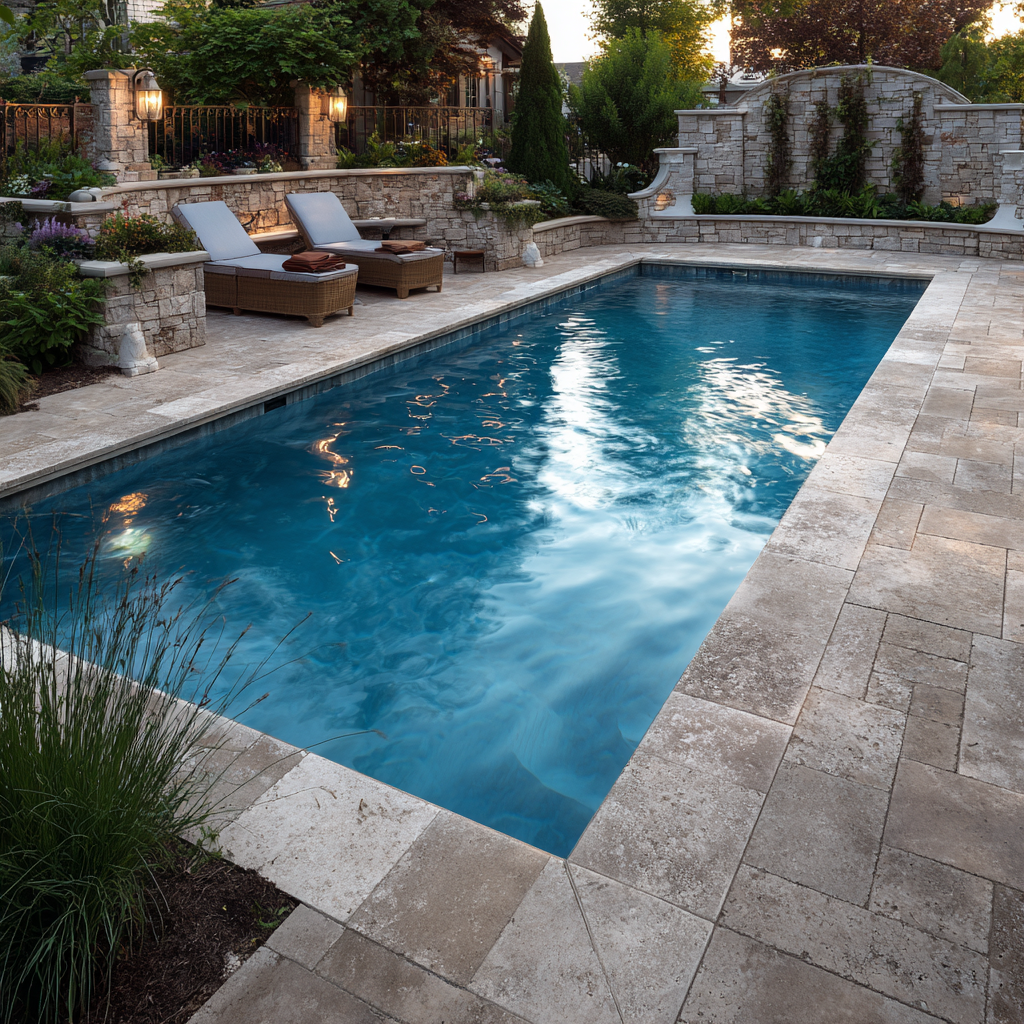
Travertine is widely known for its ability to remain cooler under direct sunlight. Its porous structure reflects heat more effectively and prevents excessive surface temperatures. This makes it especially popular in warm climates like Florida.
Marble also performs well in terms of heat resistance, particularly lighter-colored varieties. However, some darker marble tones may retain more heat than travertine.
For barefoot comfort around a swimming pool, surface temperature can significantly influence the user experience.
Slip Resistance and Safety
Safety is critical in pool deck design.
Travertine’s naturally textured surface provides strong slip resistance, even when wet. The small voids in the stone increase friction underfoot, reducing the risk of slips.
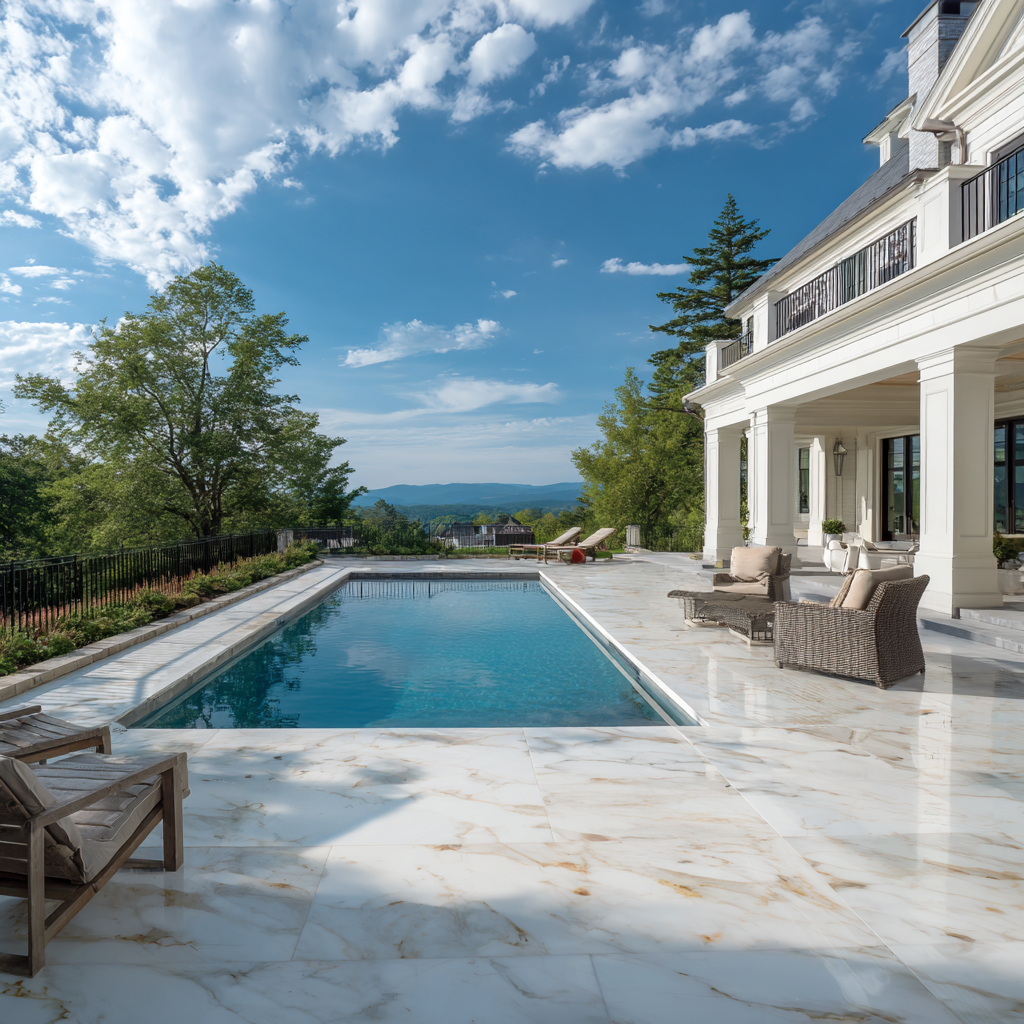
Marble, depending on its finish, may be smoother. Textured or tumbled marble finishes improve traction, but polished marble is generally not recommended for pool decks due to reduced grip when wet.
When comparing marble vs travertine pool deck options, slip resistance is often a deciding factor.
Durability and Structural Performance
Both marble and travertine are durable natural stones, but they behave differently over time.
Marble is denser and typically less porous than travertine. This density contributes to strength and resistance to heavy loads. However, it may be more susceptible to surface etching from chemicals if not properly sealed.
Travertine, while slightly more porous, performs exceptionally well in freeze-thaw environments because its pores allow water to expand without cracking the surface.
Proper installation and sealing significantly affect long-term durability for both materials.
Maintenance Requirements
Maintenance plays a key role in the marble vs travertine pool deck comparison.
Travertine requires sealing to protect against moisture penetration and staining. Its porous nature makes sealing particularly important in pool environments where water and chemicals are present.
Marble also benefits from sealing to protect against discoloration and surface damage. Regular cleaning with pH-neutral products helps maintain appearance.
In general, both materials require periodic maintenance, but neither is considered high maintenance when properly installed and sealed.
Aesthetic Appeal and Design Versatility
Marble offers a refined and luxurious appearance. Its smooth veining patterns create an elegant aesthetic often associated with high-end properties.
Travertine provides a more natural and earthy look. Its warm tones and textured surface blend well with outdoor landscaping.
When evaluating marble vs travertine pool deck designs, aesthetic preference often plays a significant role. Both materials complement a wide range of architectural styles.
Cost Comparison
When evaluating marble vs travertine pool deck options, cost plays a major role in the decision.
Travertine pool deck materials typically range from $8 to $15 per square foot for the stone itself, depending on quality, thickness, and finish. Installed costs generally range between $15 and $30 per square foot, including labor, base preparation, and setting materials.
Marble, on the other hand, tends to be more expensive. Material costs commonly range from $12 to $25 per square foot, depending on the variety and origin. Installed marble pool decks typically range between $20 and $40 per square foot, especially when premium selections or custom cuts are involved.
Several factors influence the final investment. Stone grade, thickness, edge treatments, site accessibility, and existing base conditions all impact total pricing. Geographic location also plays a role, as labor rates vary across regions.
As with any hardscape investment, the lowest material cost does not always translate into the best long-term value. Proper installation and drainage planning are critical regardless of which stone is selected.
Which Is Better for Your Pool Deck?
The answer depends on your priorities.
If your primary concern is cooler surface temperature and slip resistance, travertine often stands out as the preferred choice.
If you are seeking a more refined, upscale aesthetic with higher-density stone, marble may be the right fit.
When comparing marble vs travertine pool deck options, it is important to consider climate, maintenance commitment, design goals, and budget.
Read more here: Paver Coping Ideas for a Pool: Exploring the Best Options
So – which one is best for you?
The marble vs travertine pool deck decision ultimately comes down to performance expectations and design preference. Both materials provide durability, elegance, and long-term value when properly installed.
Choosing the right material is about balancing comfort, safety, aesthetics, and long-term durability. And, at the end of the day, only a qualified hardscape contractor can help you make the best decision. So find one you can trust in your area.
And if you happen to be around Sarasota, in FL, we here at JS Brick would be happy to offer that help for you. You can contact us anytime for a free estimate on our services.