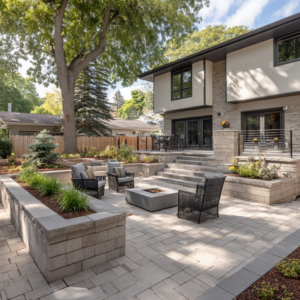
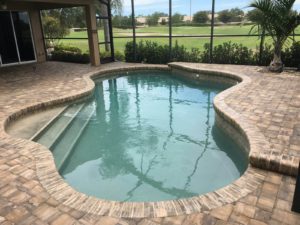
When most people hear the word pavers, they picture driveways, patios, and pool decks. Traditionally, that’s where pavers shine. However, as interior design continues to blend indoor and outdoor living, many homeowners are now exploring masonry-based flooring options inside the home as well. This has led to growing interest in what are often called indoor paver tiles.
Indoor paver tiles are frequently discussed as a way to bring the rugged charm of outdoor materials into interior spaces — creating visual continuity, durable floors, and a timeless aesthetic. But what’s often overlooked in these conversations is how traditional pavers, the thicker and more robust products used outdoors, can offer the same benefits indoors when installed correctly.
In this article, we’ll explain what indoor paver tiles are, how they’re typically used, and how traditional pavers compare — and often excel — as an indoor flooring solution.
Read also: What’s the recommended slope for a paver patio?
Jump to:
Understanding the Appeal of Indoor Paver Flooring
The move toward masonry materials inside the home reflects a broader design trend: homeowners want durability, authenticity, and a stronger connection between indoor and outdoor living areas. Paver-style flooring delivers exactly that.
Aesthetic Versatility and Timeless Character
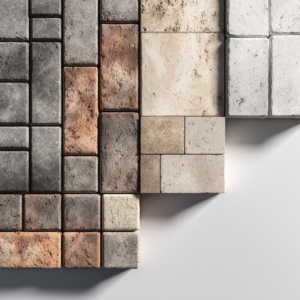
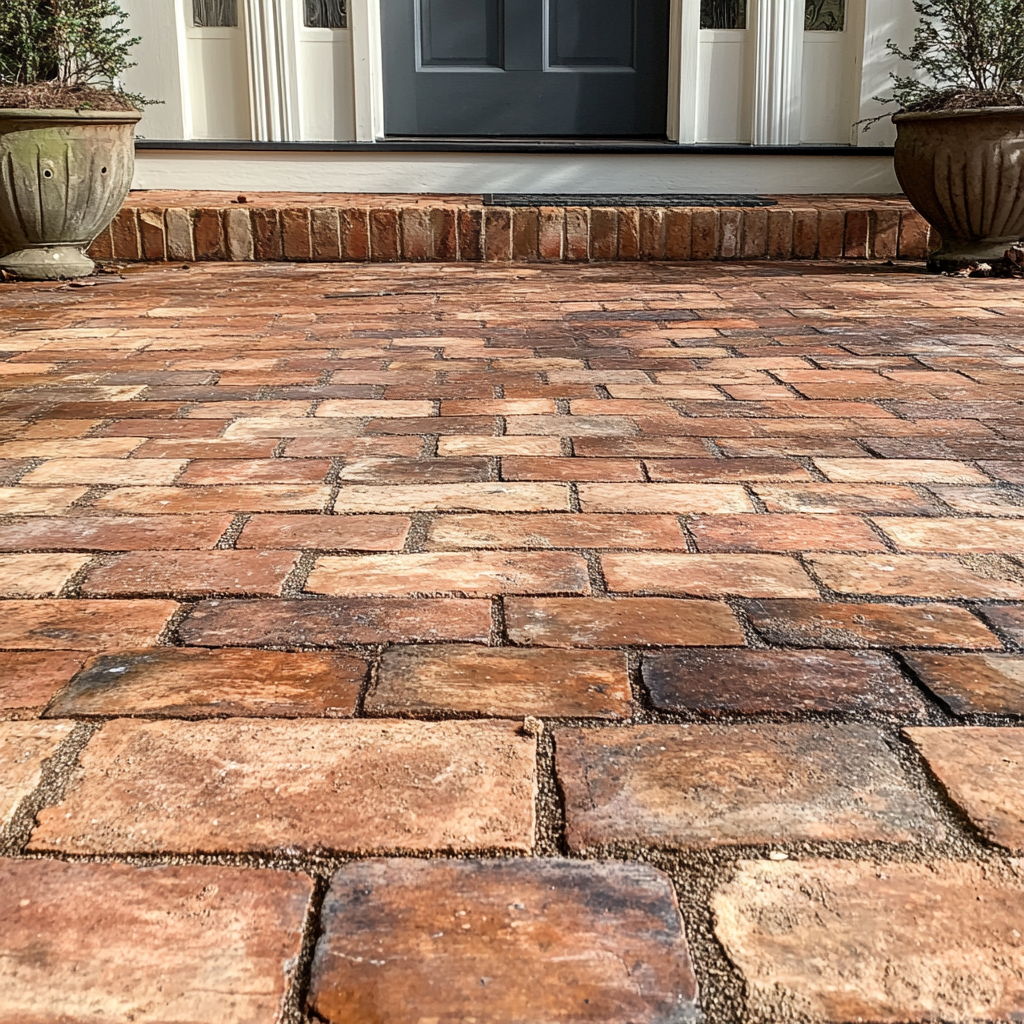
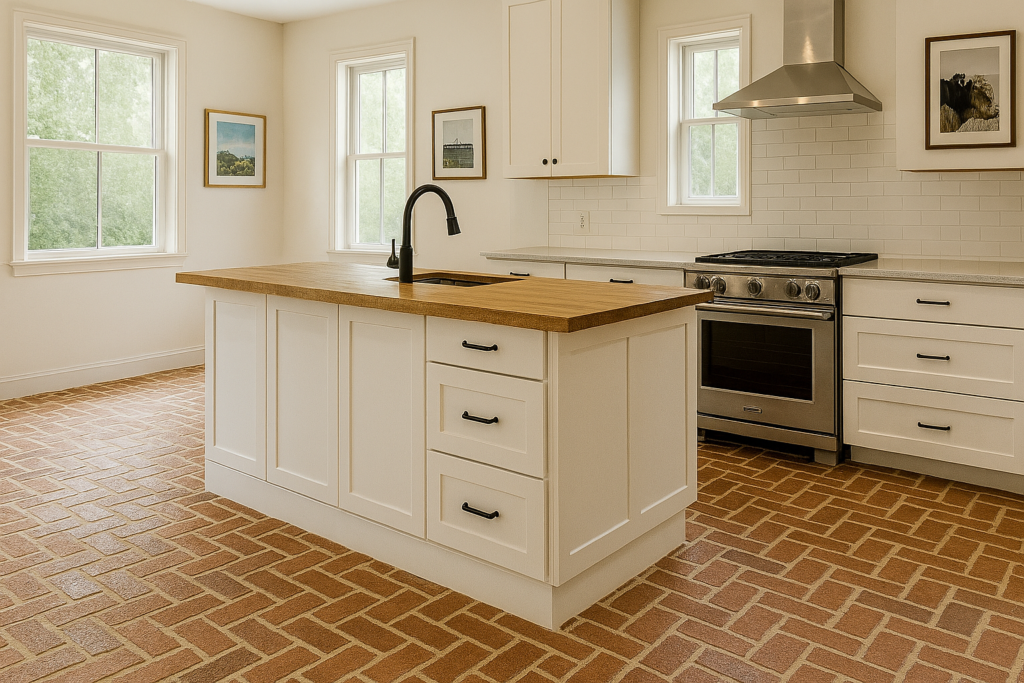
Indoor paver tiles are often marketed for their visual range — from classic brick tones to refined stone finishes. That same versatility exists with traditional concrete and brick pavers, which are available in a wide variety of colors, textures, and surface finishes.
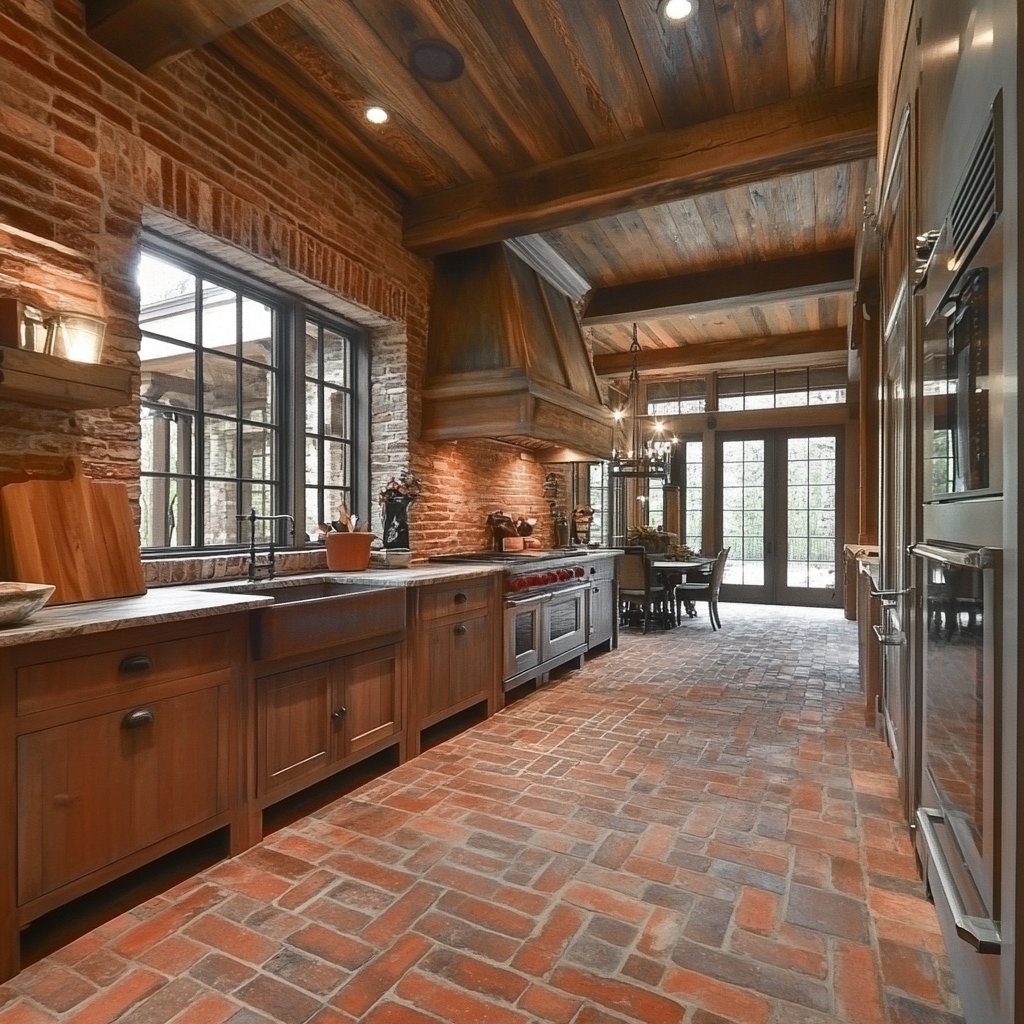
When installed indoors, standard pavers create a sense of permanence that many synthetic flooring options can’t replicate. Their subtle texture adds depth to a room, while natural color variations prevent floors from feeling flat or artificial. Over time, pavers develop character rather than showing wear, making them especially appealing for homeowners who value long-term design over fleeting trends.
Designers often use paver flooring to connect entryways, kitchens, dining areas, and transitional spaces, creating a cohesive flow throughout the home. With proper layout and finishing, traditional pavers work just as seamlessly indoors as they do outdoors!
Durability That Goes Beyond Tiles
One of the biggest selling points of indoor paver tiles is durability — but this is where traditional pavers truly stand apart.
Unlike thin tile-style products, standard pavers are manufactured to withstand vehicle loads, weather exposure, and ground movement. In an indoor environment, that level of strength translates into exceptional longevity.
Traditional pavers:
- Resist cracking from impact
- Handle heavy foot traffic with ease
- Maintain their structure for decades
- Outperform many ceramic and porcelain tile options in real-world durability
For homeowners looking to invest in a floor that won’t need replacement every 10–15 years, traditional pavers offer unmatched peace of mind.
Don’t miss: Plastic paver base – is it worth it?
Installation Considerations Indoors
Installing masonry flooring indoors does require a different approach than outdoor sand-set applications, but traditional pavers adapt extremely well when installed over the right base.
Subfloor Preparation
Indoor pavers are typically installed over a concrete slab using mortar or adhesive systems that ensure stability and a level surface. Their consistent thickness makes it easier to manage transitions to adjacent flooring materials such as hardwood or carpet.
Because traditional pavers are thicker and more forgiving than tile-style products, they’re less prone to cracking caused by minor substrate imperfections — an important advantage in residential construction.
Sealing and Maintenance
Just like tile-based options, indoor pavers benefit from sealing. Sealers protect against stains, enhance color, and make routine cleaning simple. Maintenance usually consists of sweeping and damp mopping with neutral cleaners, with resealing recommended periodically in high-traffic areas.
This process is very similar to the care recommended for outdoor pavers — something we here at JS Brick specialize in.
Comparing Indoor Pavers to Other Flooring Options
Thermal Comfort and Energy Efficiency
Pavers have high thermal mass, meaning they retain temperature efficiently. While they may feel cool in winter, they help keep interiors comfortable during warm Florida summers.
Traditional pavers are also excellent candidates for radiant floor heating systems. When paired with underfloor heating, they distribute warmth evenly, turning masonry flooring into one of the most comfortable surfaces in the home.
Long-Term Cost Value
While masonry flooring may carry a higher upfront cost than vinyl, laminate, or carpet, the long-term economics favor pavers. Traditional pavers rarely need replacement, resist damage, and maintain their appearance for decades — often increasing a home’s resale appeal in the process.
Traditional Pavers: A Smart Indoor Choice
Indoor paver tiles have helped spark interest in masonry flooring, but they’re not the only — or necessarily the best — way to achieve this look. Traditional pavers offer the same aesthetic appeal with greater strength, flexibility, and longevity, making them an excellent option for indoor use when installed by experienced professionals.

At JS Brick, our passion is pavers – and that includes helping homeowners understand how versatile they truly are. While we focus on traditional pavers rather than thin tile-style products, the pavers we install every day outdoors can be just as effective and beautiful inside your home.
If you’re considering pavers for a patio, walkway, driveway, or even exploring how traditional pavers could enhance your interior spaces, our team is here to help. Contact us to learn more about our paver solutions and discover why traditional pavers remain one of the most durable, timeless flooring choices available here in Florida!