Choosing the right concrete paver sizes and shapes is one of the most important decisions in any hardscape project. The dimensions and geometry of your pavers directly influence structural performance, visual balance, installation complexity, and long-term durability.
Concrete pavers are available in a wide range of sizes and shapes, allowing homeowners and property owners to create customized patios, driveways, and walkways that match both functional and aesthetic goals. Understanding how these variations affect design, performance, and maintenance is essential before starting any installation.
Whether you are planning a driveway that must withstand vehicle traffic or a patio designed for comfort and visual appeal, the correct combination of concrete paver sizes and shapes can significantly impact the final outcome.
The goal of this article is to help you navigate paver sizes and shapes and help you decide what works best for your current project.
Jump to:
Common concrete paver sizes
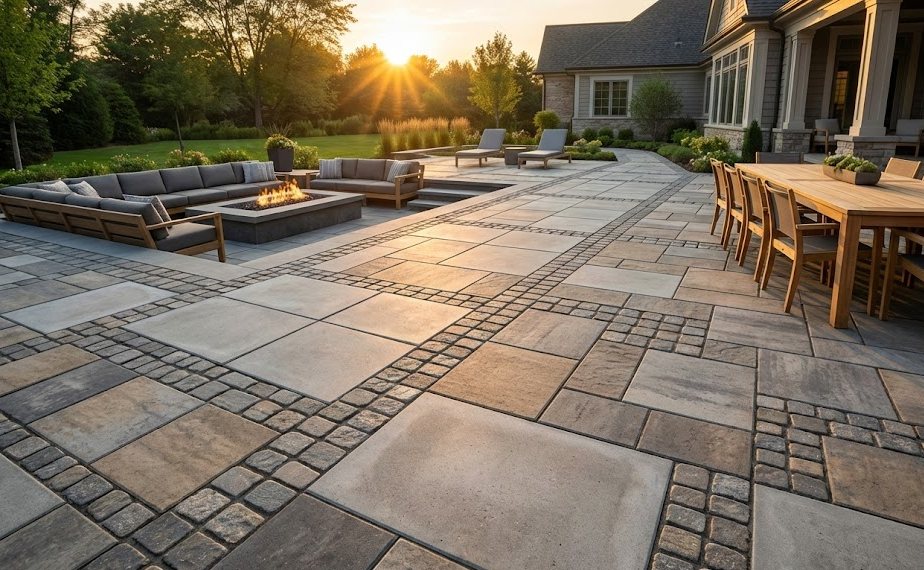
Concrete pavers come in several standard dimensions. Some of the most common sizes include 4×8 inches, 6×6 inches, 6×9 inches, 12×12 inches, and larger format pavers such as 24×24 inches or even bigger slabs for contemporary designs. Each size serves a different purpose depending on the scale and load requirements of the project.
Smaller pavers are often used for intricate patterns and curved designs. They provide flexibility during installation and allow for smoother transitions in circular or organic layouts. Because they create more joints, they also offer improved flexibility under minor ground movement, which can help reduce cracking over time.
Medium-sized pavers provide a balanced aesthetic and are frequently chosen for patios and walkways. They offer versatility in pattern selection while maintaining structural strength.
Larger pavers create a more modern and seamless look. By reducing the number of visible joint lines, they make outdoor areas appear more expansive and clean. However, larger format pavers may require a stronger, more carefully compacted base, especially in driveways or high-traffic areas.
Different concrete paver sizes affect load distribution and visual scale. Larger pavers distribute weight differently than smaller modular units, which can influence base preparation requirements. Selecting the appropriate paver dimensions ensures both durability and visual harmony.T
Common concrete paver shapes
When evaluating concrete paver sizes and shapes, shape plays just as significant a role as size. Shapes determine how pavers interlock, how patterns are formed, and how the surface behaves under load; common shapes include rectangular, square, circular, and irregular or modular designs.
Rectangular pavers are widely used because they allow for classic installation patterns such as running bond and herringbone, both known for strong interlocking performance.

Square pavers create symmetrical layouts that work well in contemporary outdoor designs. Their clean lines make them ideal for minimalist aesthetics.
Irregular shapes and modular systems introduce movement and visual variation. These designs are often used in decorative patios, pool decks, and custom landscape features where creativity is a priority.
How paver shapes influence pattern design
The shape of concrete pavers directly impacts pattern versatility and structural behavior. Rectangular pavers are ideal for structured patterns that maximize interlocking strength, particularly in driveways. Herringbone patterns, for example, are often recommended in load-bearing applications because they resist shifting under pressure.
Square pavers offer a grid-based aesthetic that suits modern properties and geometric landscapes.
Modular shapes allow for creative combinations of multiple paver dimensions, enhancing design flexibility. In projects requiring curved layouts or visual focal points, certain shapes provide better adaptability than others.
Understanding how concrete paver sizes and shapes interact within a pattern helps ensure that the final result is both structurally sound and visually cohesive.

How size and shape affect performance
The many existing concrete paver sizes and shapes do more than influence appearance. They also impact structural performance, drainage behavior, maintenance needs, and installation techniques.
Smaller pavers with more joints can provide greater flexibility and stress distribution. Because movement is absorbed across multiple units, the risk of large cracks is minimized.
Larger pavers, while visually striking, demand precise base preparation and compaction to prevent settling or uneven surfaces. Improper installation beneath large-format pavers can result in noticeable displacement.
Shape also influences interlocking capacity. Some shapes are engineered specifically to enhance mechanical interlock, increasing resistance to horizontal movement.
Drainage is another key consideration. The spacing between pavers allows water to filter through joints, reducing surface pooling. The chosen size and shape can influence how effectively water disperses across and beneath the surface.
When properly selected and installed, the right combination of concrete paver sizes and shapes contributes to long-term stability and minimal maintenance.
Aesthetic impact and visual scale
One often overlooked aspect of concrete paver sizes and shapes is how they influence perceived space. Smaller pavers create a detailed, textured appearance that works well in traditional designs. Larger pavers, by contrast, create a smoother, more contemporary look.
In smaller yards, oversized pavers may visually overwhelm the space. Conversely, very small pavers in a large open area may create visual clutter.
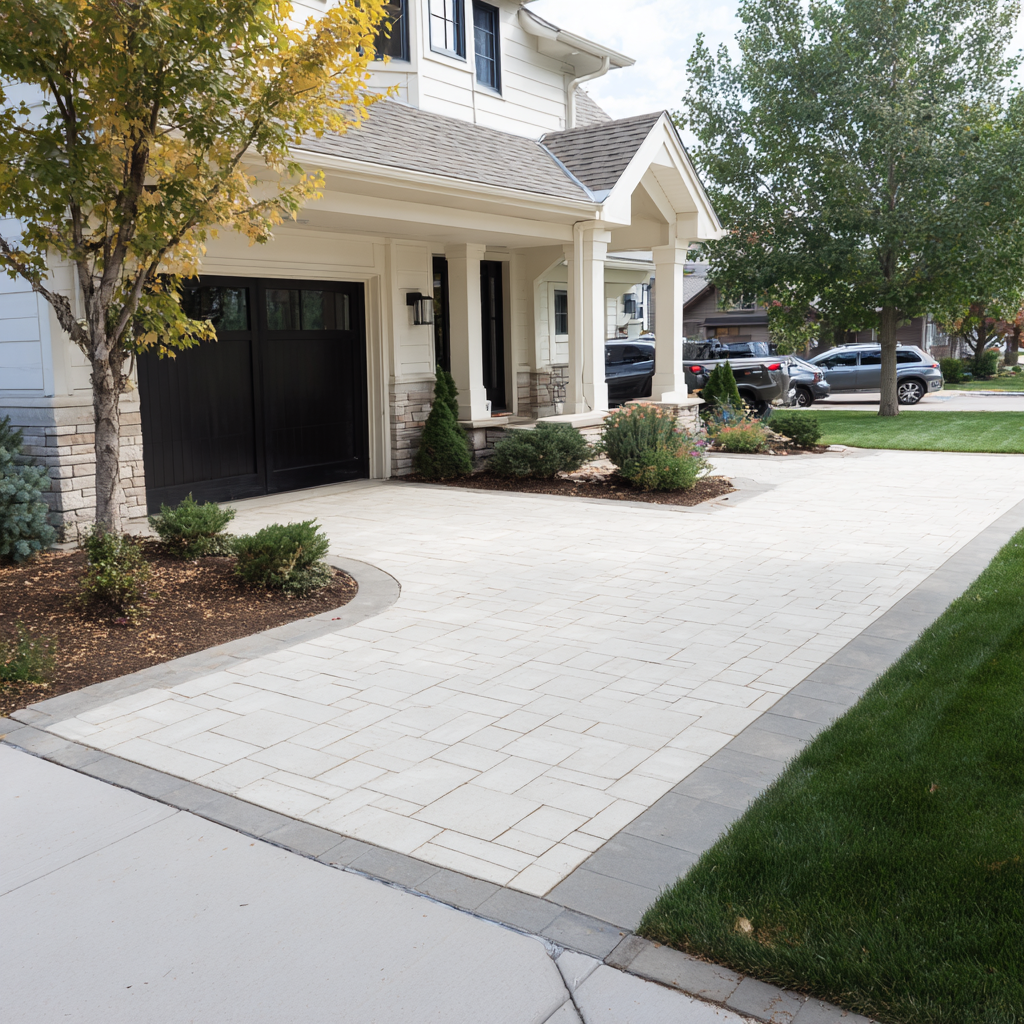
Color variations combined with different shapes can also define zones within a patio or driveway. For example, a border made with contrasting shapes can frame the main surface and add definition.
Understanding scale and proportion ensures that the selected paver dimensions complement the architecture of the property.
How to choose the right concrete paver sizes and shapes for your project
Selecting the right concrete paver sizes and shapes depends on several factors, including intended use, soil conditions, traffic load, design goals, and budget.
For driveways, structural strength and interlocking capability are essential. Rectangular pavers installed in herringbone patterns are often recommended because they enhance load distribution.
Patios allow for more flexibility in size and shape selection. In these areas, visual harmony and comfort underfoot may be more important than load resistance.
Walkways benefit from medium-sized pavers that balance stability with adaptability. In compact spaces, smaller paver dimensions prevent the area from feeling crowded. In larger open areas, larger format pavers can create a modern and streamlined aesthetic.
Proper planning ensures that your options align with drainage requirements, base preparation standards, and long-term durability expectations.
Professional installation considerations
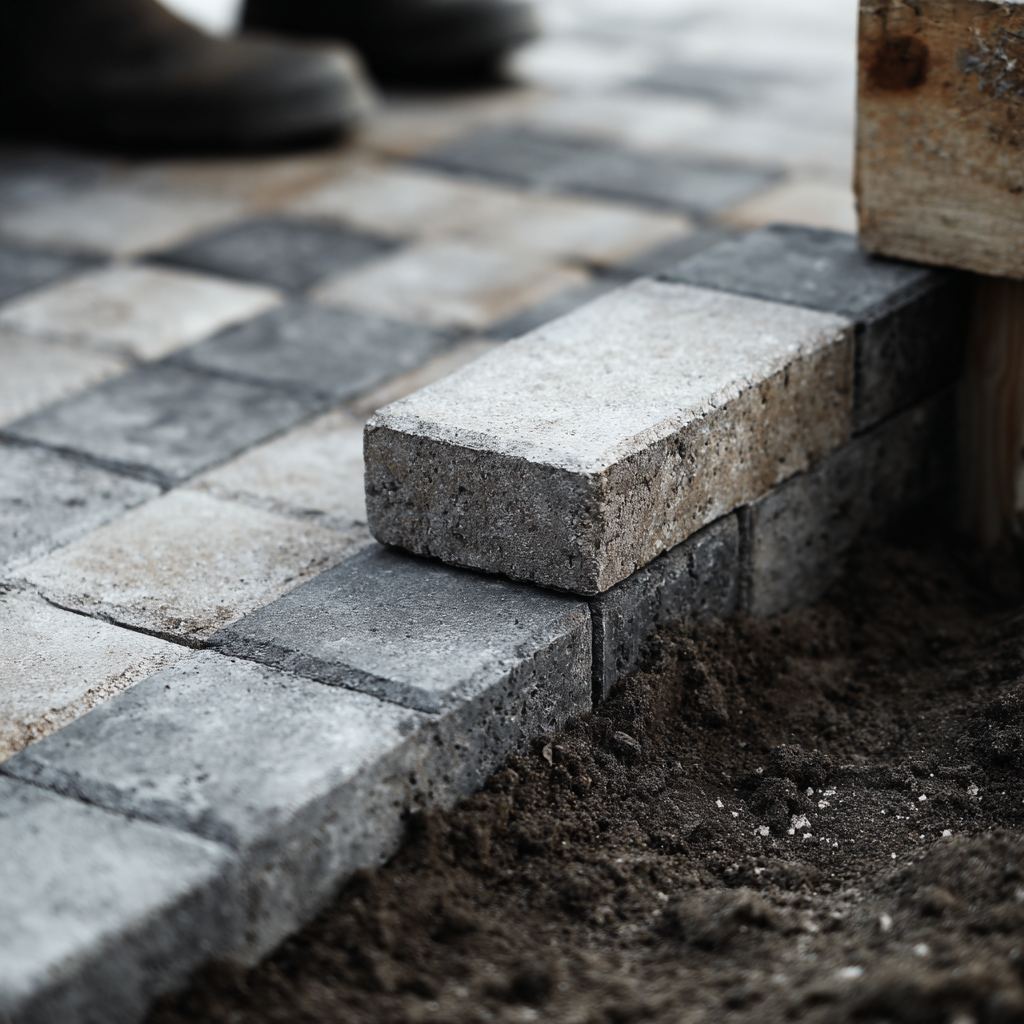
The success of any project involving concrete paver sizes and shapes depends heavily on proper installation techniques. Excavation depth, base compaction, edge restraints, and joint stabilization all influence long-term performance.
Different paver dimensions require different structural support strategies. Larger pavers typically demand stronger base layers, while intricate modular patterns require precise alignment and careful measurement.
Edge restraints prevent lateral movement. Joint sand locks the system together while allowing controlled flexibility. Compaction ensures that each unit is properly seated within the base layer.
Understanding concrete paver sizes and shapes before installation allows you to make informed decisions that protect your investment and enhance your property’s long-term value.
Working with experienced professionals ensures that technical requirements are addressed with precision. Proper planning, grading, and compaction reduce the risk of shifting, settling, or premature wear. So make sure to hire a professional you can trust in your area.
And if you happen to be around us here at JS Brick, in Sarasota, FL, don’t hesitate to contact us anytime for a free estimate on our services. We would be glad to put our 26 years of experience at your service and add you to our long list of satisfied customers.