Every homeowner with a paved driveway, patio, or walkway understands the silent frustration that arises when nature begins to reclaim the landscape. It often starts with a single, tiny green shoot peeking out from the narrow joint between two perfectly laid stones – a problem that can be solved with the best paver sand to prevent weeds.
This seemingly innocent sprout is the harbinger of a relentless battle that, if left unchecked, can turn a pristine outdoor oasis into a chaotic garden of neglect. In this article, we’ll dive deep into the technical and practical aspects of joint stabilization – so keep up with us to protect your investment.
Jump to:
The science behind weed growth
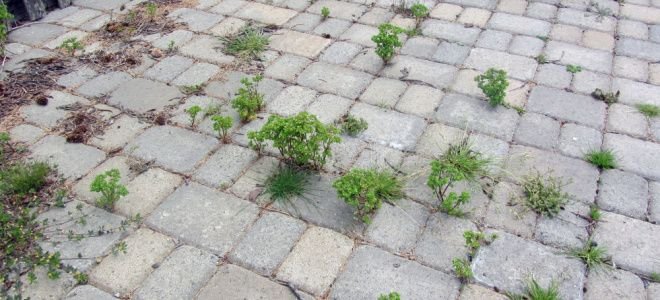
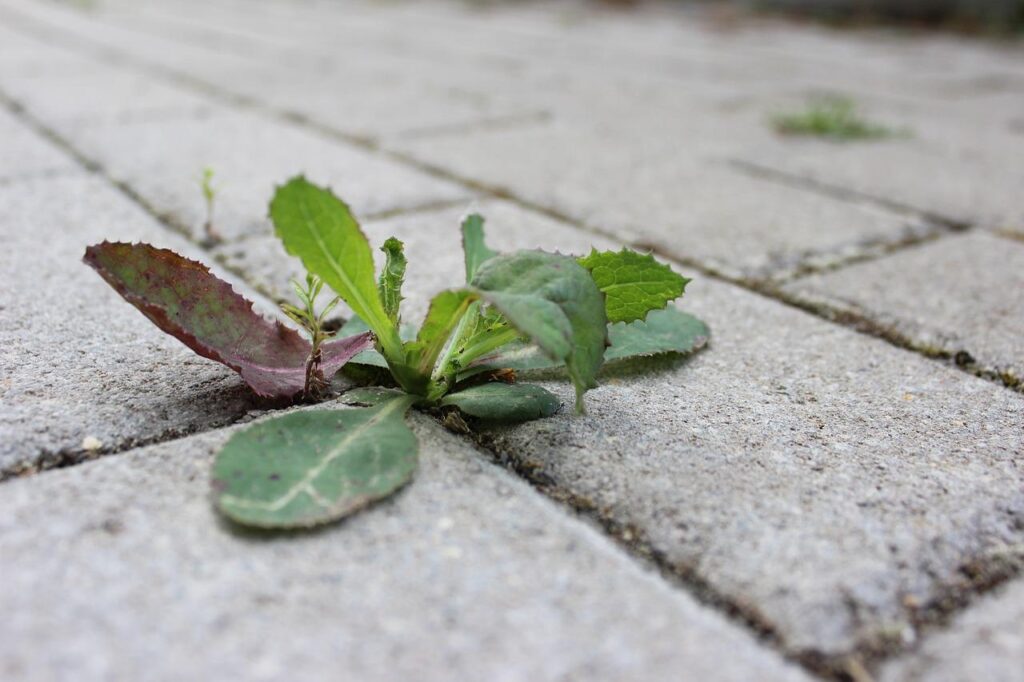
To truly appreciate the solution, you must first understand the mechanism of the problem. Weeds do not typically grow from underneath the pavers up through the sand; rather, they invade from the surface. Seeds are blown by the wind or dropped by birds into the joints, where they find purchase in loose, organic-rich debris.
Why traditional sand often fails
For decades, standard masonry sand or washed concrete sand was the default choice for filling the gaps between pavers. While cost-effective and readily available, this material lacks the cohesive properties necessary to maintain a seal. Over time, rain and irrigation wash away the fine particles, lowering the level of the joint.
As the sand level drops, it creates a shadowed, damp trough that collects organic matter like cut grass, leaves, and dust. This mixture forms a perfect compost strip, an ideal environment for germination. When searching for the best paver sand to prevent weeds, one quickly realizes that standard sand acts merely as a placeholder rather than a preventative barrier.
What’s the best paver sand to prevent weeds?
The evolution of hardscape technology has brought forward advanced materials designed specifically to combat erosion and vegetation. The industry standard has shifted toward a mixture of fine grains and chemical binders – also known as polymeric sand – to solve this exact matter.
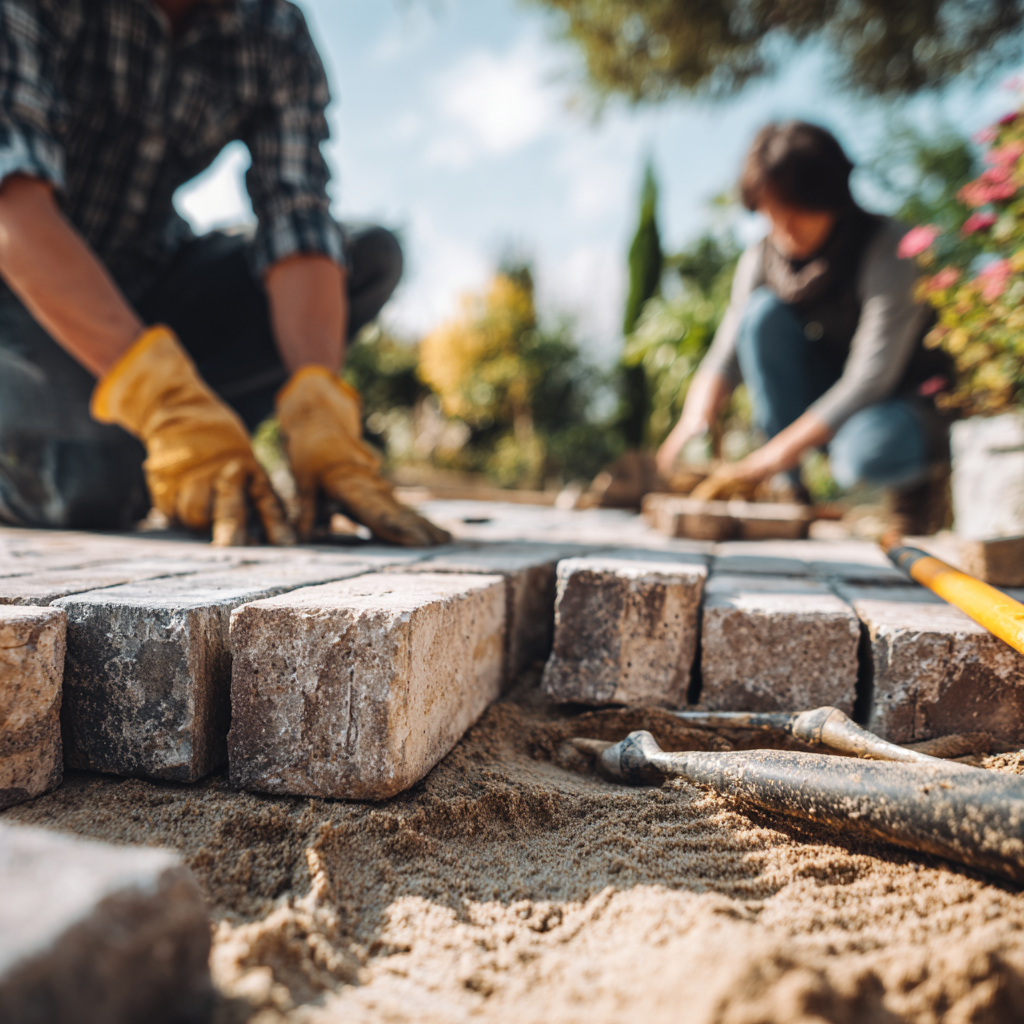
Polymeric sand is a precise blend of calibrated silica sand and specific polymers that act as a binding agent. When this material is installed and activated with water, the polymers dissolve and then cure, bonding the sand particles together and to the sides of the pavers. This creates a monolithic, flexible joint that resists washout and insect penetration. Identifying the best paver sand to prevent weeds requires looking for high-quality polymers that allow for some flexibility.
This flexibility is crucial because the ground naturally moves with temperature changes; a joint that is too rigid might crack, while a flexible joint absorbs the movement while maintaining its seal. The best paver sand to prevent weeds utilizes advanced polymer chains that can re-heal slightly after wetting, ensuring that micro-cracks do not become entry points for seeds.
Installation techniques for optimal performance
Even the highest quality material will fail if the application does not follow strict technical protocols. The effectiveness of polymeric sand is entirely dependent on the preparation of the surface and the activation of the polymers, though, as we’ll check out below.
Preparing the joints for new sand
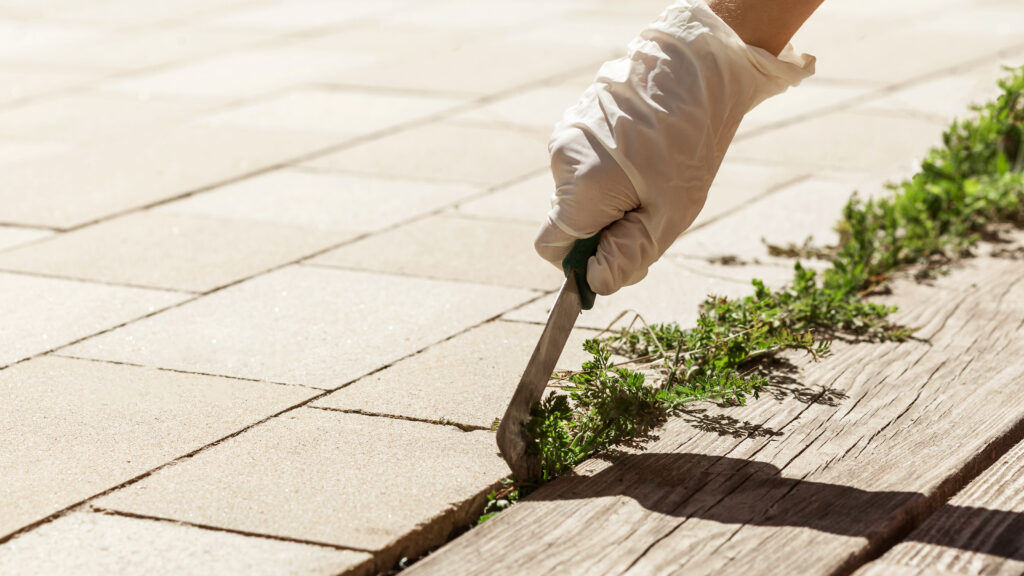
Before introducing the sand into the joints, the area must be pristine. If this is a remediation of an existing patio, all old organic matter, moss, and loose sand must be removed to the full depth of the paver or at least to a depth of one and a half inches. This is often achieved through pressure washing, but care must be taken not to disturb the bedding layer beneath the pavers.
In short, the goal is to create a void that is clean and dry. Moisture is the enemy during the installation phase; the pavers must be completely bone dry before spreading the best paver sand to prevent weeds. If the pavers are wet, the polymers will activate prematurely on the surface, causing staining and preventing the sand from sliding deep into the joints where it is needed most.
Compaction and activation
Once the dry sand is swept into the joints, the physical consolidation of the material is paramount. Simply sweeping it in is not enough. The best paver sand to prevent weeds requires mechanical compaction, usually achieved with a vibratory plate compactor or, for smaller areas, a dead-blow hammer. This vibration settles the sand particles into a dense matrix, removing air pockets that could collapse later.
After compaction and a final sweeping to remove surface dust, the activation process begins. This involves a precise showering of water to saturate the sand without washing the polymers out. The technical instruction for the best paver sand to prevent weeds usually dictates a specific misting pattern to ensure water penetrates to the bottom of the joint, initiating the chemical reaction that locks the sand in place.
Long-term benefits and maintenance
Investing in the correct materials upfront changes the lifecycle of the hardscape. While the initial cost of polymeric sand is higher than generic sand, the reduction in maintenance costs and labor makes it the economical choice over time.
When utilizing the right sand for your hardscape installation, the ritual of weekend weeding is virtually eliminated. The hardened joints act as a shield, meaning that any debris that falls on the patio sits on top of the joint rather than becoming embedded in it. This makes cleaning significantly easier; a simple sweep or light leaf blowing is usually sufficient to keep the area looking pristine.
Furthermore, remember that polymeric sand resists erosion from rainstorms. Here in Florida, where heavy downpours are common, traditional sand washes out onto the lawn, leaving gaps. Polymeric sand stays put, maintaining the interlock between pavers that prevents them from rocking or shifting, thereby extending the structural life of the driveway or pool deck.
Polymeric sand is the best paver sand to prevent weeds – but professional aid is a must
The journey to a weed-free patio is not about fighting nature daily, but about engineering a defense that nature cannot easily breach. The market is flooded with products claiming to be the best, but true performance is found in the technical balance of high-quality polymers and calibrated aggregates.
That said, most results are easier said than done – and that’s why companies like ours exist.
Our team at JS Brick understands that the technical details of hardscape maintenance can be overwhelming. If you are looking for professional assistance to ensure your pavers are installed or maintained with the best paver sand to prevent weeds, we are here to help.
Contact us today for a free estimate on any dream project you might have! We’ll be waiting.