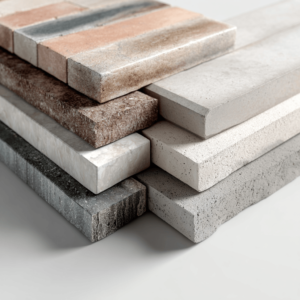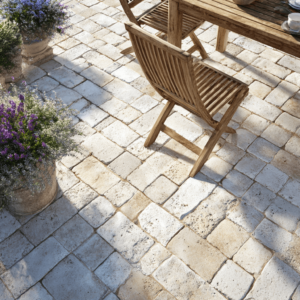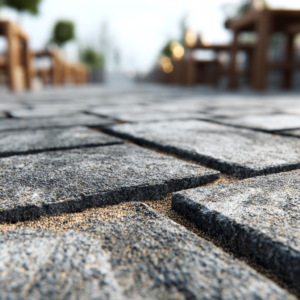
Flagstone pavers remain one of the most visually distinctive options in hardscaping, especially for homeowners who want an outdoor space with a more natural and organic feel. Their popularity has greatly increased recently, and everything points towards its continuous increase.
Their irregular shapes, earthy tones, and timeless appeal make them a favorite for patios, walkways, garden paths, and poolside areas. But as beautiful as they are, flagstone pavers are not the right fit for every project, and that is exactly where many homeowners get stuck.
In this guide, we explain what flagstone pavers really are, where they work best, what their main pros and cons are, and how they compare to other popular paving materials. We also cover what to expect from installation and maintenance, because with natural stone, looks are only part of the story.
Jump to:
What are flagstone pavers?
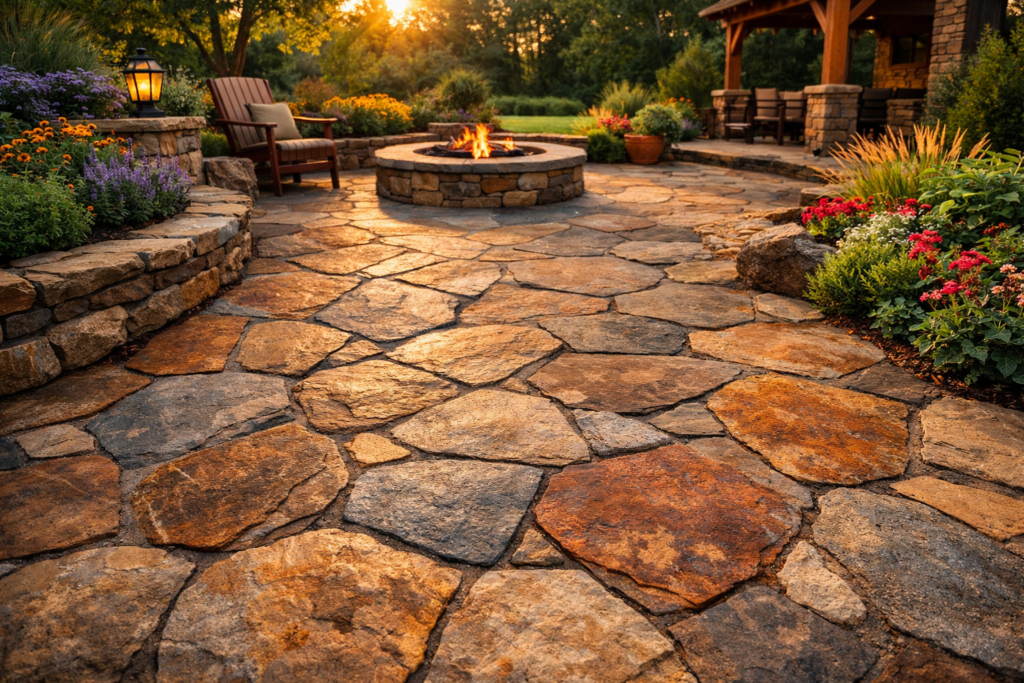
Flagstone is a term used in the hardscape industry to identify a group of sedimentary rocks that can be cut and used as pavers.
So, basically, they are pieces of natural stone cut or split into relatively flat slabs that can be used in outdoor hardscape applications. The term “flagstone” does not refer to one specific stone only. Instead, it usually includes several natural stone types commonly used for paving, such as sandstone, limestone, slate, bluestone, and, in some cases, travertine.
The Natural Stone Institute also notes that stone selection should always consider composition and application, which matters because performance can vary from one stone type to another.
What makes flagstone pavers stand out is their natural variation. Unlike manufactured pavers, they do not deliver a perfectly uniform look. That variation is exactly what many homeowners love. It creates movement, texture, and a more relaxed visual style that works especially well in backyards, garden transitions, and rustic or Mediterranean-inspired projects.
Pros and cons of flagstone
One of the biggest reasons people choose flagstone pavers is appearance. Natural stone has a depth and visual richness that is very difficult to replicate with manufactured materials. Each piece looks slightly different, which gives the finished surface a custom feel.
Another advantage is slip resistance. Many flagstone surfaces offer good traction, which is one reason they are often considered for patios, pool decks, and walkways. Flagstone can also last for many years when the right stone is selected for the climate and when the installation is done correctly.
The caveat is important because stone performance depends heavily on the specific material, the substrate, and exposure conditions. More on correct flagstone installation in this post.
On the downside, flagstone pavers are heavier, less uniform, and usually more labor-intensive to install than standard concrete pavers. They also tend to require more attention over time. In general, natural stone care depends on understanding the stone’s geology and using appropriate maintenance practices, which reinforces a simple reality: natural beauty often comes with more maintenance responsibility.
Color choice can also be more limited than with manufactured pavers, and not every homeowner will like the irregular aesthetic. For projects that call for clean lines, precise repetition, or a highly contemporary finish, flagstone may feel too visually busy.
Flagstone vs other options
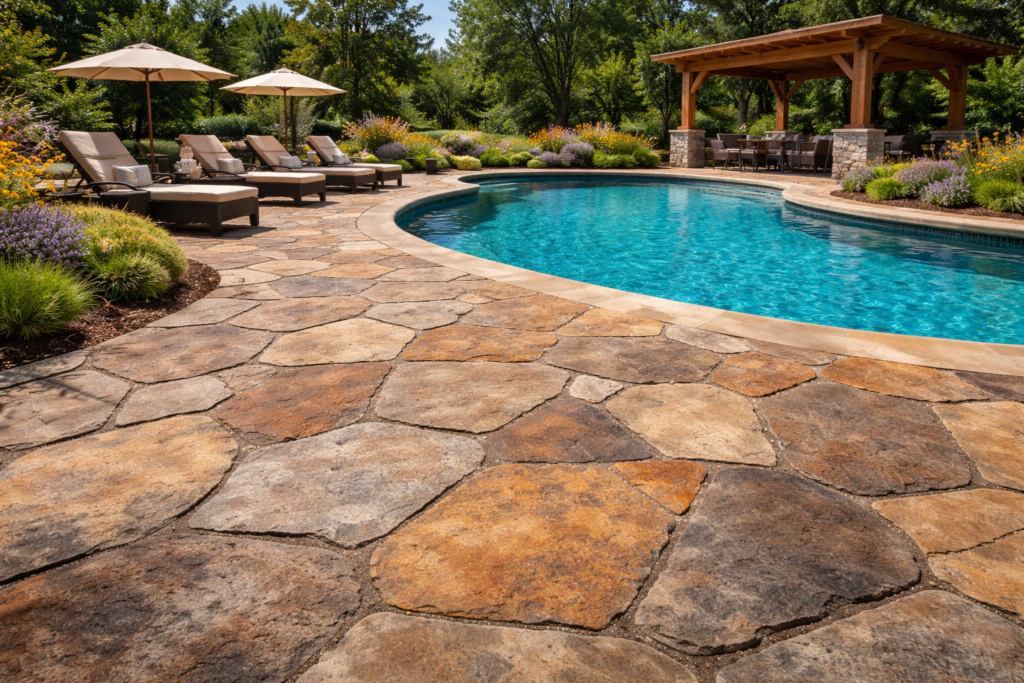
If you absolutely require the look of stone as natural as possible in your project, understand the difficulties in maintenance, and are lucky enough not to have to worry about price, then flagstone is a good option for you.
However, if you want something more reliable, easier to maintain and work with, and cheaper, you have tons of better options.
Porcelain pavers, for example. If you are thinking long-term and don’t mind paying a little more upfront for something that has the potential to last for decades, porcelain is a good choice.
They are naturally non-porous, extremely resistant, and one of the easiest materials to maintain in the market. And some options can even simulate the look of natural stone!
For a more traditional choice, concrete pavers are the way to go. While you may not be able to reach that natural stone look, concrete pavers more than make up for it in sturdiness and reliability.
They are a perfect balance between a material that can last for years and still have one of the most affordable prices available.
In fact, let’s expand a little more on the price comparison.
Flagstone prices usually range from $2 to $6 per square foot. Without accounting for installation and knowing you’ll have to expend more on future maintenance services. However, installation prices for flagstone range from $10 to $16 per square foot.
Concrete pavers, on the other hand, cost from $6 to $15 per square foot installed.
Therefore, you will have to spend more if you want flagstone pavers.
How to install flagstone pavers
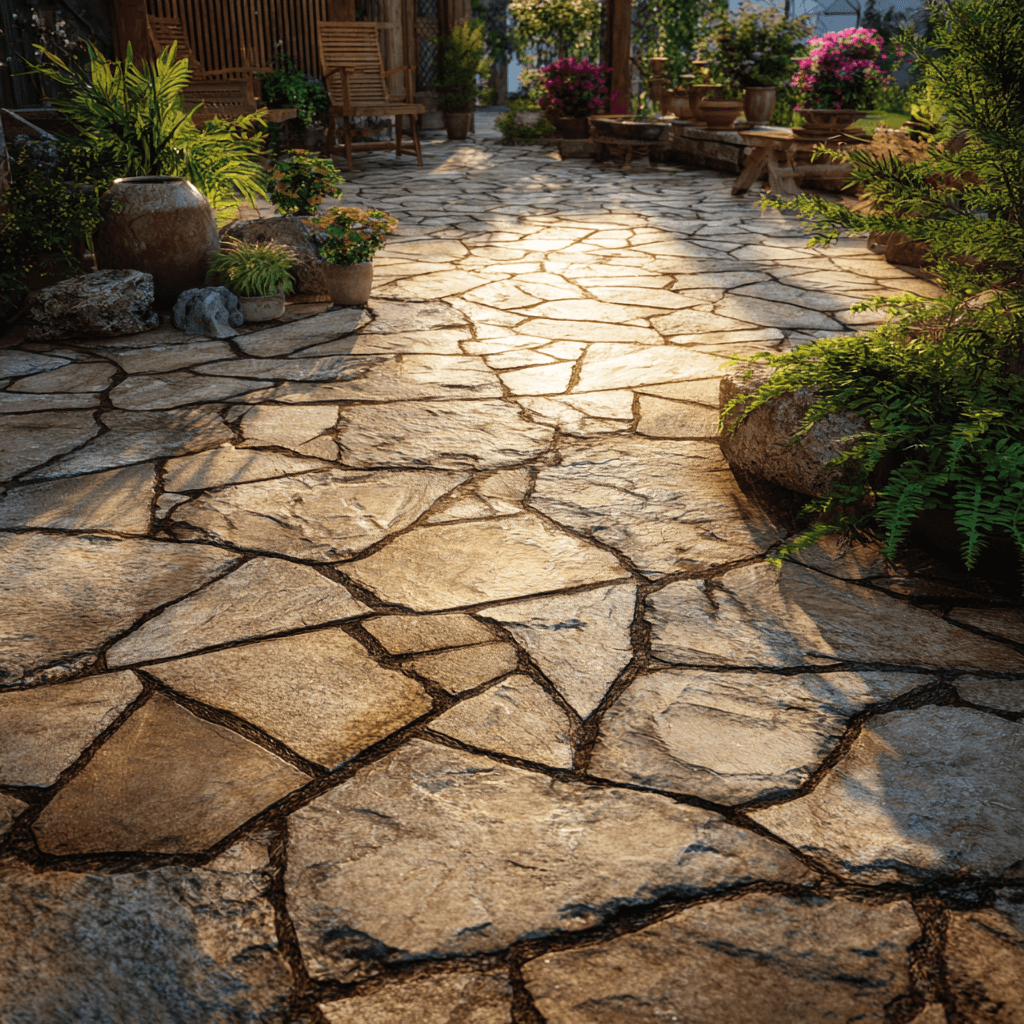
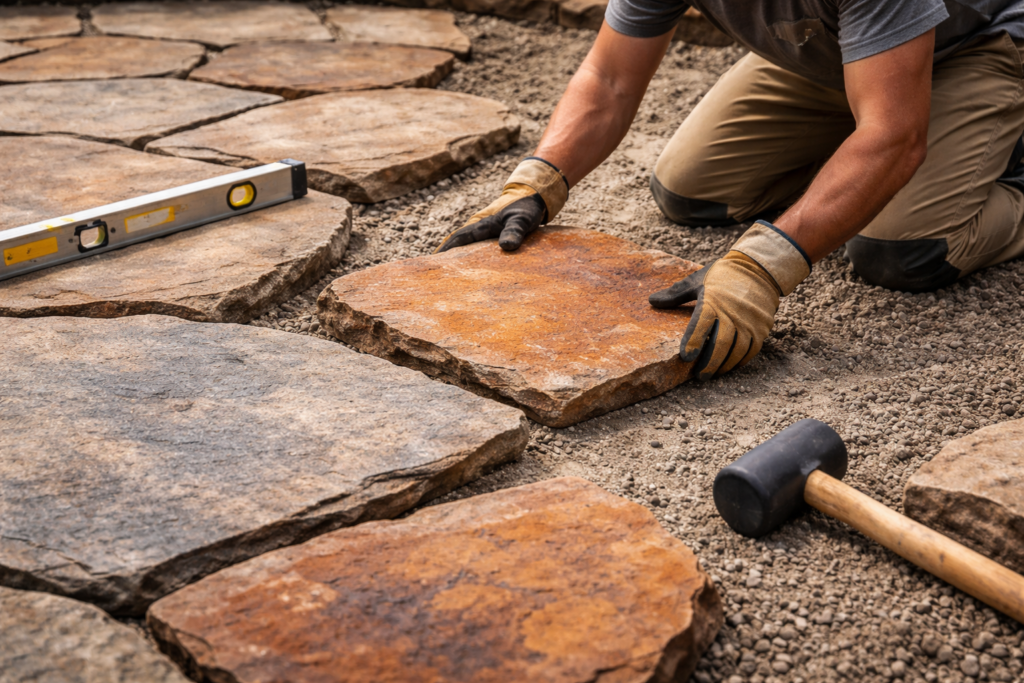
Installation is one of the most important parts of any flagstone project. Flagstone is not just heavy, it is also irregular. That means the installer must work with natural variation in shape, thickness, and edge profile. Layout planning matters more here than it does with modular concrete pavers.
For this reason, the installation of flagstone can be a complicated matter without the help of a professional.
Another important element is that the success of a flagstone installation depends on sub-base preparation, drainage, leveling, and joint strategy. Some projects use a sand-set system, while others require a mortar-set installation.
The right method depends on the type of flagstone, the intended use of the space, local weather conditions, and the desired finish. So, as you can see, a lot to think about from a DIY perspective. Your best bet is to trust professional guidance, from stone selection and installation method to the environmental conditions of the project.
Get professional hardscape help at JS Brick!
Flagstone pavers can be an excellent choice when the project calls for natural texture, custom character, and a more organic design style. They are especially appealing for patios, walkways, and poolside areas where aesthetics play a central role.
At the same time, they are not the easiest material to install or maintain, which means the decision should be based on more than appearance alone.
If you are comparing materials and want to understand whether flagstone pavers are the right fit for your patio, walkway, or pool deck, look for a professional hardscape contractor in your area that can help you evaluate the look, performance, and maintenance side of the project before work begins.
And if you happen to be around Sarasota, in FL, we here at JS Brick would be happy to provide you with that help, both when it comes to flagstone and any other paver needs you might have.
We have been providing the area for 26 years with only top-quality service in the supply, maintenance, and installation of pavers. Give us a call anytime for a free estimate on your project!